
Eye in the sky – Connecticut-based ESPN camera operator returns to South Williamsport
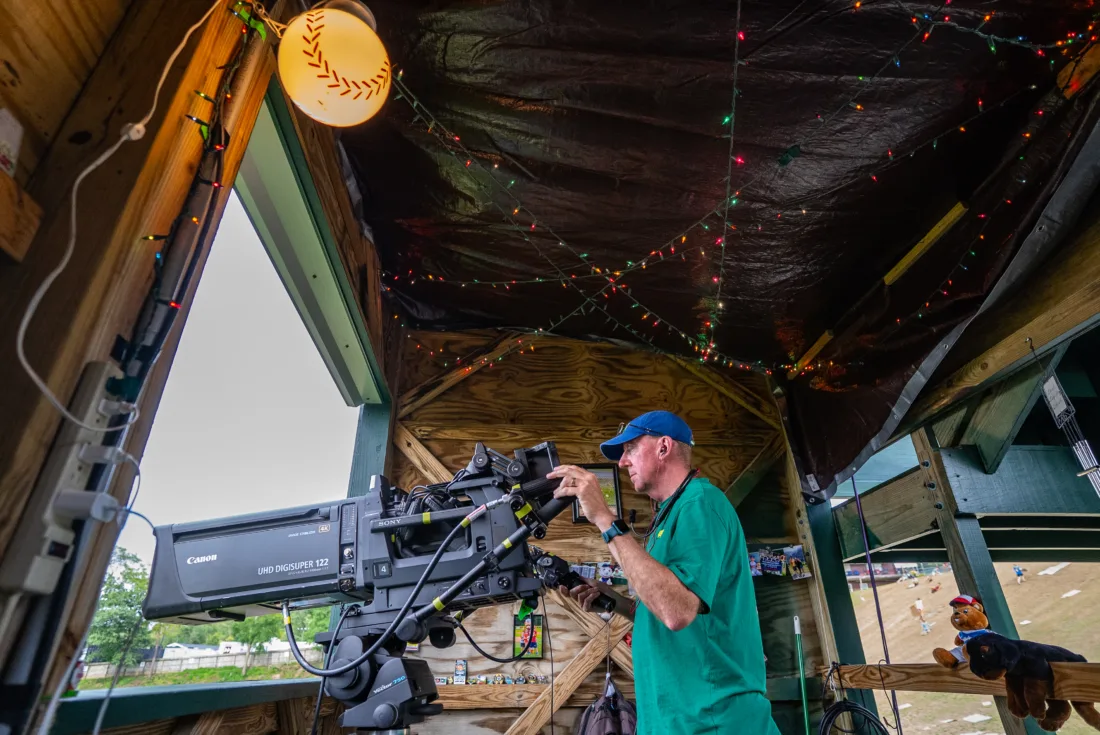
Chris Kelley, an ESPN camera operator from Avon, Connecticut, zooms in on the action between Mountain and Midwest on Wednesday afternoon at the Little League World Series at Lamade Stadium. Kelley has his room in the center field camera tower decorated with photos, lights and many plush toys. DAVE KENNEDY/Sun-Gazette
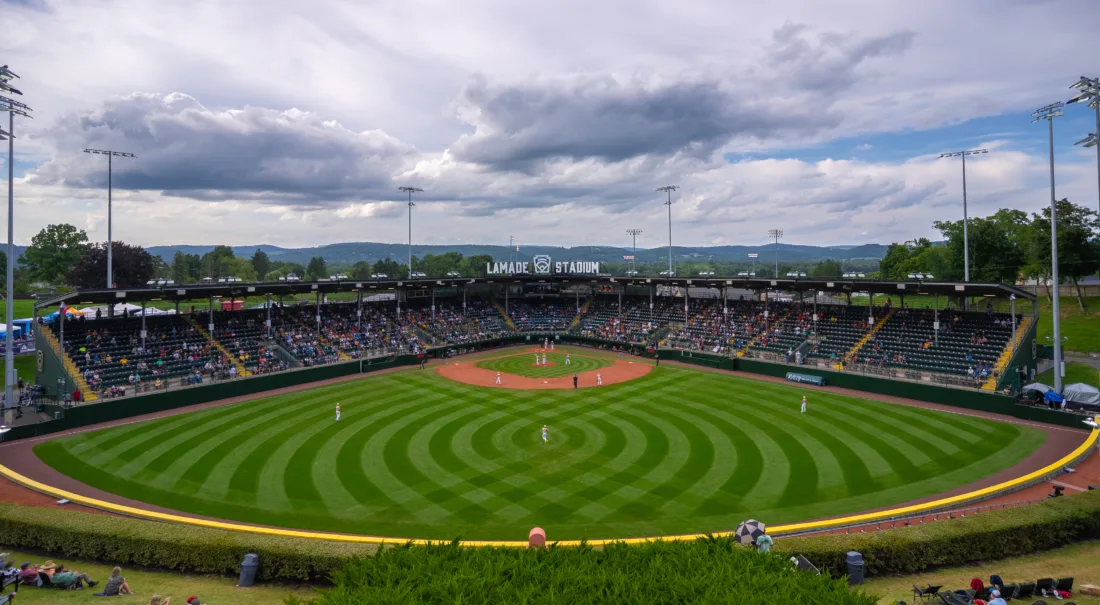
Clouds pass over South Williamsport in the late innings between Mountain and Midwest at the Little League World Series. DAVE KENNEDY/Sun-Gazette
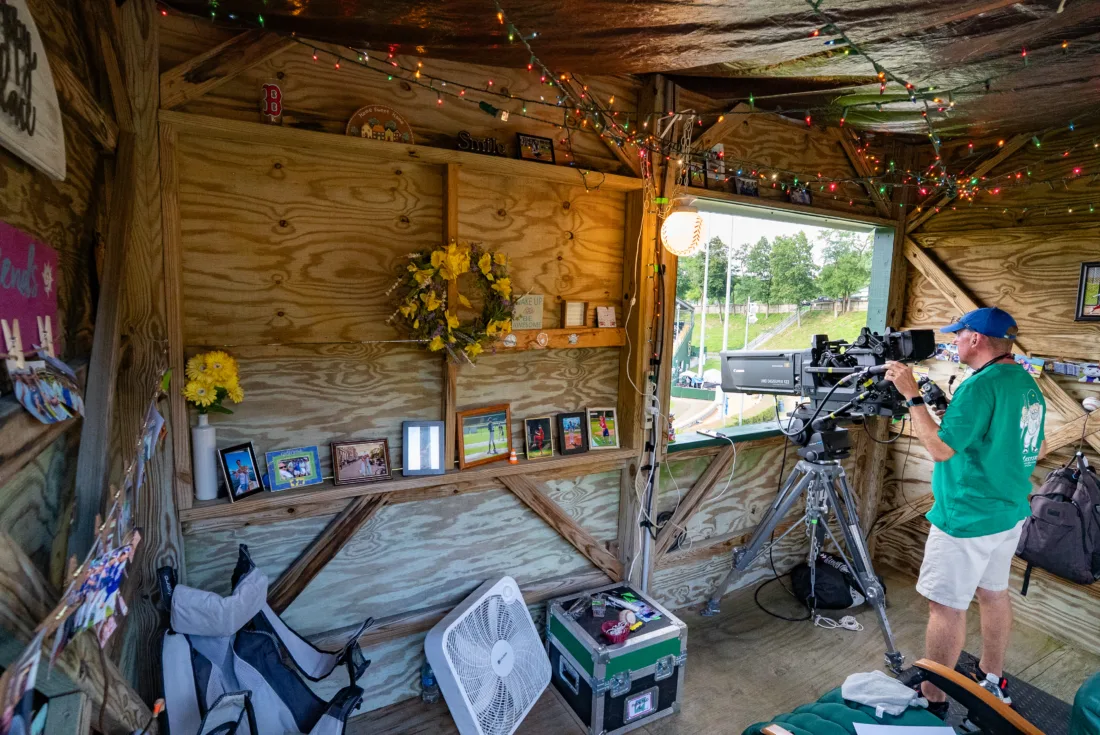
Chris Kelley and ESPN camera operator from Avon CT zooms in on the action between Mountain and Midwest Wednesday afternoon at the Little League World Series at Lamade Stadium. Kelley has his room in the center field camera tower decorated with photos and lights and many plush toys. DAVE KENNEDY/Sun-Gazette
Chris Kelley, an ESPN camera operator from Avon, Connecticut, zooms in on the action between Mountain and Midwest on Wednesday afternoon at the Little League World Series at Lamade Stadium. Kelley has his room in the center field camera tower decorated with photos, lights and many plush toys. DAVE KENNEDY/Sun-Gazette
Clouds pass over South Williamsport in the late innings between Mountain and Midwest at the Little League World Series. DAVE KENNEDY/Sun-Gazette
Chris Kelley and ESPN camera operator from Avon CT zooms in on the action between Mountain and Midwest Wednesday afternoon at the Little League World Series at Lamade Stadium. Kelley has his room in the center field camera tower decorated with photos and lights and many plush toys. DAVE KENNEDY/Sun-Gazette
Trending
Anyone walking around the grassy area of Lamade Stadium, or not stopping early enough sliding down the hill, may have noticed a green tower facing home plate, where one ESPN employee calls home for two weeks every year.
During the Little League World Series, Chris Kelley, remote camera operator, arrives a few hours before every game at Lamade Stadium to prepare for another day in his tower.
"The first year I ran that camera in 2015, I was on the roof of that tower and I was completely exposed." Kelley said. "I had a little pop up tent to make sure I didn't get sunburnt every day."
Eventually, they moved his position down to the lower level.
"As soon as I showed up in 2021, I knew I had to make it homey," Kelley said. "It's such an awesome spot."
Taking inspiration from a past announcer who decorated his space with trinkets, Kelley decided to do the same, starting with Christmas lights, then adding pictures of family and friends' families.
"That's one of the great things about what I do," Kelley said. "You're here two weeks and you have a lot of time to hang out with each other and talk and find out what's going on in each other's lives. I thought it was the perfect opportunity to have pictures of our kids."
Since a lot of his coworkers' kids play baseball or softball, it seemed thematic.
"It kind of snowballed from there," Kelley said. "I went to Goodwill in Williamsport for tchotchkes and I decorated every space."
His favorite find was a baseball light, which he thought looked like it belonged over a pool table.
"When I went into Goodwill, it was calling out to me," Kelley said. "It was perfect."
But really, it is the photos of his kids that really make the space.
"The pictures of my kids are so important to me," Kelley said. "Two weeks away from home is a long time and having them with me is really important."
After studying at Plattsburgh State in upstate New York, he began working at a television station in Plattsburgh for 10 years, calling himself a "one-man band," as he worked as a reporter, anchor, editor, cameraman and everything else. He decided enough was enough and wanted something new, so he followed his then-girlfriend and now wife to Connecticut, where she already worked at ESPN. Opportunities started popping up as a freelancer for local college basketball and hockey games. He worked as a freelancer from 2003 to 2014, when he became a full-time employee of ESPN.
Kelley had been living in Connecticut for a year when, in 2004, he was asked to work the Little League Regionals in Bristol for the Northeast and Mid-Atlantic Regionals.
"I've been doing that ever since," he said.
In 2006, a spot opened up on the crew at Volunteer Stadium, so after working Regionals, he came to the Little League World Series. He moved to Lamade Stadium in 2015 when a position became available.
"It's definitely an event that once you're on it, you can stay as long as you want," Kelley said. "It's just one of those rare events that everyone recognizes is so unique and so special that they really honor."
ESPN is very loyal to the people who commit to working the Little League World Series each year, he said.
"It's fun," Kelley said. "It's a wonderful event. It's a big commitment. Two weeks. ... They're away from their families for two weeks. When people retire the industry and spots open up, they're highly coveted."
He considers himself highly lucky when an opening became available at Lamade Stadium, he already was working at Volunteer Stadium, so it was a natural transition.
"The world of sports just evolves so much," Kelley said. "It used to be there was a clear separation from professional sports and college sports, and college sports seemed like real amateur athletics and that's not the case anymore. You have to go to Little League to find people playing for the joy of it."
He is a dad to three teenagers, with a 14-year old son that he said is barely out of Little League himself.
"I connect with this event more now than I did when I first started doing it," Kelley said. "At the end of the day, you see these kids having fun with their friends."
While he is focused on the game as it's happening, between games, he gets to watch the people around him.
"Between games, it's great," Kelley said. "I drink it all in. It's so cool. It's great especially because most people don't even know I'm up there so I can spy on all the fun. I love the fact that parents just let their kids run and play and no one's hovering over them. They just let them run around and know they're in a safe place and surrounded by other kids."
He especially likes that the parents are not only looking out for their own kids, but the others around them.
"I love Williamsport," Kelley said. "I love the way the community embraces us. It seems incredibly wholesome."
While here each year, he tries to squeeze in a round of golf whenever possible, even if it involves getting up early. He also enjoys walking along the river.
"It's a beautiful area," Kelley said. "It's a good way to not just feel like it's hotel to camera and camera to hotel."
His coworkers also try to get out, whether they play pickleball or go out to eat after work and check out the downtown scene.
"Everyone loves Williamsport so much," Kelley said. "We all try to make sure we take advantage of the region as much as we can."
For some of his coworkers, the Little League World Series begins long before the first game kicks off. Some people begin arriving 10 days before the Series begins to make sure everything is ready, so people like Kelley can start right away.
"Bristol regionals end on Friday," Kelley said. "I drive Sunday. Monday we start setting up cameras."
Once the Series begins, he comes in every day four hours before the first game. If the games start at 3 and 7 p.m., he's there at 10:30 or 11 a.m., turning everything on and making sure it functions properly before having a meeting about what to expect for the day. The crew eats together and then once the teams start warming up, they're recording elements to highlight that day.
"It's a quick turnaround," Kelley said. "After the 3 o'clock game is over, we start it all over for game two."
A typical day during the Series means he's working from 10:30 a.m. to 9:30 p.m., but sometimes weather makes him adapt. This year, a rainout meant there were four games on each field the next day to make up for it.
"I was there from 7 a.m. to 10 p.m.," Kelley said. "It's a lot of hours."
Even with the long days, he said how much the ESPN crew adores filming the series. He works with people who have covered events such as the NBA finals, the Stanley Cup and more.
"The people who work on this show are some of the best television techs in the industry and they consider this event one of the highlights of their year every year," Kelley said. "It's such a blast."