
‘A calling’: Nurses Honor Guard celebrates late nurses who dedicated their lives to caring for others
Trending
Sometimes the sacrifices that nurses make to follow their calling are overlooked -- the long hours, the life or death situations they encounter, family holidays and events that are missed. But the Clinton-Lycoming Nurse Honor Guard wants to make sure those who have dedicated their lives to caring for others are celebrated as they near the end of their lives and thereafter.
The Nurse Honor Guard's national organization was founded in 2003 but the local group began in 2024 and officially joined the national chapter this year.
"I had been to a service for a very good friend of ours and saw this done, and I was just inspired. And I talked to a few of them, and my husband knew the one nurse that participated. And I said, that was awesome and as we're driving home, he's like, why don't you start a group," said Gayle Kiessling.
About four months later, there was a post on Facebook that a group was being organized.
"Our organization came about when a family member of a fellow nurse passed away from brain cancer," said Mary Kay Dremel-Farley, whose post Kiessling had seen.
"Her sister had seen one of these services performed and she asked the social workers at hospice if there was one around here," she explained.
There wasn't one at the time, but someone asked the group of hospice retirees who meet to have lunch regularly if they would want to do it for the person who had passed who happened to have worked in oncology.
"In a month, we whipped everything together and got started up," she said.
Their very first weekend the group ended up having three services even though she admitted that they didn't really know what they were doing.
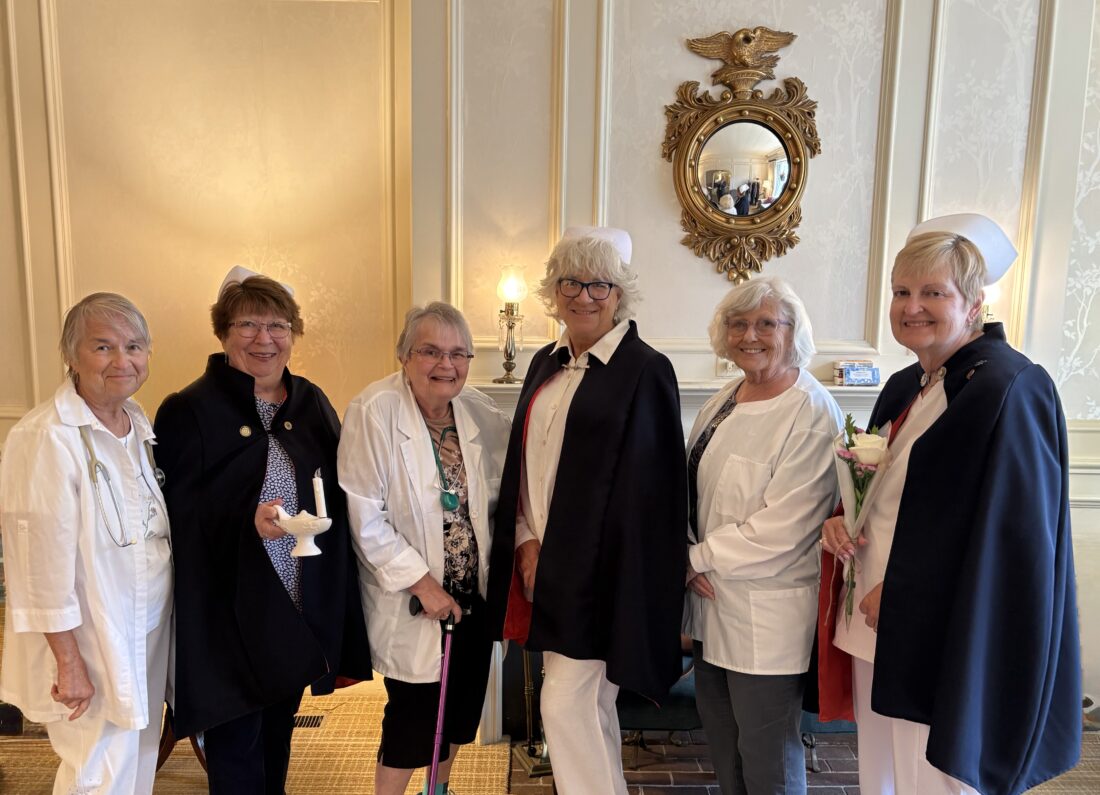
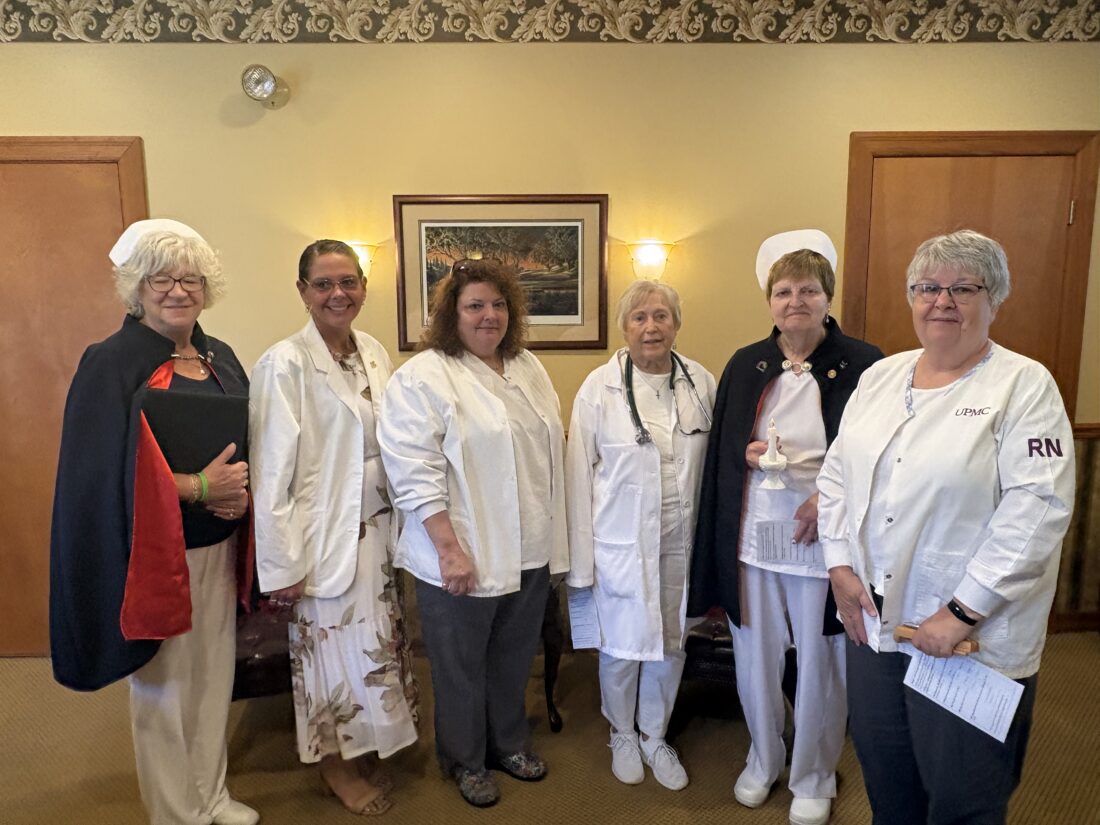
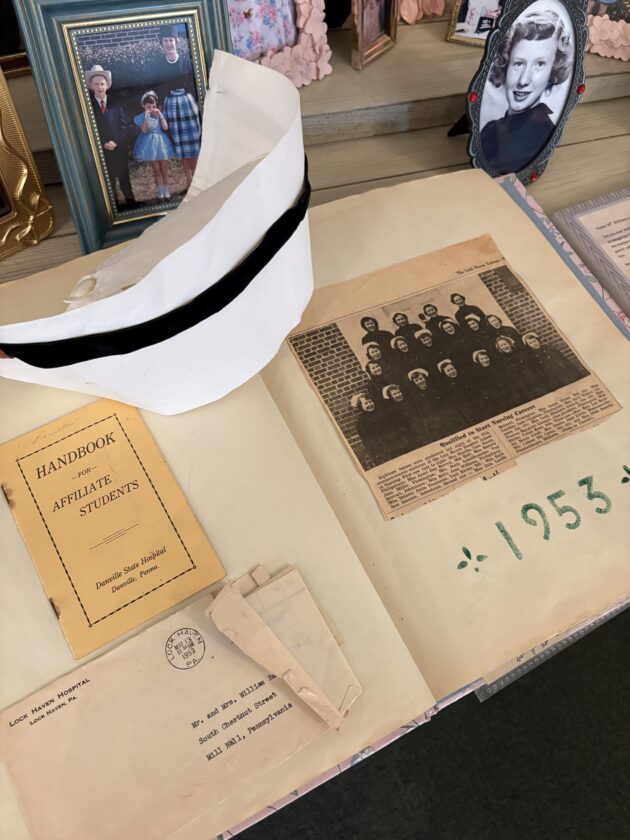
The ceremony the Nurse Honor Guard conducts, she explained, is very simple. The nurses dress professionally. Some wear capes and white caps, a throwback to a time when nurses wore white head to toe.
Some of the younger members of the group have never worn a cap, so it's not mandatory.
"I had never seen a cape, which is hard to believe. We didn't have one in nursing school, so we just said dress professionally and then someone bought two capes," she said.
During the ceremony, the nurses stand in the back of the church or whatever facility they're at and then they walk single file to the front. One person is the narrator, another holds the Florence Nightingale lamp with an electric candle in it and a third person holds a chime.
The narrator reads a tribute to the nurse who has passed, honoring all their years of service to others.
Although they started out with just a handful of people participating, now the group is up to about 40 and as many as possible participate in the ceremony. The oldest member of the group is 92 years old.
"As you know, nurses don't get a lot of recognition. They do what they do. They sacrifice what they need to sacrifice. So if you grow up with a nurse, your mom might have worked Christmas, and you celebrate Christmas some other time. Your mom worked every other weekend, so you might not have been able to go to a park or something with everybody else because your mom was working, or she didn't make all the baseball games. So there's a lot of hidden sacrifices that the nurse makes, but also her family makes, and you just don't realize all the sacrifices that everyone is making that as a professional, you've chosen this for your family, and everybody's sacrificing. So it's nice to be able to honor the nurse, but it also recognizes the family too, and helps them to understand what being a nurse meant," Dremel-Farley said.
"My four children had a mom and dad that were both nurses, so they got a double whammy. Usually if I wasn't working Christmas, he was," Kiessling, whose husband is Lycoming County Coroner Chuck Kiessling, said.
"You just accept it. It's part of your life. And when you start nursing school, you take the Florence Nightingale vow, and you say that you're going to provide good care of people, and you say that you're going to not be judgmental, and you say that you're going to be honest and wonderful and compassionate and all those things. You can't put a price on any of those because, especially older nurses, I think really took that to heart.," Dremel-Farley said.
"It changed you as a person, as an adult, and I mean you just look at things completely differently. So it's really nice to be able to thank those nurses for what they did, the unspoken things and the spoken things that they did. Some of the things that we say are like at the time a nurse told you what you needed to know, even if you didn't want to hear it, or how gently and kindly, or you know things like that people don't quite understand, and then in the ceremony there's one part where we ask other nurses to stand if they want, and that's really nice when other nurses do stand up. Some of them are bashful at ones you go to, but then sometimes you'll go to a service and there's like 20, 25 nurses that'll stand up," she said.
An especially poignant part of the ceremony comes when the nurse who has passed is called to duty with the ringing of the chime. Dremel-Farley explained that in hospitals, nurses are called to duty when they are asked to come to the hospital for a shift because someone has called off sick.
"So, we call them to duty and we ring the chime. And they don't come, two more times and then we release them from their duties as a nurse and let them know that we will carry on for them," Dremel-Farley said.
"It is a tearjerker," Kiessling interjected. "At that part, it's hard for all of us to stay together."
At the end of the tribute, the member of the honor guard turns off the lamp and then they file out.
In order to personalize the program, Dremel-Farley said that she usually tries to incorporate something about the nurse.
"I'll ask people, did you know anything about her? Did you work with her...I try to tell a funny story or something heartwarming or something about us that's heartwarming. Maybe a little bit about our history or that we're nonprofit," she said.
They also offer the family a white rose in memory of the nurse who has passed.
There is no charge for the Nurse Honor Guard to perform the ceremony. They have made funeral directors aware that they offer this service and many times will receive calls to perform the ceremony at the request of the families.
They have also done living tributes for nurses who are facing terminal illnesses or have been diagnosed with dementia.
Both Kiessling and Dremel-Farley agreed that being able to honor those who have been called to the nursing profession just as they have is a privilege.
"Doing it makes us feel good too. It makes us feel good every time I've been able to honor a fellow nurse. I consider it a privilege," Dremel-Farley said.
"We've lived it. And it is a calling. Really it is. If you're a nurse, it's a calling. We ought to say once a nurse, always a nurse," Kiessling added.