
‘Better public safety’: State plans destruction of Alvira bunkers
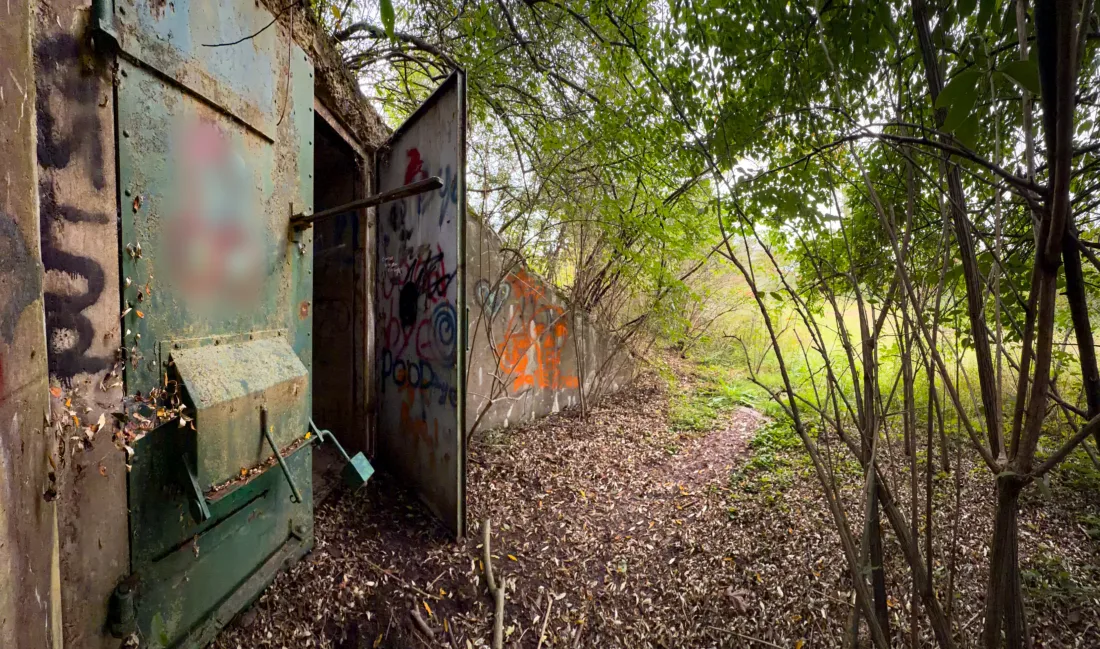
A door on one of the many former military storage bunkers sits ajar on the state game lands that used to be the town of Alvira. The concrete and steel “igloos” were used to house explosives during WWII. DAVE KENNEDY/Sun-Gazette
A door on one of the many former military storage bunkers sits ajar on the state game lands that used to be the town of Alvira. The concrete and steel “igloos” were used to house explosives during WWII. DAVE KENNEDY/Sun-Gazette
A door on one of the many former military storage bunkers sits ajar on the state game lands that used to be the town of Alvira. The concrete and steel “igloos” were used to house explosives during WWII. DAVE KENNEDY/Sun-Gazette
A door on one of the many former military storage bunkers sits ajar on the state game lands that used to be the town of Alvira. The concrete and steel “igloos” were used to house explosives during WWII. DAVE KENNEDY/Sun-Gazette
Trending
The state Game Commission says it has plans to remove most of the remaining concrete World War II dome-shaped igloos near the lost village of Alvira near Allenwood due to vandalism and nefarious activities such as illegal drug use.
Recent security measures include crews bringing in large dirt berms with materials provided by the state Department of Transportation (PennDOT) and road gates to block vehicle access and prevent unauthorized entry into the remaining hazardous or vandalized structures.
The bunkers were built during World War II-era as TNT storage locations. Dozens of bunkers still remain on the property, many overtaken by nature on State Game Lands 252 in Brady Township, Lycoming County, and Washington and Gregg Townships, Union County.
The game land near Allenwood is two separate tracts totaling 3,014 acres in the commission's Northcentral region.
In 1942, the federal government seized the small village to create the Pennsylvania Ordnance Works and built dome-shaped concrete bunkers to store TNT (dynamite) before shutting down shortly after the war, said Mark Ternent, regional director for the game commission.
He noted before the commission acquired SGL 252 in southern Lycoming County it was used by the federal government as a munitions and explosives facility.
Numerous concrete, earth-covered bunkers were built for storage, and 132 of these structures remain there today, he said.
They are commonly referred to as the SGL 252 'bunkers' or 'igloos', and they are scattered throughout the game lands.
The structures are not currently used. However, a number of problems associated with them have become increasingly concerning and include vandalism, attraction of criminal activity, public safety, and anticipated future maintenance costs.
These structures are now over 80 years old and evidence of crumbling concrete with rebar exposed in places is not uncommon.
"They provide no wildlife or recreational benefit, and therefore we have not invested in their upkeep," Ternent said. "They will eventually require significant maintenance costs to preserve if not removed," he said.
The commission has tried to prevent trespass by welding the doors shut, but vandals used a grinder to grind down the welds to gain access.
It piled dirt in front of the doors but people dug through it, and at one site the commission added a 1,000 pound concrete block in front of the door but it was towed away.
All roads were closed in close proximity except Alvira Road, which has since been converted to a seasonal access road three years ago by gating a popular 1.4 mile stretch to make the most accessible bunkers less approachable.
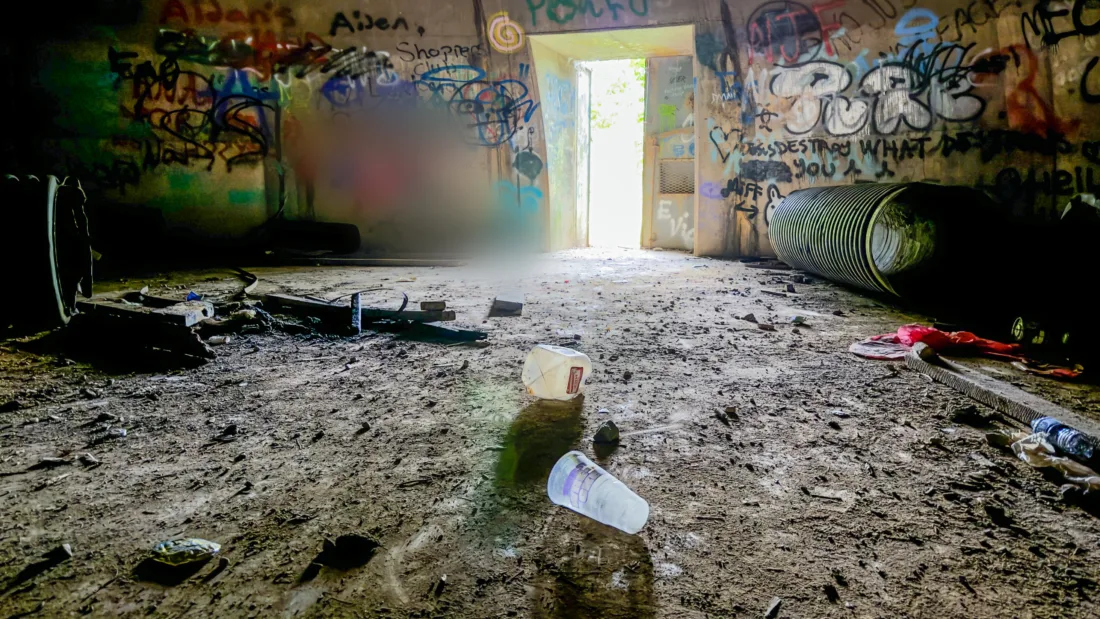
Vandalism includes spray-painting obscene pictures and wording on the walls, starting fires inside the structures, and dropping logs and rocks into overhead vent pipes.
The commission is aware of one 911 response for an unconscious woman hit by a dropped rock, and one of the fires was large enough to initiate an arson investigation.
The structures are frequent party spots and trash left behind is a regular problem. Wardens have more drug-related violations/encounters at these structures than in all other State Game Lands in the 10-county northcentral region combined.
Underage drinking has also been encountered. An inability to adequately deter people from using them and their remote nature has created a significant law enforcement challenge. In 2024, a warden was assaulted while trying to remove trespassers from a bunker.
Despite their problems, the PGC recognizes that these structures have a historical element tied to the history of the Pennsylvania Ordnance Works.
As a compromise, the commission submitted a plan to the Pennsylvania State Historical Preservation Office (SHPO) proposing retention of 16 structures while removing 27 through demolition.
The removal of selected bunkers will take years to complete.
"We don't quite know what exact costs will be, but a workplan for fiscal year 2027 was approved for $201,000 to focus on the 15 most problematic structures first," Ternent said.
This work would occur in fiscal year 2027 between July 1, 2027 and June 30, 2028.
"We've never tried to demolish one of these before, and given their concrete nature, our plan is to use this first year as a basis to better refine future plans," he said.
While working with the commission Engineering Division to determine how many bunkers might be included in this initial request for bids, the plan is to have a contractor pull dirt back from overtop, use a heavy piece of equipment to collapse it, and then cover the debris with the removed dirt and revegetate to habitat standards.
"We don't anticipate hauling debris off site, but we are still in the early planning phase so contractor or engineering input may alter these plans," Ternent said.
"Demolition will obviously incur significant cost by the end of the project, but we believe it's the right investment with a return of decreased criminal activity, better public safety, and better wildlife habitat," he said. "It will also significantly reduce future maintenance obligations."