
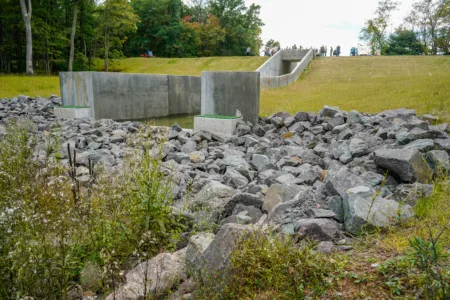
Heller dam project helps ensure safety
Trending
So what does more than $1 million of grant investment and work done on a dam spillway mean for Lycoming County residents?
Most of the time Randy Padfield, director of the state Emergency Management Agency (PEMA) says he is at disaster scenes and wading through floodwater.
"It's always great to be out to celebrate projects like this that reduce the hazards and reduce the risks for populations and preserve pristine waterways," Padfield said of the completion of the Frank E. Heller Dam Spillway owned by the Williamsport Municipal Water Authority.
Projects such as the Heller dam are critical to ensuring the safety of Pennsylvanians, he said.
This is a state with older and aging infrastructure, requiring constant attention and focus to ensure the safety and longevity of communities.
Water remains the biggest hazard in terms of flooding, clearly the most prevalent disaster dealt with annually.
It is also a much needed resource, powering communities, economies and critical infrastructure.
"Water provides safe drinking water and opportunities for recreation," Padfield said.
He added how the state must ensure it has the infrastructure in place that is well maintained to manage this critical resource in a safe and effective manner is imperative.
No stranger to infrastructure defects
Many of these infrastructure failures can be attributable to inadequate construction or lack of maintenance associated with water impoundments. An example of that is the history and infamous Great Flood of Johnstown in 1889, which claimed 2,208 lives and then there was the Austin Dam Flood in Potter County in 1911 that claimed 78 lives and resulted in Pennsylvania passing the nation's first comprehensive dam safety legislation in 1913.
"We don't want to have that, obviously, repeated here or any place else across the Commonwealth," Padfield said.
That is why the project at the Heller dam is so important to "our communities," he said.
These types of projects require dedicated leadership ... and a commitment at the local level .... to identify funding and effectively manage these types of projects.
They also require the collaboration of numerous local, state and federal organizations, advocacy from elected and appointed officials, and identification of funding as most local communities do not have sufficient funds to be dedicated to these types of infrastructure projects because they are extremely expensive.
Without funding through FEMA's High Hazard Potential Dam Grant Program, which is administered by a hazard mitigation team at PEMA, these types of projects would go unfunded or put significant strain on communities to fund the total project costs – needlessly exposing communities to predictable and avoidable risks.
This work is a template of what is occurring across the state under the administration of Gov. Josh Shapiro to address aging infrastructure, protect communities and continue to provide essential services such as drinking water.
"It's a beautiful day," Whitcomb said at the ceremony, adding how she was always happy to be out in communities highlighting the important work that is done every day and benefits those who live, work and play in Pennsylvania.
The state has more than 86,000 miles of rivers and streams, 700,000 acres of lakes and water shapes the state's landscape, its communities and daily lives.
Managing water comes with great responsibility as more than 1.5 million Pennsylvanians, which is one in every 10 residents, live or work downstream of a high hazard potential dam.
That means a dam whose failure could result in a loss of life, or significant property damage.
Most of the people have no idea that they are downstream of a dam.
"That dynamic, the quiet infrastructure paired with significant responsibility, is exactly why our work together matters so deeply," she said.
The average dam in Pennsylvania is 77 years old, which is far greater than the 50 year design life and about 30 % of the dams in the state are more than 100 years old.
These dams need regular inspection, maintenance and in many cases regular rehabilitation
DEP's responsibility goes beyond regulation and permitting, it includes a role to work with communities, water suppliers and sister agencies such as PEMA as partners to help to identify challenges and find practical solutions.
Regulation establishes important safeguards but successful water resource management depends on cooperation.
An example of that commitment to proactive rehabilitation and partnership is this work on the Heller dam, she noted.
The completion of this project means a lot to this community and as was noted provides drinking water to more than 50,000 individuals, serving six municipalities in the greater Williamsport region. This is about 45 % of the population of Lycoming County and includes the significant base of industry and employment for the county, two colleges, the Little League World Series Complex, two hospitals and most of the county government operations.
A public water supply reservoir has dual importance as a critical water source and a dam, and rehabilitating the dam protects the people who live downstream while maintaining the reservoir protects the communities water supply.
This rehabilitation project helps position this water supply to continue to serve this community into the future, Whitcomb said.
"This project reflects what dam safety looks like at its best – rigorous inspection, strong engineering, strong collaboration and timely action," she said.
"Dams are as critical as roads and bridges and just like those structures they age, require care, investment and vigilance ... DEP is continuously attentive to supporting water supply needs throughout the Commonwealth."