
State Rep. Jamie Flick: Too many homeless, not enough funding
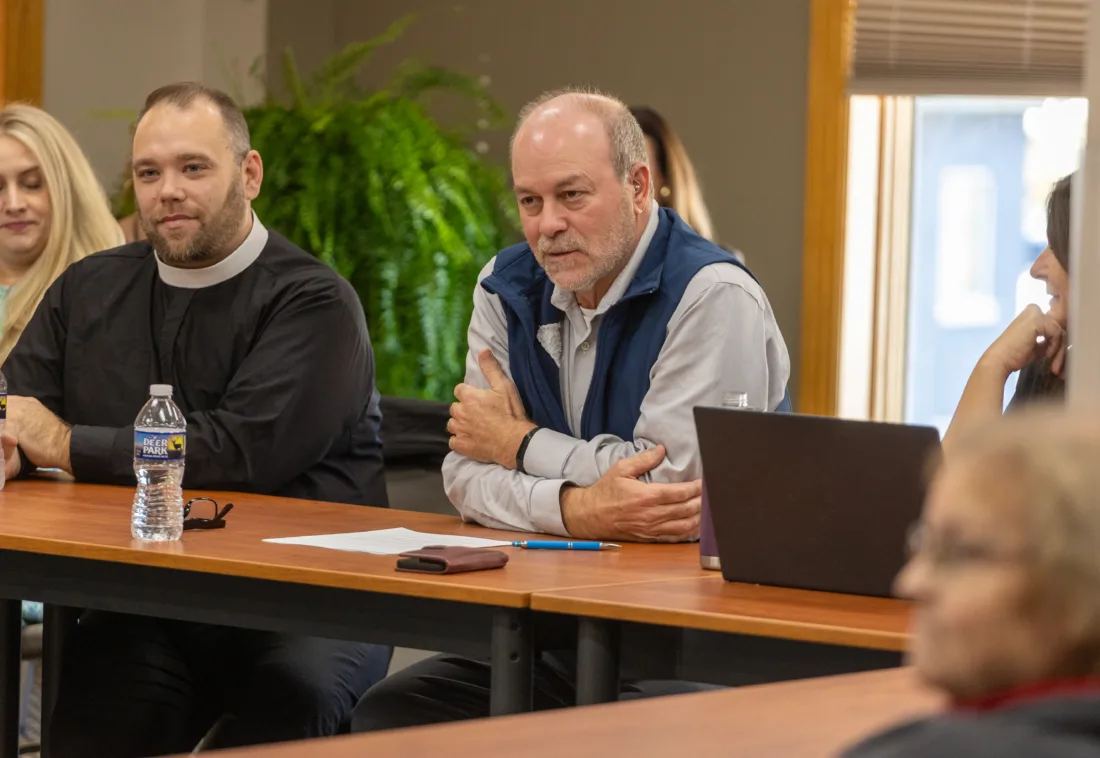
KAREN VIBERT-KENNEDY/Sun-Gazette State Rep. Jamie Flick, R-South Williamsport, speaks during a meeting his office hosted to discuss the homelessness crisis in our area. The meeting included area agencies, oraganziations and political leadership.
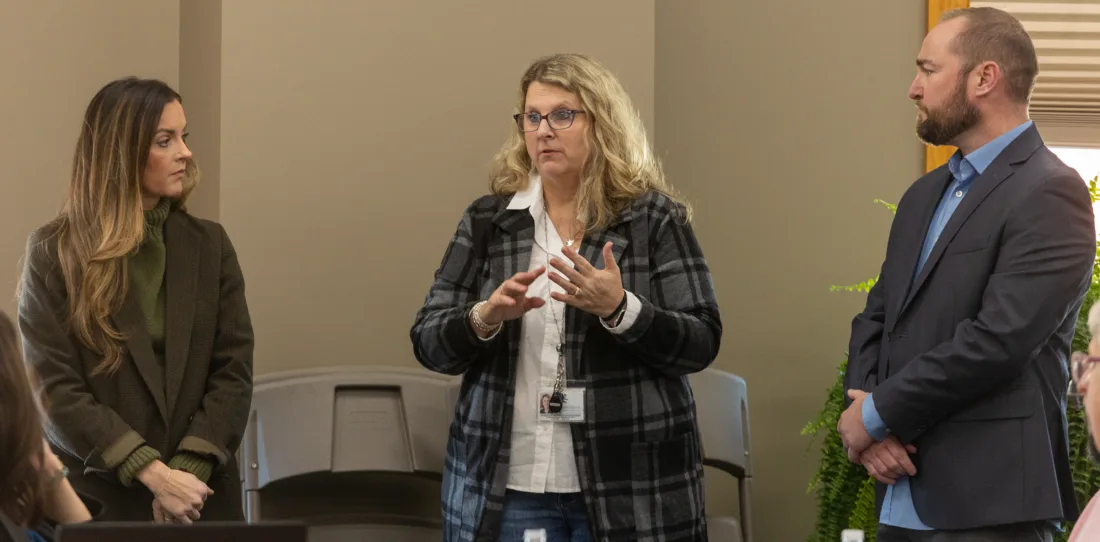
KAREN VIBERT-KENNEDY/Sun-Gazette Amber Morningstar, CEO YWCA Northcentral Pa.., left; Shea Madden, executive director West Branch Drug and Alcohol, center; and Ben Hazen, executive director American Rescue Workers, right; talk about their new joint initative to repoen Saving Grace Shelter, during meeting hosted by Rep. Jamie Flick about homelessness.
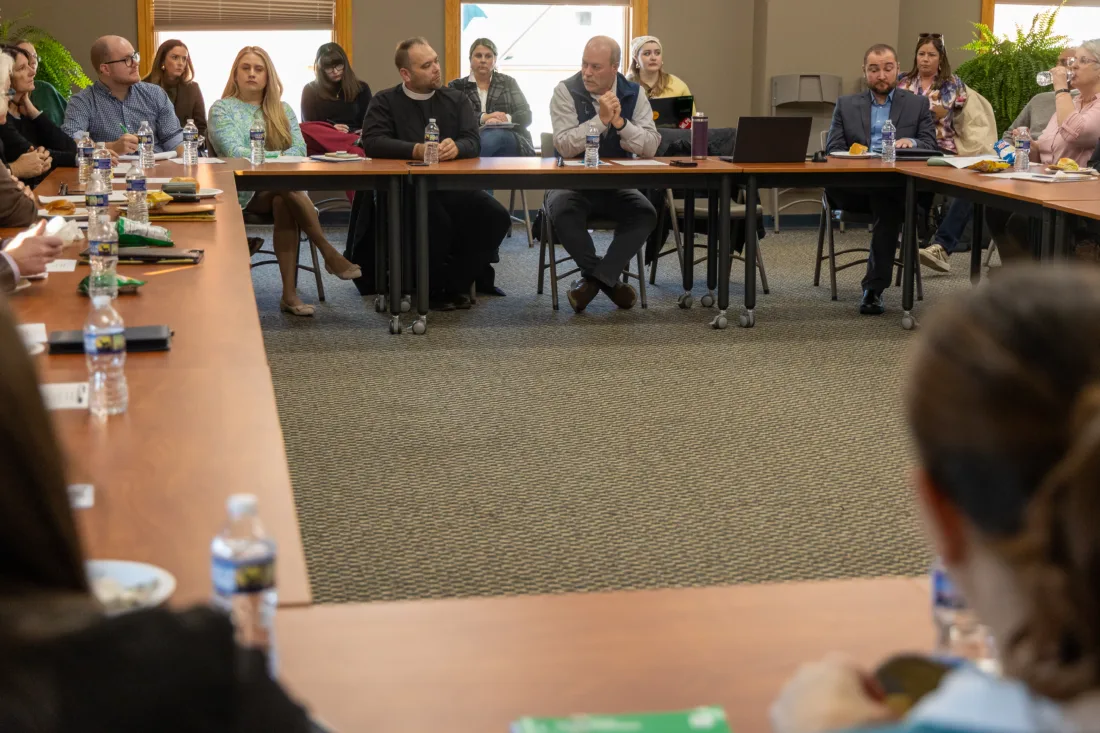
KAREN VIBERT-KENNEDY/Sun-Gazette State Rep. Jamie Flick, R-South Williamsport, speaks during a meeting his office hosted to discuss the homelessness crisis in our area. The meeting included area agencies, oraganziations and political leadership.
KAREN VIBERT-KENNEDY/Sun-Gazette State Rep. Jamie Flick, R-South Williamsport, speaks during a meeting his office hosted to discuss the homelessness crisis in our area. The meeting included area agencies, oraganziations and political leadership.
KAREN VIBERT-KENNEDY/Sun-Gazette Amber Morningstar, CEO YWCA Northcentral Pa.., left; Shea Madden, executive director West Branch Drug and Alcohol, center; and Ben Hazen, executive director American Rescue Workers, right; talk about their new joint initative to repoen Saving Grace Shelter, during meeting hosted by Rep. Jamie Flick about homelessness.
KAREN VIBERT-KENNEDY/Sun-Gazette State Rep. Jamie Flick, R-South Williamsport, speaks during a meeting his office hosted to discuss the homelessness crisis in our area. The meeting included area agencies, oraganziations and political leadership.
Trending
State Rep. Jamie Flick, R-South Williamsport, brought together the heads of multiple human service agencies, religious leaders and elected officials to discuss the issue of homelessness in the county. What came out of the two-hour meeting were the conclusions that the need is growing, the resources are there, but the funds to support that growing need are not. And these aren't issues that can be solved by just one agency.
Flick shared with the group attending the event at the library that someone had alerted him to the increase in homelessness, which became more pronounced with the closing of the Saving Grace Shelter in September, which meant there were no shelters in the community for men, women and children. The only shelters available were for men at the American Rescue Workers (ARW) and at the YWCA for women escaping domestic violence. The Code Blue shelter at First Church does not open until January so it offered no alternative in the months until then.
This week it was announced that Saving Grace would be reopening Dec. 1 under a new management model with the YWCA Northcentral PA, the West Branch Drug and Alcohol Abuse Commission and ARW handling different aspects of the operation.
Flick urged the assembled group at the meeting to speak freely about what their agencies offer and the struggles they are facing.
"There's no boundaries here...the main thing here is we are keeping people warm, right? We are keeping people from dying," Flick said.
The more the agencies shared, the more it became obvious that homelessness is intertwined with other issues-mental health, addiction, domestic violence and those coming out of incarceration-and that it is not a problem just in the City of Williamsport, where it seems to be more visible.
"We just had a meeting with the police chief this morning. They estimated probably 75 to 80 percent is Williamsport, just because of the population and demographics. But it is certainly everywhere," said Lycoming County Commissioner Mark Mussina.
Williamsport Mayor Derek Slaughter, who also attended the meeting, pointed out that most of the agencies have offices in the city and the people needing those services follow.
"They come here to access the services. So they may be in Montoursville or Loyalsock or Montgomery, but all of the services are in Williamsport, and so then they're like, oh, Williamsport is the only city in the whole country that has a homeless problem," Slaughter said.
Several of the agencies shared that they deal with individuals who are homeless, maybe coming out of incarceration or an institution who are just dropped at their door for them to find a solution.
"We have people dropped off from Rockville State Penitentiary. We have people dropped off from Geisinger Mental Health. So we had people from out of the area that say, 'Well, we know about Code Blue, here they are,' and they drive away," said Sue Best, who with her husband John, runs the Code Blue Shelter.
Amber Morningstar, YWCA Northcentral's chief executive officer, said that the Y deals with the same thing with people just being dropped off, sometimes literally at the door.
"I think that the sentiment for me is like, well, we are going to try to help them. So they become our problem, right? This is our problem to solve. So we're doing everything that we can to help them. They're coming to the community for the resources that are here, and then we're not going to turn them away because we have a duty to serve our community," Morningstar said.
She also noted the link between mental health issues and the clients they serve who are fleeing domestic violence.
"A lot of individuals that end up in our domestic violence shelter are individuals who have some severe mental health issues that are not being treated. Then we end up being holding space for them because there's nowhere else for them to go...50 to 60 percent of individuals, women who are fleeing or who are homeless, are victims of domestic violence, and 80 percent of women with children that are homeless are homeless as a result of domestic violence. So that's kind of where the YWCA comes into play. We're going to try to do what we can," Morningstar said.
That was the overall sentiment of the agencies and churches represented at the event-they were all doing what they could with the resources that they have, whether that was providing physical needs such as a bed or two for the night, food or even showers so that people without facilities could clean up, or they were offering help in accessing resources for housing or dealing with mental health issues.
But, the biggest obstacle they referred to again and again was lack of funding.
"I think the issue is that we have such limited funding," Morningstar said.
"We keep becoming the ones who have to solve this problem without the funding to do it. Minimum wage is going to go up. Well, all the nonprofits that have staff that are able to afford to pay them to maintain their shelters, to maintain their case management, and all of these services that are so needed to support this community are going to have to increase that minimum wage. We've already done that preemptively because we knew it was coming. We did this a couple of years ago, but those that haven't, they're going to have quite the hurdle to maintain the services they're already providing, let alone meeting this need that isn't being met," she said.
She shared that one of the biggest problems right now is that there is a finite amount of financial resources to deal with a multitude of issues.
"That's our biggest struggle. I'll just say when we decided to partner to take on Saving Grace, like I'm looking at a $500,000 deficit per year to run that facility...So there's definitely a need there, and we shouldn't take on these programs and do this extra work with the potential that is going to take away from the programs we're already running. I still have survivors of violence to serve and homeless women and children in our Liberty House program, and I am terrified that taking on this new program means that I'm going to have a cut in those other programs, and I can't afford it, so that's something that we all need to know and be transparent about and be talking about too. Is that this work needs to happen, but it shouldn't be at the detriment of another. It has to be above and beyond," Morningstar said.
"It has to be in coordination and conjunction with everyone in this room," said Rachelle Abbott, president and CEO of STEP, Inc.
"And municipal leaders are key to that, right? In terms of bringing money back to Harrisburg, whether that's the ESG, the emergency solutions grants-we currently help support that in Clinton County. We can definitely help support that here. There's a lot of pieces to the bigger puzzle, and I think somebody said it earlier. It's like it's not one solution, but we all have to be thinking about what is best for the individuals within the community," Abbott said.