
15-person crew works to keep LLWS going
Trending
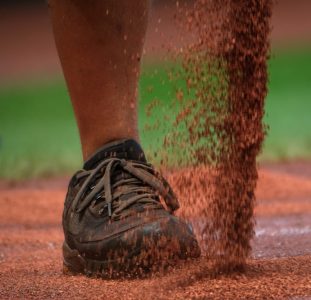
The grounds crew at Volunteer Stadium tries to dry the field and put down fresh, dry gravel after a downpour during the first inning of the game between Michigan and Texas at the Little League World Series at Volunteer Stadium.
DAVE KENNEDY/Sun-Gazette
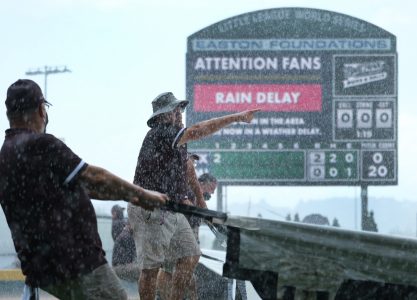
The grounds crew at Volunteer Stadium tries to pull the tarp onto the field during a downpour during the first inning of the game between Michigan and Texas at the Little League World Series at Volunteer Stadium.
DAVE KENNEDY/Sun-Gazette
When the rain kept pouring Monday afternoon, the grounds crew were easy to spot. They were the people in the maroon shirts and hats working in the worst of it to make the fields playable again.
As soon as the forecast predicts rainy weather, the crew tries to proactively get the large white tarp over top the baseball diamond, Rob Guthrie, turf and groundskeeper, said.
"I always keep an eye on my phone," Guthrie said.
Then there are days like Monday when the storms seemingly came out of nowhere, when even some of the crew left their rain gear at home because the chance of a storm was so minimal.
"It's rain after rain after rain," Guthrie said. "We're at the mercy of Mother Nature."
When the rain first started during the first inning of the Texas-Michigan game on Monday, the crew at Volunteer Stadium tried to get the tarp over the bases, but it didn't go into place quickly. The longer it takes to get on, the more rain gets on it, making it even heavier, he said.
"We got caught in a downpour," Guthrie said.
He is the only full-time staff member for the grounds. Normally, he has two college interns help him during the summer to prep the fields by fixing the mound, putting down the pattern and anything else that needs to be done. A core crew of about 20 volunteers, some of whom have been doing it for 25 years, arrive a few days before the games begin to finalize everything. This year, there are only 15 volunteers and, because of rain, they had only a day and a half to work.
The crew maintains Volunteer Stadium, Lamade Stadium and the three practice fields.
The fields are designed to drain quickly. There's a drainage spot every 6 feet that moves the water away. Once the rain finally stops, it takes about 45 minutes for the field to dry enough so the players can return.
"Safely," Guthrie added. "We don't want anyone to trip or fall or sprain an ankle."
The grounds crew does not just wait around once they can get the tarp on the field, though. They use brushes to move the water off the tarp, even while the rain still falls. By periodically brushing the rain into the grass, it allows the drains to work gradually. Some people just dump all of the rainwater from the tarp onto a field at once, but that takes longer to dry, he said.
Putting the tarp away is a decision made by the operations crew and meteorological staff.
The crew also uses squeegees, brushes or "anything soft" to get the water off the tarp. Their spot under the stadium has a wall full of tools to speed up the process.
Already this year has been "on the wetter side," Guthrie said. But it isn't the rainiest one the crew have seen.
"'17 or '18, that was a really wet year," he said. "The tarp came out 36 times between the two stadiums. That was a new record."
So far, the crew has only had to get the tarps out five or six times, but a normal year is only four or five times.
"A hot, dry year is better," Guthrie said. "Better control conditions. More playable."