
Matt Campbell’s honeymoon slate at Penn State this year
Trending
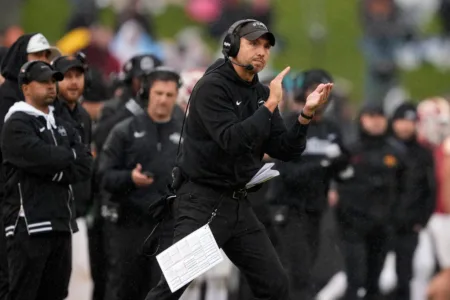
At the onset of Penn State's August media day, first-year coach Matt Campbell talked about how the Nittany Lions will approach the 2027 season and then quickly corrected himself in a Freudian slip of schedules.
In his initial season as Penn State coach, Campbell has been graced with the rare combination of manageable opponents and strategic timing that position his Nittany Lions for a very successful campaign in his first season.
That may not be the case next year, but this column will not put the cart before the horse. This season, Penn State hit the schedule lottery.
While no Big Ten schedule is considered a cake walk, Penn State's 2026 slate provides a path that is certainly more favorable than in previous years. The Nittany Lions open the season with a September tune-up tour against Marshall, Temple and Buffalo, three teams that do not carry the same national pedigree as a Power Five program.
The Lions' opening trio is one of the weakest non-conference slates in the nation.
There is no SEC heavyweight, no neutral-site showcase, no early-season measuring stick. Instead, Penn State gets three games that should allow it to build confidence and momentum, while avoiding an early loss that so often derails a promising season.
The Sporting News ranked Penn State as having the easiest Big Ten schedule in 2026, while Ohio State has the most challenging.
The early schedule gives Penn State a chance to build momentum and develop chemistry under new coach Matt Campbell after a major NIL roster overhaul. It provides the opportunity to work through any growing pains without risking an early season loss.
The absence of Big Ten powers Ohio State, Oregon and defending national champion Indiana cannot be overstated.
Penn State will play seven home games including conference matchups against Wisconsin, USC, Purdue, Minnesota and Rutgers. The schedule avoids consecutive back-to-back road games, while their trips to Michigan and Washington are spaced far enough to avoid any travel grind with the bye week conveniently arriving before the season's final push.
Granted, schedules do not win games by themselves but they can open doors providing teams a chance to contend if they can take advantage. The absence of conference heavyweights, a merciful nonc-onference lineup and a strong home-game advantage all combine to create a realistic and promising season.
In a conference where one loss can derail momentum and possibly a season, simply removing Ohio State from the equation changes the season's complexion. Michigan is still there, but the matchup arrives early, before attrition sets in. USC comes to Beaver Stadium for the annual White Out game, which is a far different challenge than flying crosscountry into Los Angeles. Washington is the lone long road trip and is spaced out enough not to create any travel football fatigue.
College football schedules are built four to six years out, but expansion forced the Big Ten to reshuffle. Penn State ended up on the right side of that reshuffle. The 2026 rotation does not guarantee success as nothing in this conference does, but what it does offer is a clear path for a solid shot at a playoff spot.
For a program that is often asked to climb uphill, 2026 should feel like level ground.
This schedule does not just allow