Katharine Williams Bennet: Feminist, librarian and local historian

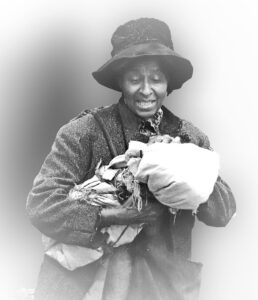
PHOTO PROVIDED Katharine Williams Bennet was a librarian and writer who joined the staff of the James V. Brown Library when it first opened in 1907.
Katharine Bennet (1885-1968) was a librarian, a local historian and a writer. One of her more intriguing works, entitled “Lo, the poor Spinster by One of Them,” begins “I am a spinster and in as far as I know, endocrinally speaking, normal. I am also a virgin — my reasons for as being are personal — and I shall not discuss them. But I wish to protest against the commiseration for and general misunderstanding of, the unmated female in the literature of feminism.” When Janet Hurlbert and I, co-authors of this Lycoming County Women series, came across this piece, we could not help but want to know more about her life and work.
Bennet was very knowledgeable about local history. She wrote a series of articles for the Williamsport Sun and for the Journal of the Lycoming County Historical Society, a number of which were about women.
Bennet’s entire library career was at Williamsport’s James V. Brown Library. She was a member of the original staff when the library opened in 1907, starting out as the children’s librarian. In 1921, she was appointed Assistant Librarian to O. R. Howard Thomson, and after his death in 1943, she became Head Librarian. She held that position until her retirement in 1960 at the age of 74, at which time she had served the library for 52 years.
When I saw the date of her retirement, it came back to me that Bennet must have been the one who hired me, a senior at Williamsport High School, to be a page in the library. It was my first library job and set me on the path to a career in librarianship.
Bennet was the daughter of John Andrew Bennet and Emma Williams Bennet of Fairfield Township and Montoursville. She attended Montoursville public schools and the former Muncy Normal School. It appears as if she may have taught school after she graduated from Normal School, but we cannot verify that. After she accepted a position at the Brown library, she took extension courses in library science at Pennsylvania State University and the University of Chicago.
Descendant of one of Williamsport’s earliest settlers
Bennet is a descendant of one of Williamsport’s oldest families. Her great-great-grandparents were Amariah Sutton (1728-1817) and Mary Letitia Haines Sutton (1734-1781). Amariah Sutton was one of the earliest landowners in the West Branch Valley, after coming here from New Jersey in 1770. Sutton was also one of the few Williamsport settlers of the time to own slaves. The large parcel of land he owned, acquired by patent from William Penn, was on the east side of Lycoming Creek. According to the Lycoming County Historical Society, his log cabin was used as a preaching place for early Methodist circuit riders.
Katharine Bennet’s great-grandparents were the Suttons’ daughter Letitia Sutton Williams (1774-1862) and Joseph Williams (1770-1841). Joseph Williams, a New Jersey native, was a civil engineer, and he was hired by Michael Ross to survey Ross’s riverfront farm and divide it into town lots. Some historians speculate that Williamsport, which was officially founded in 1795, was named after Joseph Williams.
‘Lo, the poor Spinster’
Returning to Bennet’s feminist writing, we were not able to determine where, if anywhere, the piece was published. But this spirited defense of unmarried, independent women makes clear that Katharine Bennet was not shy or apologetic about being an unmarried woman.
She went on to say, “Time was, when marriage was a woman’s only destiny. Failing that, she became a burden to society and led a parasitic life. Few positions were open to her, and such as were, brought with them a train of humiliations.”
Writing on behalf of independent women such as herself, she asked if antifeminists “mistake woman’s economic freedom as a substitution for woman’s erotic impulses?”
In addition to carrying out her library responsibilities and doing research and writing, Bennet was involved in the community on many different levels. Within the library community, she was active in the Pennsylvania Library Association and other professional organizations. She was commended for being one of the first to acquire paperback books for the library in 1947. These paperbacks, mostly mysteries, westerns, and romance novels, were portable and easy to carry. They had been introduced to servicemen and women during World War II.
Bennet was elected president of the Lycoming County Historical Society in 1930 and was, for a time, the curator. She was an officer of the Pennsylvania Society of Archaeology, and among the projects she initiated was researching and documenting the trails used by Native Americans in the area. An active member of the Lycoming County Chapter of the Daughters of the American Revolution, she traced her lineage to Andrew Bennet, who had served as a private in Capt. John Franklin’s company, Pennsylvania Service.
She was also involved in the music community, including the Community Concert Association. And she demonstrated her concern for Williamsport residents by serving as president of the Social Services Bureau.
After her retirement at the age of 74, Bennet’s health declined. She lived for a period of time at the Williamsport Nursing Home and then died in 1968 and was buried in Edgewood Cemetery in Loyalsock Township.
Bennet keeps history alive
The Bennet manuscript collection at the Lycoming County Historical Society includes her writings on the settlement of the West Branch Valley, the early days of Williamsport, the Civil War, and other interesting topics. She often incorporated her ancestors into the plays and articles that she authored.
In her column “Stories of the West Branch Valley,” which appeared regularly in the Sun in 1928, Bennet often featured women. “Preaching Quakeress” is the story of Mercy Cox Ellis, who was active in the ministry throughout the northeast and was a teacher at the Friends School in Pennsdale. Ellis’s home for a period was the Wolf Run House in Pennsdale, a station on the Underground Railroad.
Bennet dedicated one of her columns to Madame Montour, the native American woman who founded a village in what is now Montoursville. That piece is entitled “America’s First Feminist.”
Bennet also told the story of Rachel Silverthorne, a young single woman who traveled the countryside on horseback to warn Muncy residents of an imminent Indian attack when no men came forward to carry out the dangerous mission. And she wrote about Widow Catherine Smith, a munitions maker living along White Deer Creek, who had a boring mill in addition to a saw and a grist mill. Smith provided weapons to the local militias during the Revolutionary War.
Each of these women merits her own profile in an upcoming installment of the Lycoming County Women series.
Lifestyle News
James V Brown Library resumes Community Book Club program
The James V. Brown Library, 19 E. Fourth St., has resumed its Community Book Club program, hosted by Phoebe Wagner, ...

Dushore martial artist named Grand Master
Beavertown Museum’s display honors musician Davy Jones
BEAVERTOWN — The Beavertown Historical Society Museum could have chosen any number of musicians for its new ...
4-H Wildlife and Forestry Field Day coming in May
Penn State Extension will hold the 4-H Wildlife and Forestry Field Day, an event where youth from across ...

Man turns fitness into fundraising mission