
Reflections in Nature: Chance to see few seldom seen plants was worth the trip
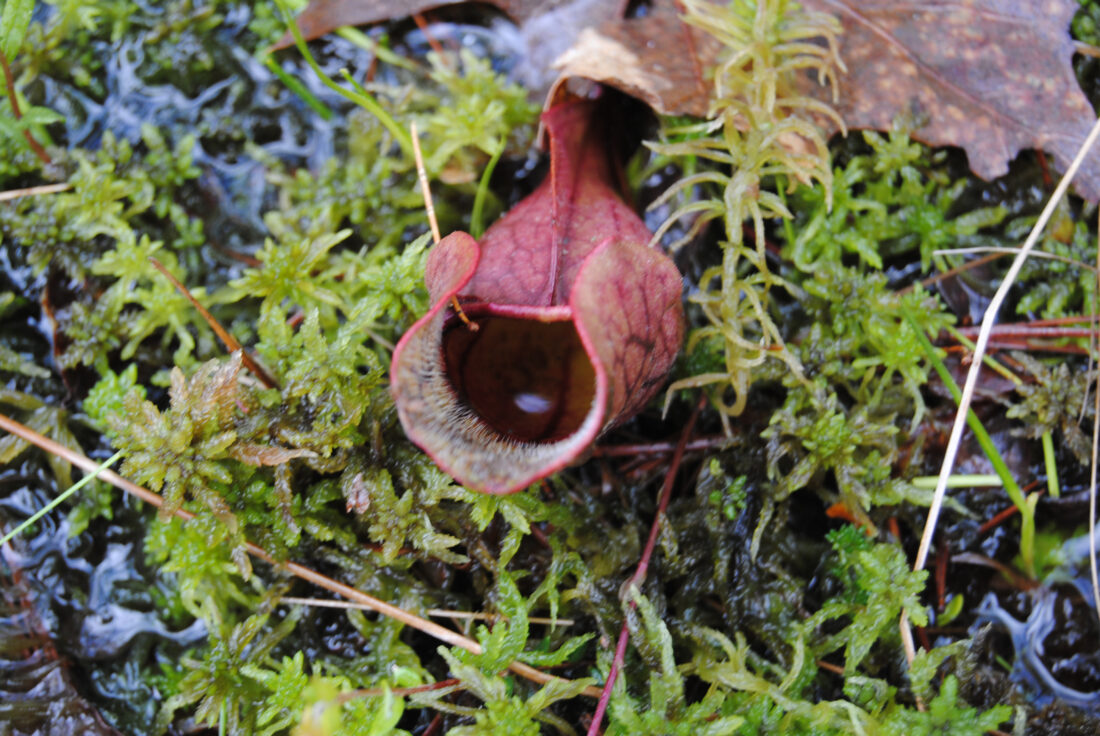
PHOTO PROVIDED Shown is a pitcher plant from Bill Bower’s recent trip.
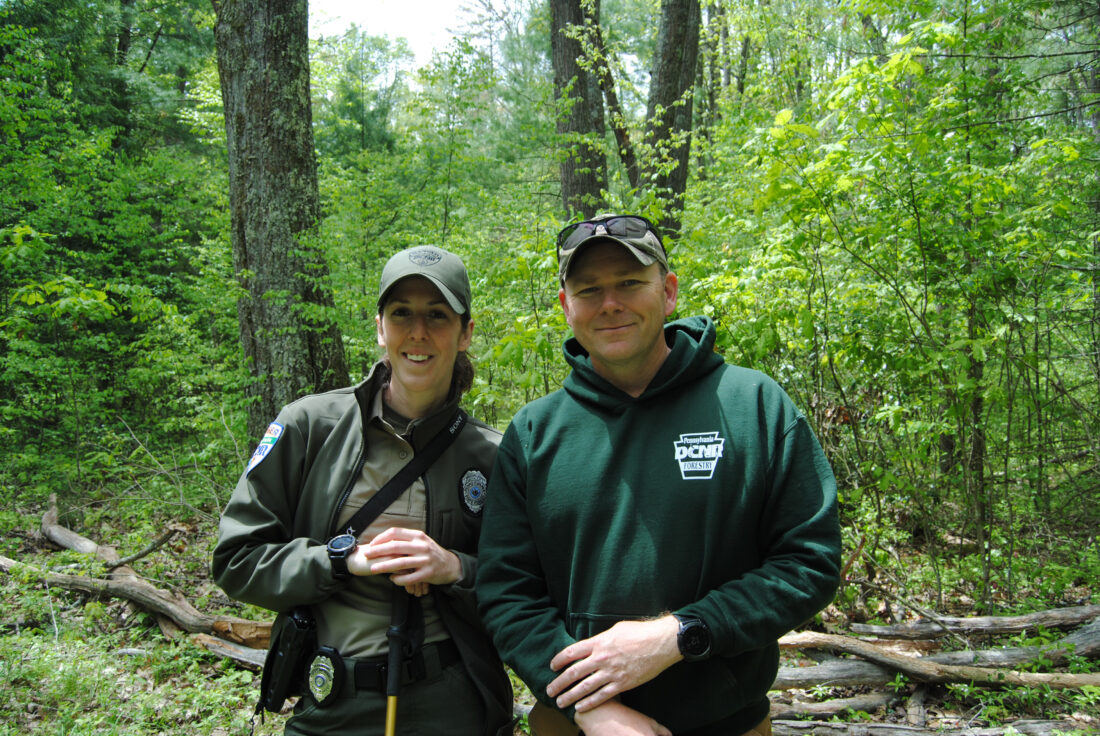
PHOTO PROVIDED Kara Swarthout, left, and Ron Warren pose for a photo together during Bill Bower’s recent trip to see a pitcher plant.
PHOTO PROVIDED Shown is a pitcher plant from Bill Bower’s recent trip.
PHOTO PROVIDED Kara Swarthout, left, and Ron Warren pose for a photo together during Bill Bower’s recent trip to see a pitcher plant.
Trending
Outdoor writers are always on the lookout for something of interest to write about. It was my lucky day when Kara Swarthout, a state forest ranger for the Department of Conservation and Natural Resources, sent me a letter concerning pitcher plants that she had found on state forest land and wondered if I would like to see the seldom seen plants.
I quickly accepted her invitation. In her letter, Swarthout wrote that this was the first time she had seen these plants and was very excited about the discovery. While doing some research on the pitcher plant Swarthout came across an article that I had written in the Williamsport newspaper entitled Carnivorous Plants in Pennsylvania.
She thought that the plants were ready to flower and would be glad to take me to the area where the plants were growing.
Although I had seen pitcher plants many years before, they were not flowering. So, I contacted Swarthout, and we set up a time to meet. Mary Alice asked if she could go along also; however, neither of us are up to a strenuous hike in Penn's Woods. Swarthout assured me that the hike would not be long. After a few calls back and forth, a day and time was set.
We met Swarthout at her district office in Wellsboro. Although the day had started out quite chilly, the sun appeared through the clouds and warmed the day. After meeting Kara at her office, we followed her for about 40 minutes and then took a dirt road to the top of the mountain. We stopped, parked, got out and looked at the area. By then we had been joined by another ranger, Ron Warren.
After a short conversation, including Swarthout mentioning rattlesnakes in the area, we began putting on our hiking boots. After a short walk on the road, Swarthout headed into the woods, saying that we didn't have far to go.
We did not go far into the woods before the ground became squishy. A little further and the ground was covered with water and as we reached our destination the water was quite deep. Swarthout was surprised since it had not been like this when she last visited; however, we just had three days with continual rainfall.
We stood there pondering what to do and then decided we were so close and what did it matter if our boots get wet.
There were humps of plants that appeared as if they could be dry ground, so we decided to step from one hump to another. However, they were not what we thought. Although the water was deep the mud was deeper, and our boots sunk out of sight. The mud was so deep that once your foot sunk in the mud it was almost impossible to pull it out, and when you were able, the other foot would disappear. Mary Alice fell on one knee and Warren had to rescue her. My wife was positive that we were in quicksand.
From this point on Warren and Swarthout each had the job of keeping two 86 -year-olds from falling into the muddy water. We were thinking we should turn around when Kara, saw one of the pitcher plants. Then, as we looked closer, we noticed the plants all over the area ahead of us. After taking pictures we headed back to dry land. Although the trip back was easier, I fell on one knee and could not pull myself back up, and Warren had to rescue me.
This was certainly a fun trip.
Mary Alice and I are still laughing when we talk about the day. It was one of those trips made on a perfect spring day, with two very nice young forest rangers that will remain in our memory banks.
And thankfully, we saw no rattlesnakes.
We were wearing wet and muddy jeans and boots on our trip back home. It was past lunch, and I was hungry. Mary Alice told me that no way was she going into a restaurant looking like she did. She wanted to go to a fast- food drive through and eat in the truck; however, I convinced her that no one would know us in Mansfield, and she agreed to go into the restaurant.
Well, there were three occupied tables, and we knew the occupants of two of the tables. After being a game warden for 35 years, I often went into a restaurant looking as if I had just come out of the woods, and it never bothered me. Yes, Mary Alice was embarrassed.
In Pennsylvania, we have three carnivorous plants, the pitcher plant, sundew and bladderwort. Each has a special way to trap insects. The pitcher plant grows in areas (bogs and swamps) where very few other plants could survive because these places have a very low nitrogen content. The pitcher plant can withstand this low nitrogen condition because it is a carnivorous plant and uses small insects to supplement its diet.
Small insects are attracted to the plant because of a sweet substance on the leaf's edge. Inside the hollow leaf are hairs that point downward so that once an insect crawls on the inside of the leaf, it cannot escape. Located in the bottom of the leaf is a pool of liquid, which contains rainwater with a high number of enzymes produced by the plant.
When an insect falls into this liquid its body is quickly broken down by the enzymes, and the plant absorbs it. The hollow leaves resemble a pitcher, giving the plant its common name as the pitcher plant.
Bladderwort grows in water and lacks roots and usually has a horizontal floating stem bearing either simple or divided, leaves. Small carnivorous bladders produced along the stem can range from a dark color to being transparent. If a small insect triggers the bristles that project from the surface of the bladder door, the trap suddenly opens, and, with a quick inflow of water, the insect is drawn inside.
The door closes quickly, and the animal is digested. Within 15-30 minutes, water passes out of the bladder, and the trap is re-set. In Pennsylvania, we have 11 species of bladderwort, with five of these considered rare.
Pennsylvania is home to two native sundew species. This plant's name comes from its leaves. Each leaf's surface has attached tentacles, which are covered with glistening droplets that appear as dew; however, these droplets are a mixture of sticky substances and digestive enzymes secreted by the plant's tentacles. After a small insect lands on the leaf's sticky substance, it becomes unable to escape, causing the tentacles to bend and imprison the insect.
The enzymes in the dew will begin to dissolve and reduce the insect to amino acids and nutrients that can be readily absorbed by the plant. Once the meal is completed the leaves will re-open and the tentacles will reset.
Bill Bower is a retired Pennsylvania Game Commission Wildlife Officer. Read his blog and listen to his podcasts on the outdoors at www.onemaningreen.com.