
Taking some time to appreciate ravens
Trending
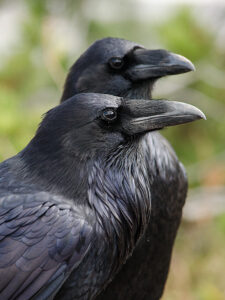
The common raven is one of my favorite birds and I am thankful that raven populations have increased in recent decades. While historians believe ravens were common throughout the Mid-Atlantic region centuries ago, persecution and especially the widespread destruction of our forests during the lumbering era resulted in almost total extermination of the species.
At some point after the woodlands regenerated, ravens began repopulating Penn's Woods and the population has steadily expanded since the late years of the 20th century.
Common ravens also breed throughout the western states, Alaska and most of Canada and Mexico as well as much of Asia and Europe. The only other raven species in North America is the Chihuahuan raven, a smaller species found in hot, dry grasslands of the southwestern states and Mexico.
Although most abundant in forests in the PA Wilds, common ravens are increasingly seen or heard and even nesting in and near our towns as their population grows. Although I don't notice them every day where I reside in Williamsport, I regularly observe one flying overhead and occasionally alighting in a tree.
While some folks would object to considering ravens as songbirds, the fact is that the common raven is North America's largest passerine species, similar in size to a red-tailed hawk. Males and females are roughly the same size -- from 22 to 27 inches in length and from one-and-a-half to more than three pounds in weight -- and with a wingspan of over four feet.
I love to watch a raven fly. Its powerful, almost effortless, wingbeats are mesmerizing.
Fred J. Aslop III, author of "Birds of the Mid-Atlantic" states it well: "This magnificent flier is the aerial equal of hawks and falcons…" and "If any bird truly enjoys flying to the point of playing in the air, it must be this raven."
Unlike crows, ravens can soar high into the sky like a raptor and can be quite acrobatic in flight, even doing somersaults. Soaring and flight games happen most often during courtship. You can also find exciting videos online of ravens and peregrine falcons threatening and evading each other.
It's easy to distinguish between a crow and a much larger, heavier raven when both are in your field of view, but when I spot a single and silent large black bird in a tree or in flight, I'm not always sure. Ravens have thicker bills, shaggy throat feathers, and their tails are more diamond-shaped or wedge-shaped than the fan-shaped tails of crows. While both ravens and crows make a variety of calls, the typical calls are quite different: a deep croak from ravens and caw-caw-caw for crows.
Ravens were revered by many Native American tribes, especially those near the Pacific Coast, yet were also recognized as a trickster. The Haida people believed that a raven transformed into a baby human in order to set free a powerful light that the human parents kept only for themselves -- and this is how our sun came to shine throughout all of Earth.
Like crows, ravens eat almost anything including carrion, insects, rodents, human garbage and much more. They also dine on bird eggs and nestlings, so it's no wonder that crows vigorously harass passing ravens as they do raptors. Ravens mate for life and have one brood per year.
They nest on cliffs and in trees and sometimes on bridges and other human-built structures, including Penn State's Beaver Stadium. I was pleasantly surprised to learn that in recent years, nests have been documented in both Philadelphia and New York City.
Ravens are one of the most intelligent bird species, described as fast learners and good at problem-solving. University of Vermont biology professor emeritus Bernd Heinrich wrote two intriguing and very informative books about ravens that are well worth your time if you want to explore observations that portray the intelligence and behaviors of ravens in detail: "Ravens in Winter" (Summit Books, 1989) and "Mind of the Raven" (HarperCollins/Ecco, 1999).
A high school field biology course initiated Green's lifelong interest in the natural world. Since 2003, Green has significantly shrunk his lawn by adding a variety of native plants to his yard in Williamsport with the goal of attracting birds and other wildlife. He has authored a Gardening for Birds article for the Lycoming Audubon Society newsletter since 2008.