
State Department of Agriculture reminds residents to be on the lookout for the spotted lanternfly
Trending
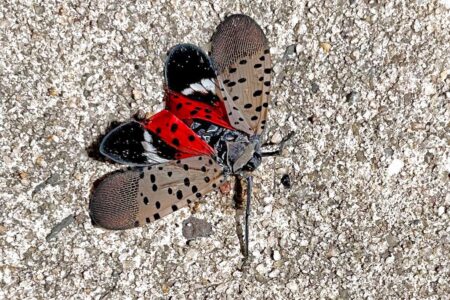
The State Dept. of Agriculture is once again reminding area residents to be on the lookout for the invasive Spotted Lanternfly.
In July 2025, the department received 2,121 public reports of lanternflies across the state, and 101 from Lycoming County alone, according to Press SecretaryShannon Powers.
"They are mostly adults right now, so people are really noticing them much more since they're at their peak," she said.
"We are still recommending that people squish them or stomp on them, to try to prevent them from laying their eggs and hatching a new brood of insects next spring," Powers said.
Pregnant or gravid lanternflies lay their eggs in the fall, and then die off, leaving the eggs to hatch in the spring, according to Powers.
"What you want to do is prevent them from laying their eggs," she explained.
Along with killing any spotted lanternflies that they come across, residents are encouraged to then report the siting to the department.
The department of agriculture website has several resources available for helping potential reporters positively identify the bugs as spotted lantern flies.
"When a report is made, department staff follow up by first confirming whether the insects sighted were lanternflies," Powers said.
"If lanternflies are confirmed, inspectors survey the area to determine the extent of the population, and then treat for lanternfly control as appropriate and necessary," she said, while stressing that currently, people should be on the look out for the lantern flies themselves, and less so their egg masses.
If someone comes across an egg mass, they should immediately scrape it from the surface and destroy it.
"They have a really distinct look to them, a bit like dried wood putty, or dried gum on a sidewalk," Powers said.
"They lay their eggs in tiny little rows of 30 to 50 eggs, and then cover them with a coating," she explained.
"So if you scrape one, you're preventing 30 to 50 insects from hatching next spring," Powers said, adding that it can sometimes be difficult due to how high up on trees and buildings the eggs may be.
Unlike their native land where they congregate along food sources, the pesky pests often end up on whatever they run into first.
"They're the type of insect that we call a plant hopper," Powers explained.
"They can only fly in one direction, and not very far, so they catch wind currents and sail a bit," she said.
Due to their inability to fly great distances, their prime mode of travel is hitching along on vehicles traveling from state to state or even country to country, some of particular concern with the current influx of travelers visiting for the Little League World Series.
"You want to keep any new invasive insect or disease from spreading, so we've had national spotted lantern fly summits all along," Powers said.
"They don't just travel on agricultural products, they travel on anything, so they present a unique challenge," the secretary said, while noting that transportation via airplane luggage, while possible, is less likely.
"We focused our strategy on places that posed the greatest threat of spreading the insect, where people are coming from all over and then leaving and possibly taking the insect with them," Powers said.
"So we focused on places like around where the Little League World Series is played, the turnpike corridor, railways and highways and around amusement parks, both in treating around those venues and in doing outreach with the people who own and operate the venues, as well as the transportation industry," Powers said.
As in the past, the Department of Agriculture urges those traveling from one area to another to thoroughly check their vehicle for the pest and kill any that are found.
A particular area of concern is those traveling to the Erie area, the center of the state's grape and wine industries, which has been particularly affected by the bugs.
That industry alone supports 10,756 jobs, totalling wages of $518.2 million, and injecting $1.77 billion into the state economy annually, according to figures provided to the Sun-Gazette by Powers.
Additionally, the state ranks fourth in wine production nationally, making it a vital industry to protect from the spotted lanternfly.
"Grapes and woody vines have tended to be the most damaged, along with young nursery trees because of how they feed," Powers said, adding that, so far, the invasive species have not proven especially harmful to the state's hardwoods or field crops.
In recent years, several products have been developed to help private residents take on the pests around their own homes.
"We now have products that are labeled to kill lanternflies effectively and safely on your property, and you'll see in your big box stores and your nurseries, shelf tags that say that a product is effective on lanternflies, and you'll see that on the product labels, as well," she said.
"Because it was an invasive species, we didn't know what products you could use to safely control it, and safely is a key consideration," Powers stressed, urging those using the products to read the labels carefully, and consider whether they have pets or children in the household, or a water source nearby.
For more information on managing, or to report a lanternfly sighting, visit www.agriculture.pa.gov/spottedlanternfly.