Nearly 100-year-old County Farm could prepare future farmers
-
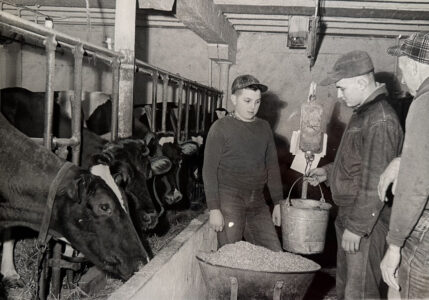
- Larry, left, and Gary Beach, center, assist their father Russell Beach, right, with the task of weighing food portions for each animal in hte dairy herd at the county farm in 1963. SUN-GAZETTE ARCHIVE PHOTO
-
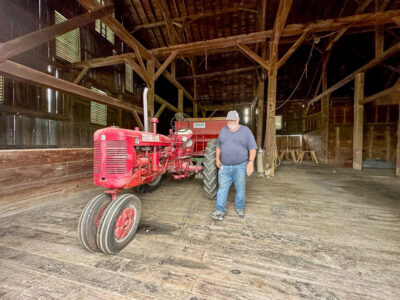
- Larry Beach has been an employee at the county farm since 1969. KAREN VIBERT-KENNEDY/Sun-Gazette
-
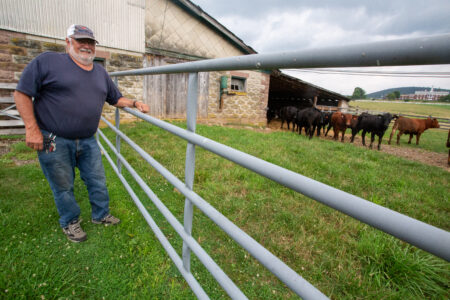
- Larry Beach has been an employee at the county farm since 1969. KAREN VIBERT-KENNEDY/Sun-Gazette
-
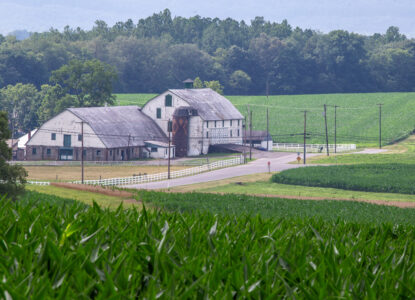
- The county farm sits at the Lysox Complex in Loyalsock Township. KAREN VIBERT-KENNEDY/Sun-Gazette
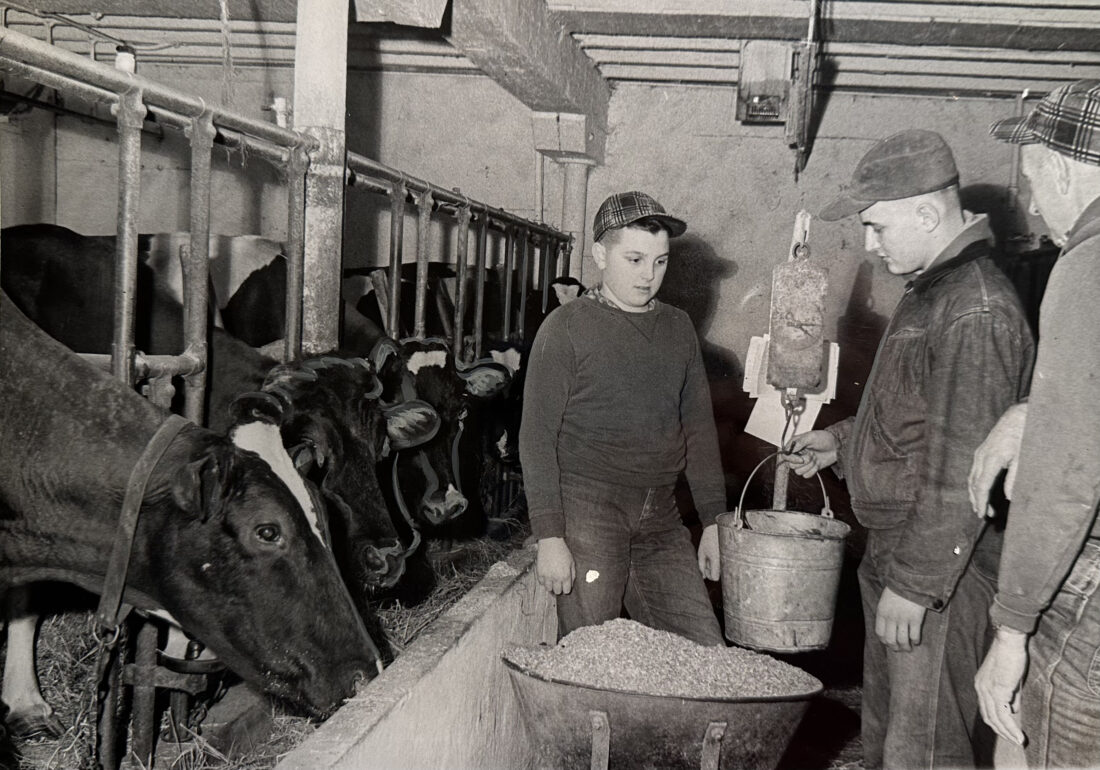
Larry, left, and Gary Beach, center, assist their father Russell Beach, right, with the task of weighing food portions for each animal in hte dairy herd at the county farm in 1963. SUN-GAZETTE ARCHIVE PHOTO
Things are really growing at the County Farm as summer is in full swing. Wait…what? The county has a farm?
If you’re like most people under a certain age, you had no idea that Lycoming County operates an actual working farm and you probably don’t know why it does or even where it’s located
The farm was established in the 1930s on land in Loyalsock Township, (even though it has a Montoursville RD 2 address), which had been owned by the Flock Brewery. The brewery went out of business in the early 1950s and the farm had been used to dispose of grains used in the brewing process, according to Larry Beach, the current county farmer.
Beach literally grew up on the farm. His father, Russell Beach, started as the county farmer in 1946. In 2002, he had 56 years with the county. Beach and his older brother Gary, who passed away in 2010, each worked on the farm part-time after their father retired. Beach, who is now 74 years old, began when he was 19, making him one of the longest serving county employees.
Although the position is considered part-time, during the spring, summer and fall, it tends to be more full-time. When needed, participants in the county’s work release program help Beach with jobs around the farm. Throughout his time as county farmer, Beach has also worked a full-time job at High Steel.
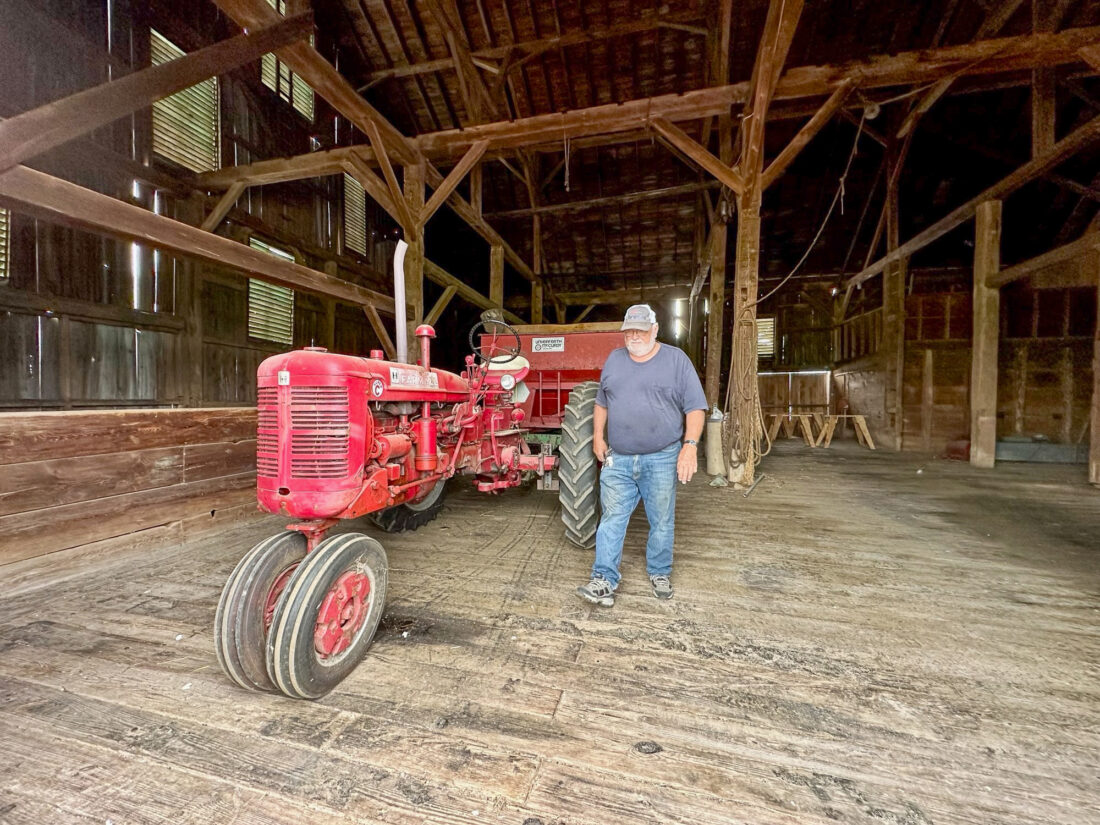
Larry Beach has been an employee at the county farm since 1969. KAREN VIBERT-KENNEDY/Sun-Gazette
In the 1980s, Gov. Richard Thornburgh had encouraged counties to divest themselves of their county farms, but Lycoming did not. In fact, Lycoming County is now the only county in the state that has a county farm.
At that time, the County Farm covered 213 acres. Today, it is about 150 acres.
In its early days, the farm provided much of the food for the nearby Lysock View Nursing Home, which was also owned by the county, and for the Lycoming County Prison.
There were dairy cattle, which produced the milk for those facilities, as well as chickens for eggs and meat, beef cattle and various vegetables that were grown on the property. Crops that provided food for the animals were produced on site.
“We had like 500 chickens…and we probably had a couple hundred pigs. We always had beef cattle and milk cows,” Beach said.
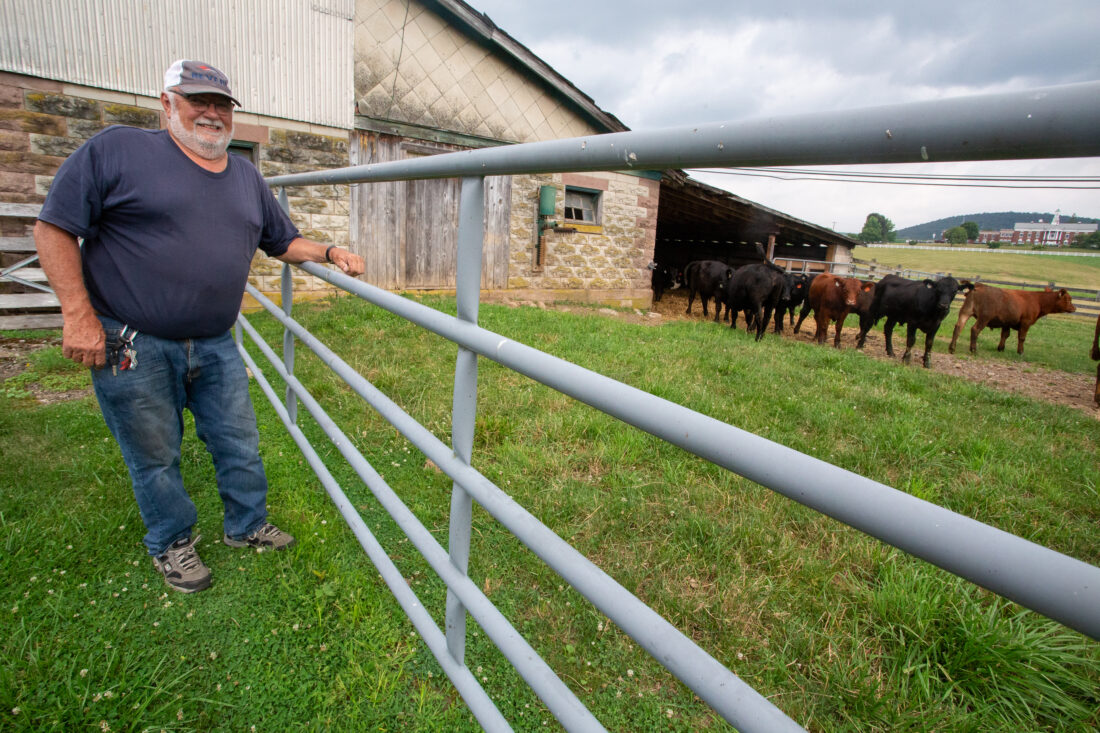
Larry Beach has been an employee at the county farm since 1969. KAREN VIBERT-KENNEDY/Sun-Gazette
The pigs and chickens were butchered and sent to the county home for processing, he shared.
“These fields were truck gardens,” he said, pointing to two fields above the barn, where in the past would yield tomatoes, carrots and vegetables.
“They took them up there and canned them at the home,” he said.
As the footprint of the farm grew smaller so did the crops grown until now there are primarily fields of corn, soybeans, hay, alfalfa and wheat. Although the farm can have up to 20 head of cattle, this year there are 17 beef cattle which will pasture over the warmer months and then be sold. The crops, except for wheat, which is used as a cover crop, and straw, which is used for the animals, are also sold for a profit.
The Lysock View facility houses Conservation District offices as well as Magisterial District Justice Gary Whiteman’s office and the local Penn State Extension offices.
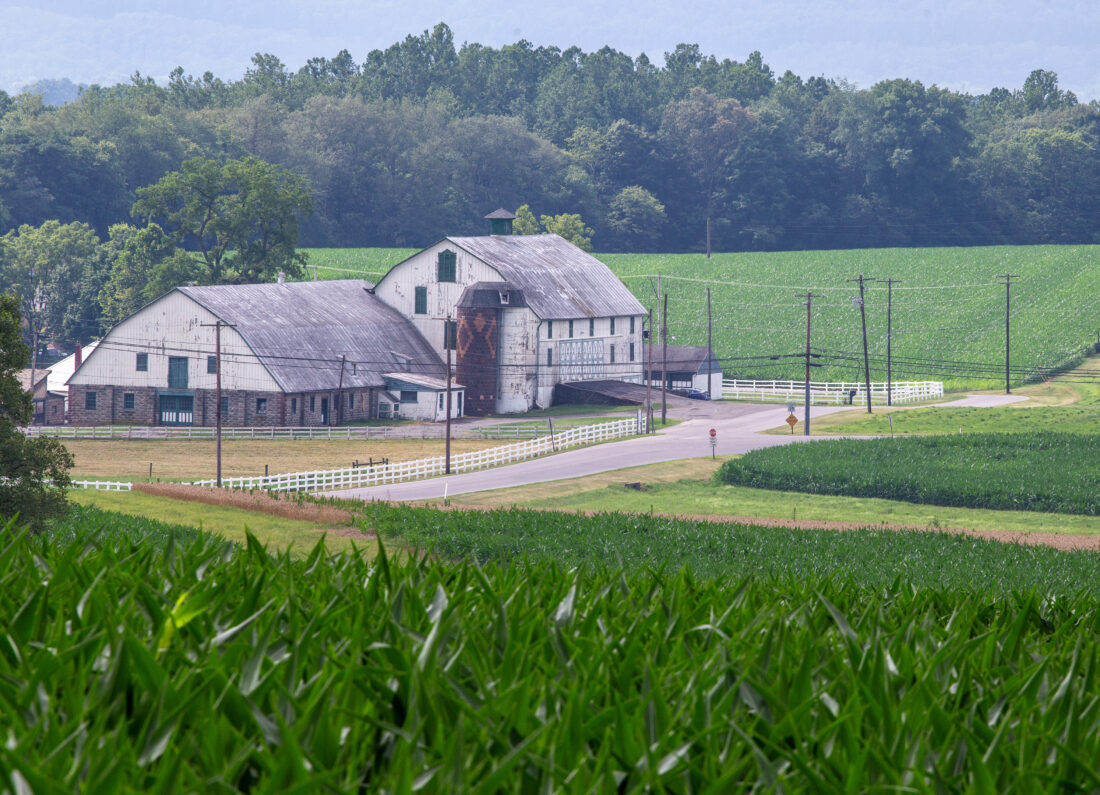
The county farm sits at the Lysox Complex in Loyalsock Township. KAREN VIBERT-KENNEDY/Sun-Gazette
The Lycoming County commissioners recently approved the members for an advisory committee for the County Farm. They included: Brett Bowes, Planning Commission appointee; Tom Hamm, Conservation District board appointee; Beth Miller, member at large; Cameron Koons, member at large; and Brett Taylor, member at large.
“They’re going to sit down with Larry to discuss the functions of the farm and how we can make it profitable — what might be a new direction to go and not just be doing the same status quo ,” said Commissioner Scott Metzger recently.
“There’s several people on that committee that are farmers themselves. Bring some ideas to the farm, do some renovations and what’s the best use of the property,” he said.
The farm offers a living classroom to illustrate and experiment with various land management and farming practices.
“It can be used as a major educational tool and that’s something the conservation district has wanted for a long time,” Metzger, who represents the commissioners on the conservation district, said.
Commissioner Marc Sortman agreed with Metzger..
“There is a ton of opportunity out there for teaching agriculture within our county,” Sortman said.
In the last few years, Beach said, the farm has been used by Penn State to teach various techniques used on farms.
A couple weeks ago they were teaching people how to build fencing, Beach said.
“Penn State was here last year and did some testing plots in the cornfields. They did their own spraying and stuff,” Beach said.
Penn State also set up a system where the cattle are rotated from one pasture to another for optimal grazing.
“We’ve used it for a lot of different things. We had a thing here for beef cattle last spring. They said there would be 20 to 30 people here. Well, there happened to be 80,” Beach said.
“A lot of people turned out for that and they asked a lot of questions. It was interesting that people were that interested,” he said.
“You know, small farms can make it … keep grazing cattle and stuff like that. It doesn’t take a whole lot of work to graze a small amount of cattle,” he added.
Even beyond having educational events, the County Farm features the Conservation Learning Trail, 1.2 miles that runs along the farm’s field ending up at a forested woodlot overlooking Loyalsock Creek.There are environmental education items along the trail, which is open to the public.
As different options for using the County Farm are explored by the commissioners and the newly-formed committee, one thing that Beach hopes is that the land doesn’t become building lots.
“You know you only get to sell it once. We’ve had some commissioners who thought they had to sell it. It doesn’t go back once you sell it,” Beach said.
“I just tried to take care of it,” he added.
Top News
Fourth of July holiday’s heat to be a challenge across eastern U.S.
CONCORD, N.H. (AP) — Heat as oppressive as British colonial rule is bearing down on the eastern U.S. heading into ...
Community celebrates opening of Lumber Yards baseball and softball complex in Williamsport
Lycoming County commissioner addresses gun violence in wake of teenager’s death
Following a week when another young person in the community lost their life to gun violence, Lycoming County ...
State trooper killed during vehicle inspection on I-81 in Schuylkill County, driver charged with homicide

Legal battle fails to remove two Muncy Township supervisors