‘As accurate as possible’: Data collectors take to Lycoming County’s backroads to assist with reassessment
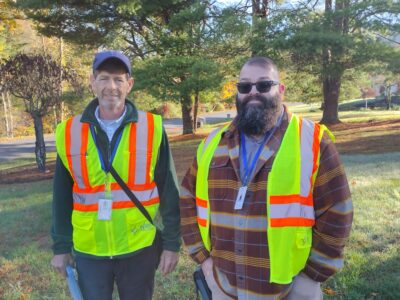
On a cold Tuesday morning, in late October around 8 a.m., a handful of information collectors hung around in a corner of the parking lot of the Weis in Muncy. Two men, supervisors Taitem Kretz and Zach Osborne, stood in the center of the group to explain the day’s work and to get feedback about the previous day.
After discussions of homes, jokes, work in general and cups of coffee going around, the workers, dressed in heavy coats, hats and gloves and very comfortable shoes, are each given stacks of papers that are held together with paper clips and plastic clamps.
Kretz and Osborne each gave a final pep talk and soon all of them head to their vehicles and soon on to Penn Street with a simple goal – that is to find the worth of as many home values of as many residences as they can in the neighborhoods of Picture Rocks.
These intrepid data collectors, not that dissimilar from census takers, have done this all over Lycoming County for the past year. The group, which is employed by Tyler Technologies, with offices all over the world, will continue to do so until 2027.
“We are contracted to collect data for all parcels including, but not limited to, new construction, parcel splits, combinations and deactivations through the end of 2026,” Kretz said.
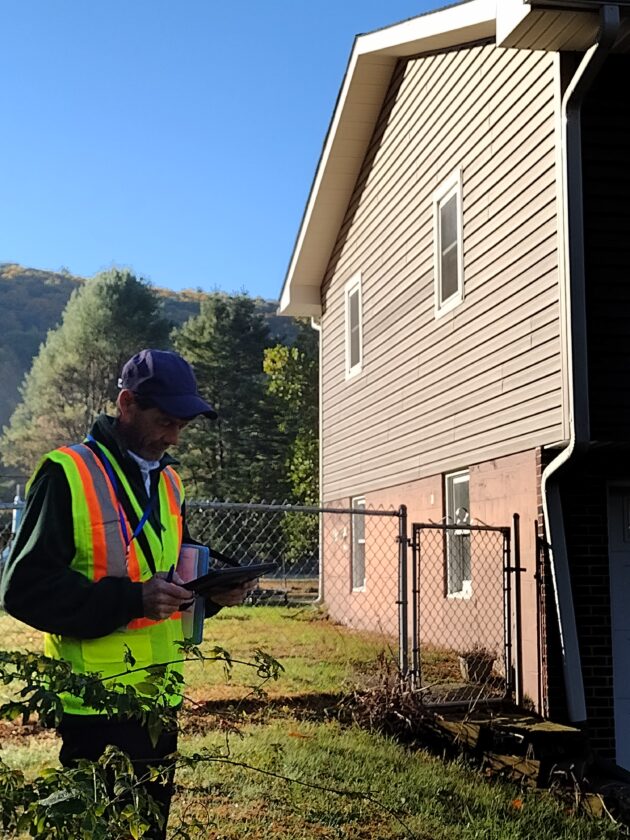
In a ride along with Osborne, and information collector Brad Cranston, he said the reason for the reassessment is because it is required by the “law of the land.”
“If you look at Article Eight section One of the Pennsylvania Constitution, it talks about…the uniformity clause,” he said.
According to the Pennsylvania Legislature web site, Article Eight and Section One said, “All taxes shall be uniform, upon the same class of subjects, within the territorial limits of the authority levying the tax, and shall be levied and collected under general laws.”
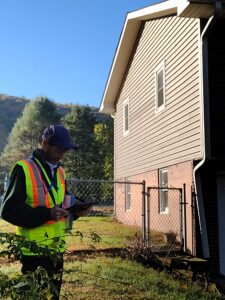
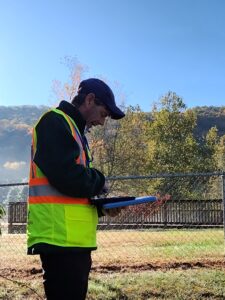
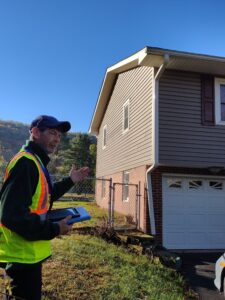
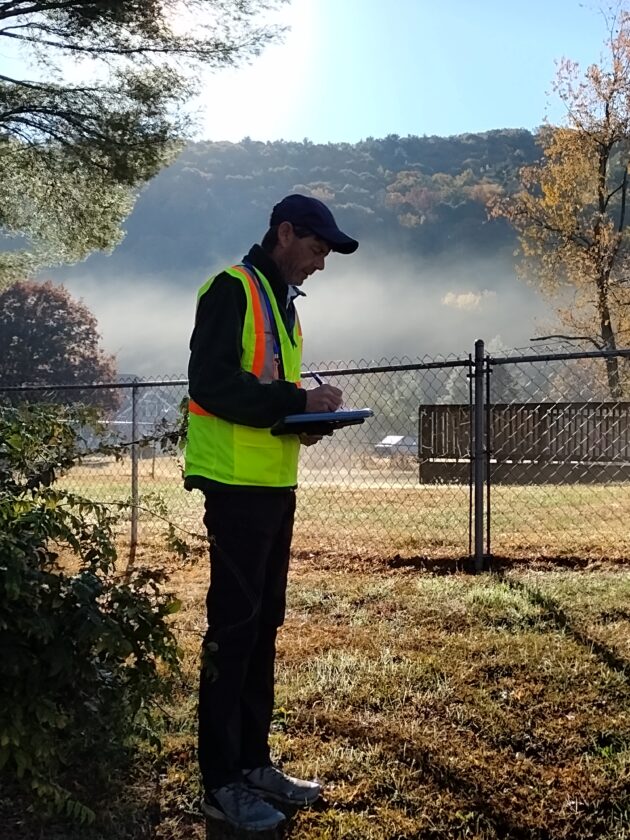
Appraisers like Cranston have to go to each home dwelling in Lycoming County, measure the houses outdoors, along with all buildings on the properties, ask about improvements, and get general information about the home.
“Our goal is to be as accurate as possible of course, and if you’re being accurate you should be
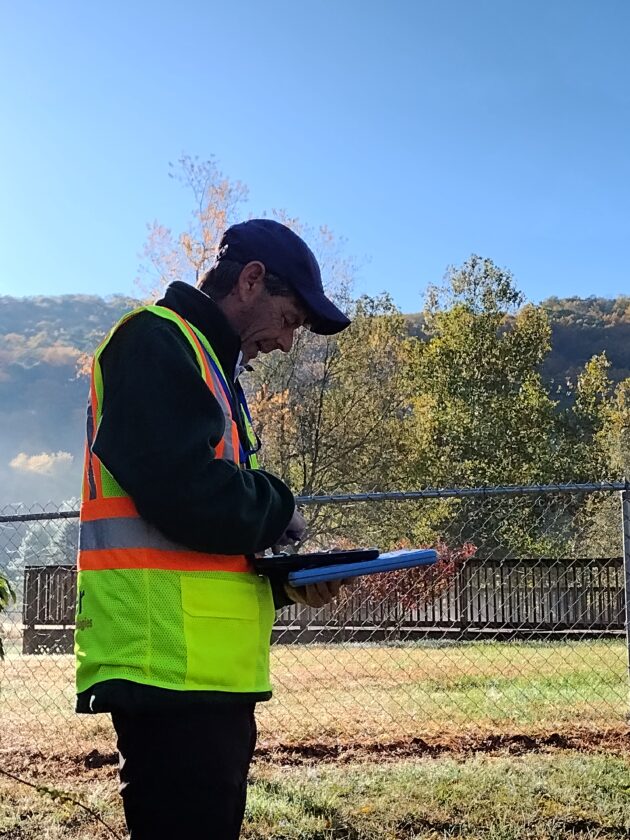
consistent,” Osborne said.
He added, “In an area like this (Picture Rocks), (each data collector’s goal is) 25 (homes) would be above our expectation. In areas like Picture Rocks and Montoursville, appraisers would reach 26 to 32 houses a day. In more rural areas, like Pine Creek, the goal is 18 to 21 homes.
“If the tenant (who occupies rental properties) wants to give us information, we’ll take that information, but…the data mailers are sent to the owner (of the property about) the initial values. They’re the one that gets all the information about it and if there’s a correction that needs to be made by the owner,” Osborne said.
Osborne was asked if a homeowner can refuse an information collector’s request to measure the homes on the property?
He said collectors have been denied access to property in the past and it is within their rights. Usually homeowners are afraid they are there to encroach on their rights or raise taxes, but Osborne said that is not the case.
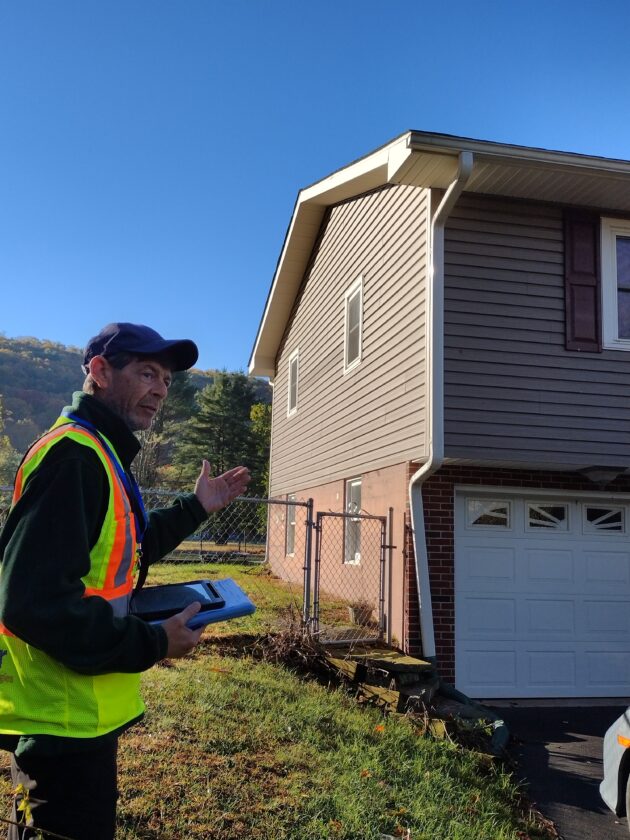
The collectors are “not here to raise taxes. They’re no part of that. They’re just here to reassess,” he said.
Cranston, who was busy measuring the homes, said he will sometimes just have to look from the road and make notes that way.
He explained that all legal means of finding the information are used. He said that he even has a subscription to a hunting app that gives the exact addresses and property lines. He will use that as he collects information.
To make sure Tyler Technologies has the most accurate information in their surveys homeowners are sent mailers with information about their house and property and given the chance to make sure the information is accurate. If not, it can be corrected.
Cranston said that “The interview with the owners (are) pretty quick. And, actually, people are surprised how quick it is.”
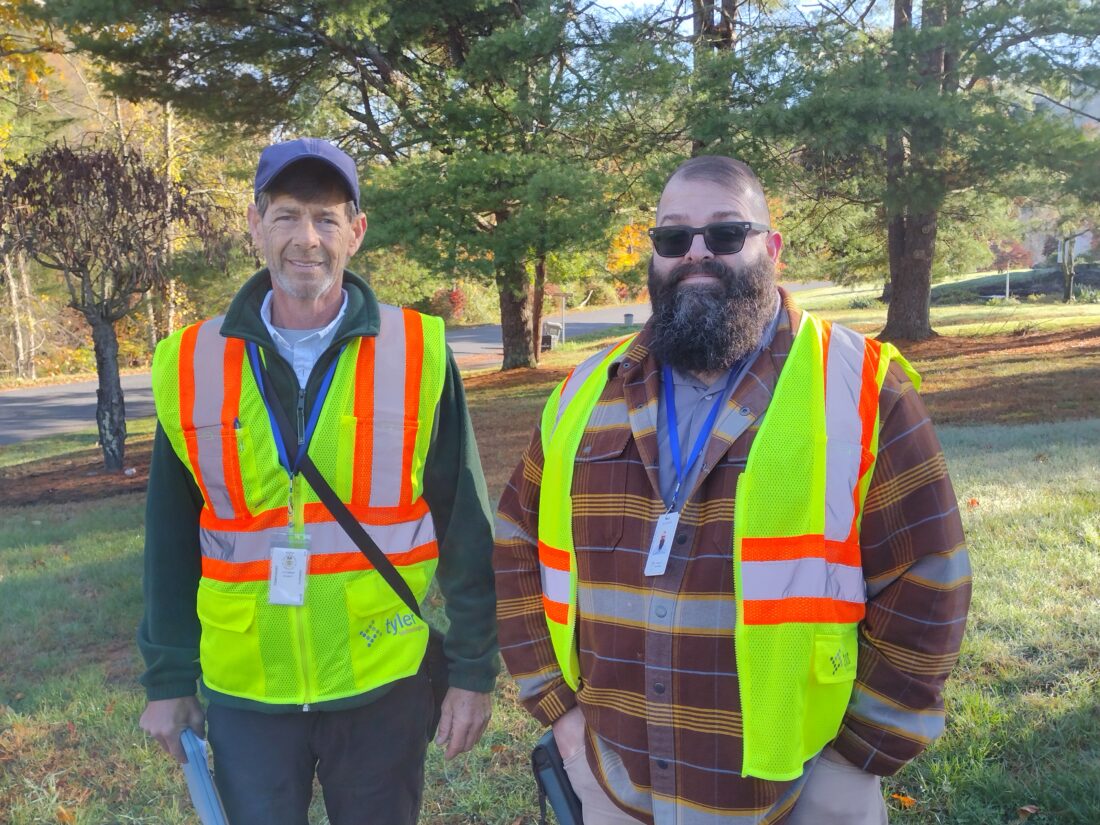
“The more points of data we can get, the more accurately we can compare homes,” Zach said. “The name of the game is uniformity. The more of those characteristics we can get the more uniform we can be in our values.”
When asked if this is an activity that can be done remotely, he said that is not possible.
“We got to do that on the ground,” Osborne said.
This is why “on the ground” collectors are needed. Of course, the collectors need to travel.
Tyler Technologies “does reimburse us for our mileage,” Osborne said.
But for long distances, he said it was more cost effective for Tyler Technologies to rent apartments for their surveyors. Hotel and lodging accommodations proved more costly.
For nearly two years this reassessment has been underway in Lycoming County.
In a document on the Lycoming County Commissioners’ site it asks, “Why Does Lycoming County Need a Reassessment?”
The “reassessment is needed when the property values that are used to make up the tax base become inconsistent, unfair, or too old to reflect the current trends and changes in the actual value of real estate.”
It stated that it “the legal responsibility of the Board of Assessment to establish the fair market value of all real estate within the County. This is done to establish a base-year market value for real estate tax purposes. The last county-wide reassessment in Lycoming County was completed in 2004.”
This is where the Tyler Technologies data collectors come in. Osborne pointed to an online brochure that explained the specifics of what is allowed and not allowed during a reassessment information gatherer’s visit.
It said (at empower.tylertech.com/Lycoming-County-Pennsylvania.html) that when the inspectors will check for when: the year the house was built, total number of rooms, the home’s heating and cooling system, if the attic and basement are finished and the physical condition of the interior.
However, the appraisers will not ask to come into the home.
“Is the data collector allowed to photograph the interior of my home? No,” said the second online brochure. “Our staff will never ask to enter your home. Data collectors will ask questions at the door and with permission to take exterior measurements of buildings and improvements.”
And that is what Cranston did.
At one house, he knocked on the door. The owner came out and he was a middle-aged man and polite. He looked like he had taken the day off dressed in shorts and a t-shirt. He nodded at Cranston and Osborne.
Cranston explained who he was and what he wished to do. He quickly gave the homeowner information to show he was there on official business and not to solicit anything. After a brief exchange, the men nod to each other and smile.
Cranston then walked along the side of the house with a laser measurer. He was able to point the device and instantly get an accurate number.
“Some people use these laser measurement devices, but we still have people who use tape measures,” Osborne said.
After several minutes, Cranston walked around the house, went into the backyard, measured the shed and made notes about the inground pool, he was satisfied with the information he retrieved.
“Okay,” he said to Osborne. “We are done here.”
Osborne smiled and said. “Well, on to the next house.”
And onwards the data collectors went, their goal was to help Lycoming County understand what it is worth.
Top News

Muncy Area fire chief sounds alarm on solar array design to date

‘As accurate as possible’: Data collectors take to Lycoming County’s backroads to assist with reassessment
Hughesville council approves property tax increase
Hughesville Borough Council at its recent meeting approved a 1.25-mill tax increase as part of next year’s $1.3 ...
Amended term-limits ordinance passes for Williamsport officials
Engineer details 2026 projects for City of Williamsport