Message of Penn College Dream Week program – there’s still work to be done
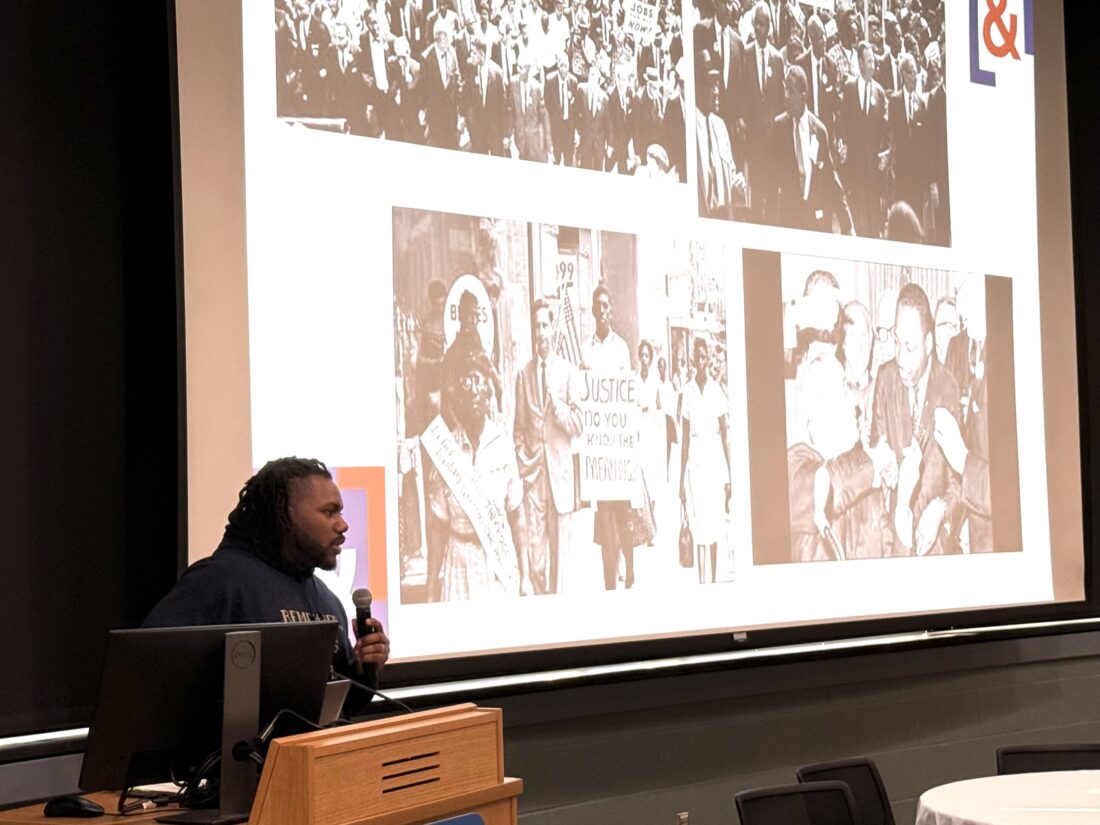
As “Dream Week” winds down and the service projects are completed, a thought-provoking program at Penn College brings into focus the work that still needs to be done to bring racial equality to communities across the country.
Interspersed amongst the poetry readings and newspaper clippings projected on the screen detailing the turbulent history of the Civil Rights movement, the Lunch and Learn program at the college offered the challenge, “What strategic advice would you give Dr. King on how to effectively protest in 2026?”
The program which was organized by Dr. Nate Wooks, executive director for student wellbeing and inclusive excellence, featured a discussion facilitated by Chuck Crews, associate director of secondary partnerships.
“We’re doing this today, not in celebration and a memorandum that the battle was won, but because the battle is still going on,” said Crews.
“We are here because we want to do the work. You’re doing the work by being here. You’re doing the work in your everyday lives – every smile that you give, every handshake, every email you return, you are doing the work,” he said.
The approximately 40 people attending the event, heard the voices of African American poets read by current and former students at the college. The words of Maya Angelou, Langston Hughes and Michael S. Harper, to name a few, spoke to the struggles for racial equality that Dr. Martin Luther King Jr. lived and worked to change. He was a voice for peace in a time of violence.
Harper’s haunting words “Can’t find what you can’t see, can you,” from his poem “American History” which was read by Ian Mwaura, president of the Black Student Union at the college, draws the comparison of the death of four young Black girls in an Alabama church bombing in the 1960’s to the loss of life of slaves on their way to America. Harper’s words resonated as the images of the girls were shown on the screen behind the speakers.
Woods reminded everyone that civil rights work is still going on today, but in some instances it looks different, like in programs that help mentor first generation students at the college.
“So mentoring this man over here and working relationship with this sister over here, your family and I are connecting and being a huge connection for us here in the community. All of this is on purpose,” Woods said.
“The whole Dream Week set up, that’s on purpose…The things that are happening this week are not out of luck, but it’s people sitting down being very intentional and all of the things that we see in these images of people fighting for rights, don’t think it was just a bunch of Black people sitting together. Those black and white people from different walks of life that were very intentional about saying that these are some rights and maybe it starts with these black rights, but women need rights, LGBTQ need rights. Like, all of these rights are needed and necessary and people came together,” he said.
Crews also talked about the importance of training the next generation to continue the fight for change.
“You start to see, as we get older we move from the front line a little bit further back. We’re still fighting, but we can’t fight the same way, but we’re still fighting, and we take a little step, first step, constantly grooming the next generation,” Crews said.
“Dr. Woods has been talking about mentorship. He’s grooming the next generation. Mom, you’re grooming the next generation. Dad, you’re grooming the next generation. All of us here are grooming the next generation. And why do we have to do that-because times change,” Crews said.
The answers Crews got to his discussion topic reflected that change. Almost everyone agreed that today King would have to utilize social media to get the word out but they also agreed that it’s important to meet people where they’re at and having a common goal and sharing that with everybody else.
Top News
Message of Penn College Dream Week program – there’s still work to be done
Construction on residential treatment facility to begin early spring
The Clinton-Lycoming Joinder Board approved an amendment to a re-investment agreement with PCS-Mental Health which ...
Video: Winter storm Fern
As forecasted, the weekend winter storm swept into the region early Sunday morning blanketing the area with heavy ...
Area sees heavy snowfall as storm system moves through
No paper delivery slated for Monday as snowstorm draws near
As of Friday, there was an increased confidence by forecasters with the National Weather Service in State College ...