‘That’s what we do’: New leadership for Lycoming County landfill shares next steps
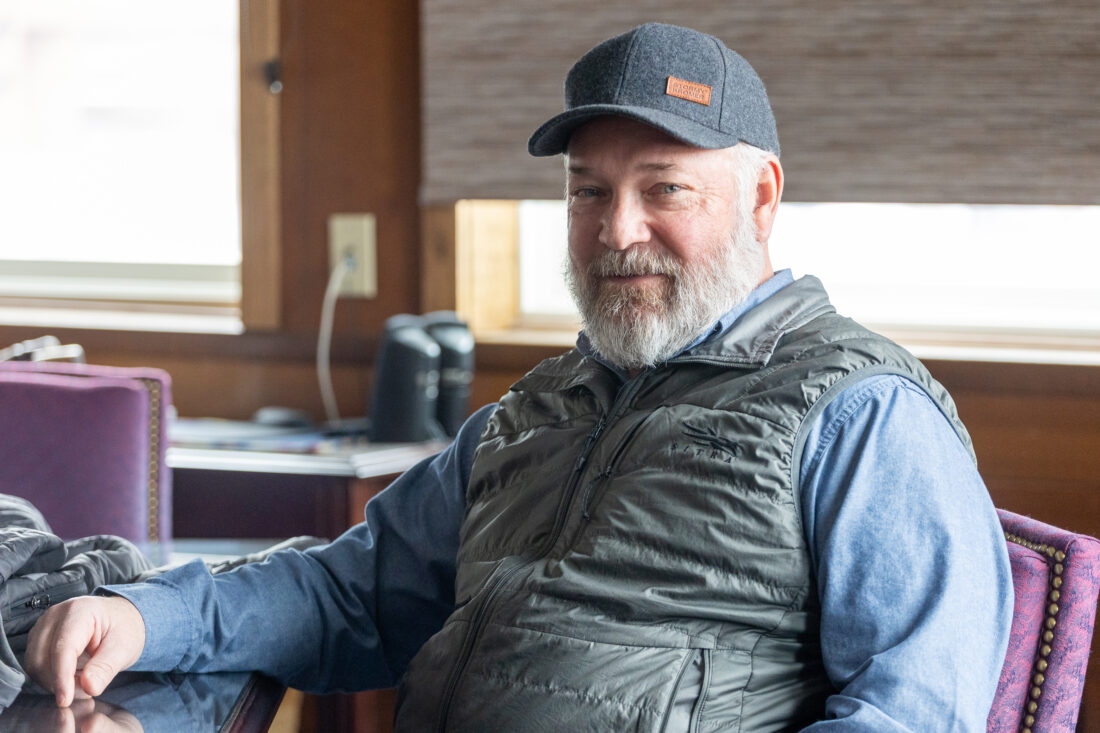
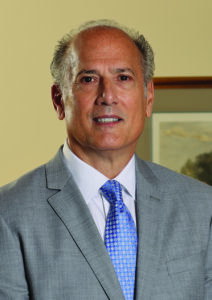
KAREN VIBERT-KENNEDY/Sun-Gazette Jay Alexander, general manager of the Clinton County Soilid Waste Authority, will, along with his team, manage the Lycoming County landfill.
The clock is ticking for the Lycoming County Landfill to get permitting from the Department of Environmental Protection for expansion of their footprint before operations would have to cease at its current site in eight years.
And the process takes time to be done and the county commissioners contend that it should have been started three years ago.
“The initial steps are to install water wells, groundwater monitoring wells,” said Jay Alexander, general manager of the Clinton County Solid Waste Authority which operates the landfill in Wayne Township, which was hired by the commissioners to manage the landfill.
Wells need to be drilled to test water quality.The have to be purged for a couple of months and then monitored for 13 months to help establish where the maximum groundwater levels are underneath the potential site for the expansion, Alexander explained.
From start to when a permit might be granted, could take five years. The problem is that until it’s determined what is under the ground there is no guarantee that the land, which is located west of the existing landfill, is usable for expansion.
“There’s a lot of work to do that needs to be done quickly, and that’s what we’re going to get rolling on here rather fast,” Alexander said.
There is a real immediacy to all of this, which is what prompted the commissioners to hire Alexander and his group to manage the landfill. If the landfill can’t expand, it has eight years of operation left in its current state. It also has $27 million in debt, mainly from purchases of services and equipment, which have been called into question as maybe unnecessary. In fact when the commissioners asked for a list of the equipment at the landfill, they were given eight pages front and back.
“They’re coming before the commissioners and saying, we need this equipment for such and such and such. Well, they’re telling us they need it. They’re explaining it. Okay, we don’t understand the landfill business, so we’re relying on their expertise saying that they need it, but then you have eight pages, front, full, front, back, that’s a lot of equipment,” said Commissioner Scott Metzger.
Under this partnership, Alexander’s group and the county are exploring a more regionalized path for the two landfills.
Although he acknowledged that they’re not there yet, Commissioner Marc Sortman explained, “What we envision is if there’s construction going on at the Wayne Township site, then maybe that equipment’s up there right now. And then if there’s construction going on at the Brady Township site now, we get the equipment down there, but we don’t have to have double the equipment in both facilities.”
Alexander described what that might look like.
“There ought to be a path where maybe instead of owning 14 haul trucks, maybe there’s only a need to own 10, and they’re moved around to when projects are scheduled. In the same way with equipment operators-instead of having ten equipment operators at each site. Maybe there’s a time down the road we only need seven at each site and five to run the daily operation, two or three extras, and they’re working back and forth between the sites when there’s extra work,” Alexander said.
“We’re a long ways from getting to that, but those are the things that lay out in front of us, opportunities to be drastically more efficient,” he said.
This is not the first time that the Clinton County group had approached Lycoming County about a partnership, Alexander said.
“This connection or attraction to work together has always been here, and an example is in 2009 we brought a proposal to Lycoming County to merge at that point. We were getting ready to start a $50 million expansion at our site and we thought, if we could merge both entities together, it could be a really efficient machine for the region as a Solid Waste Authority. So this isn’t something brand new. This interest was here,” Alexander said.
“Our Solid Waste Authority Board of Directors were bought in on it, our county commissioners were bought in on it, and we brought the proposal down here to Lycoming County, and they were afraid of it, so it didn’t happen,” he said.
He admitted that he thought it was “really dumb at the time” that Lycoming County wasn’t interested.
“I think at the end of the day, it was just some of the players around the table were too intimidated by how big it actually could be, and they were afraid of that. So behind the scenes, there was a lot of motivation to not do it. So then we just went full speed ahead with our expansion, and we followed, really the plan that we had laid out at that point, which was to get contracts with transfer stations. We needed to up the volume substantially to cover this expansion, so we just implemented our plan without the partnership with Lycoming County,” he said.
“So from this week forward, we’re just starting to scratch the surfaces of efficiencies between both sites. Personnel-it’s going to be a little cumbersome, because the employees are all Lycoming County employees, and the equipment’s Lycoming County but we can get, I think, by a few months into this, we can figure out how to keep everything even amongst both sites and maximize efficiencies. Why do both sites have the same exact equipment and not enough people to run it all,” he said.
In reference to how this move by the county would affect local garage haulers, Alexander pointed out that it is to their benefit to see the landfill become profitable rather than having it sold to a large corporation which would take over all aspects of the solid waste business.
“We want to be good at the landfill business and the recycling service business, and we want partnerships with all the regional haulers to be good at the collection business. So the way we’ve always approached is we both need each other. We want to be focused on running the landfill, utilizing all the assets, landfill gas, the leachate, the recycling services, commodities, how do you maximize utilizing everything there and make it run and not spend all of our time out doing residential collection or trying to figure out how to be good at that. We don’t need to do that.,” he said.
“If we can be good at what we’re doing, then those companies can go out there and compete against each other, keep pricing and services fair. They need us. We need them. Everybody ought to be able to live happily ever after and that’s always been that way. But as we sat back and watched and thought if one of these landfills got into a financial trouble. That model could go south in a hurry. So if that site has to become owned by a big national company, then the way they make money is to bring their own collection trucks in. They control the whole thing from start to finish. So they get the revenue for the collection, they get the revenue for the disposal, they get the revenue for collection from recycling. They get the revenue from selling recyclables. That’s the model, and it makes sense. It’s big business, it’s how it works. But what that does to this region, then, is these family operations they won’t be able to compete, because the same company that has all the cans out here is the same one that also owns the landfill. So it’s it’s a national model, and it works in some regions of the country. We don’t think it’s best for this region, so we’re going to work like hell to keep this model we have in place and keep all of our money here,” he said.
When the commissioners approved the contract with Alexander’s group, Sortman said many “naysayers” criticized them for “jumping into bed with your competitor.” He noted that further investigation on his part proved how wrong that was.
“If you go back to 2016 for about three years, Wayne township was roughly 5% cheaper than Lycoming County. And then you, as you fast forward through, we go from 5% cheaper in a year to equal-all of a sudden, Wayne township’s out here, and Wayne township got as high as 20% higher than Lycoming County,” Sortman said.
“We were still maintaining our market share and growing our business. So we were raising rates that you try and offset,” he explained.
“COVID really was the trigger. And that’s a national trend in the Waste and Recycling that everybody’s trying to figure out. How do you stay alive with all the environmental regulations and all the compliance and safety related things that you need to do, and then all the cost of everything going on? So we were paying attention to that, and we were making those changes to try and keep our head in front of our cost. But they’re tough decisions, they’re serious decisions, and when you don’t make them, bad things happen, like the cost of the operation is more than the income,” he said.
Which is what the county’s landfill is facing. Too many purchases of expensive equipment to be prepared for the busiest day of the year, which might not happen. Services purchased that could be done in-house at a lower cost. Not raising rates to generate income to offset those purchases.
Metzger compared it to personal budget decisions.
“If you’re spending too much, you have one of two choices. Either you increase your income to a second job, or you cut your spending, reduce the spending, or you’ll continue to go in debt,” Metzger said.
Alexander understands the solid waste industry. His family has generations of experience starting with his grandfather, Benjamin who had a construction business in Bradford County before being hired to run the Towanda Borough dump in the mid-1970’s.
“He had to supply the equipment that led to him getting garbage trucks, providing collection service and all that. So I was around that with my grandfather when I was a kid, and then my dad worked for George Logue. My dad was Wayne Alexander, and he worked for George Logue, who had the big contracting business here…so we grew up in that construction background,” he said.
“In 82 my dad went to work for Lycoming County to be the general manager of the Lycoming County landfill. And that was in the era where regulations were starting to shift drastically on the federal and the state level environmental regulations, that is, so that he built a team over there that took what was similar to where they’re at now. It was a cost to the county to operate the landfill, and the team that he assembled together turned that around and made it into what was known as the cash cow, and got fully up to speed with all the regulations and all the liner systems and leachate collection and gas sales, recycling services, that group, that core group, put that whole thing together, and then he left there in ’97 or ’96 I think,” he said.
“I started at the Wayne Township landfill in ’96 and then two of my sons worked there for me from the time they were 14 on, and my son, Cody, is the one that’s on point over at the Lycoming site right now. So he’s the fourth generation to be dealing with the waste and recycling business,” he added.
“We’re a Solid Waste Authority, so we’re a specialized entity. We work on solid waste and recycling.That’s what we do. And our board of directors, we sit around the table and we talk about where we need to be in five years, where we need to be in ten years, and we make decisions that are based on that, and we don’t have politics wrapped up into the middle,” Alexander said.
Lycoming County has the only county-owned landfill in the state which puts the commissioners in a position of oversight. Alexander explained why that creates a difficult situation.
“It’s tough. It’s like the battleship going up Loyalsock Creek. You can’t get it turned around, very easy. And there aren’t many spots to turn around. And I think where we’re at right now, we found a spot to turn it around, but there aren’t many. And these guys have had this big battleship for 40-plus years, and there’s very few opportunities to turn it and right now we have one. So we sit in meetings with our board of directors, and we talk about business decisions, and we talk about, how do we keep trash rates at the house as reasonable as possible with as minimal inflation as possible? How do we keep recycling services provided to residents and keep those rates as reasonable as possible. How do we have something in place 20 years from now that still exists? Those are the things that we’re working on behind the scenes, and then our specific direction is to work on all of them, and we’re to make those decisions,” he explained.
“We pay engineers and attorneys to provide advice, not direction. We pay a management team to provide direction, and that’s a different program. When you’re paying engineers and attorneys to provide direction, they have to put a lot into it, because they’ve got to make sure there’s absolutely no chance of anything going wrong. And we back up and rely on our knowledge and our history of the industry, and we make decisions, and we get moving. If we make a mistake..we don’t have a fear of making mistakes. We have a fear of not learning from mistakes. So we let our experience minimize the mistakes we’re going to make, and we make decisions, and if we make a mistake, we back up, we learn from it, and we get marching rather quickly,” he said.
He said that the staff at the landfill, right now, are as a whole “petrified to make a mistake,” which he attributes to a lack of having direction.
“Our hopes are that we have success over the next couple years in this partnership and it lays out some natural fit for how we move forward. None of us know what that fit would be. We have a lot of work ahead of us, but we hope that the results of our efforts start to lay some path out in front of us that we all can sit around the table and say, here’s second generation of the relationship, whatever that may be, but we got to let our results speak for themselves,” Alexander said.
Top News
Jersey Shore Area reverses dropping of school play after resolving casting dispute
JERSEY SHORE — Jersey Shore Area Senior High School’s spring musical is back on after a casting dispute that ...
City of Williamsport establishes Committee of the Whole to streamline work
The Williamsport City Council formally created a Committee of the Whole for reviewing items before the city — not ...
‘That’s what we do’: New leadership for Lycoming County landfill shares next steps
Lycoming Law Association honors Thrive International
Lycoming County district attorney asks for commissioners’ help with fingerprinting