‘Just really unique’: Williamsport business preserves history — and finds surprise in basement
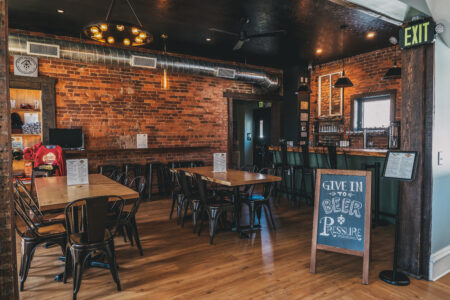
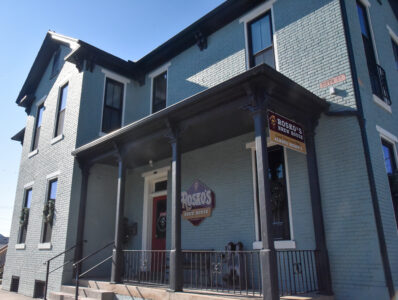
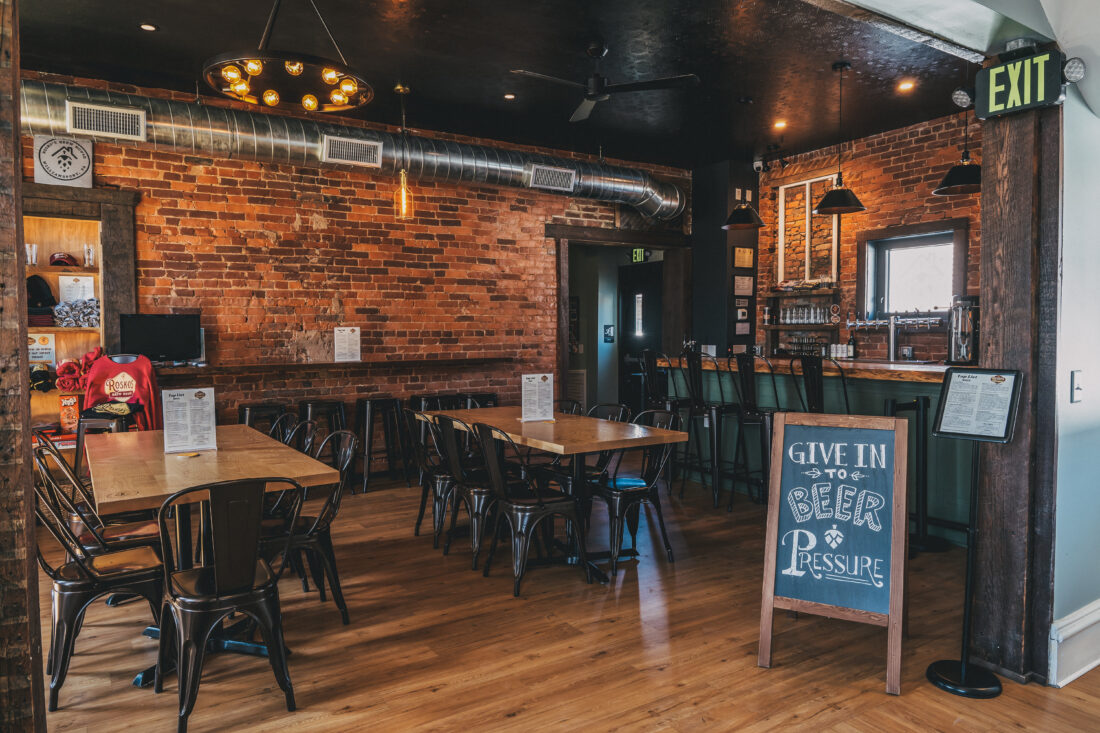
“You hate to see history disappear,” said Adam Roskowski, owner of Rosko’s Brew House in Williamsport.
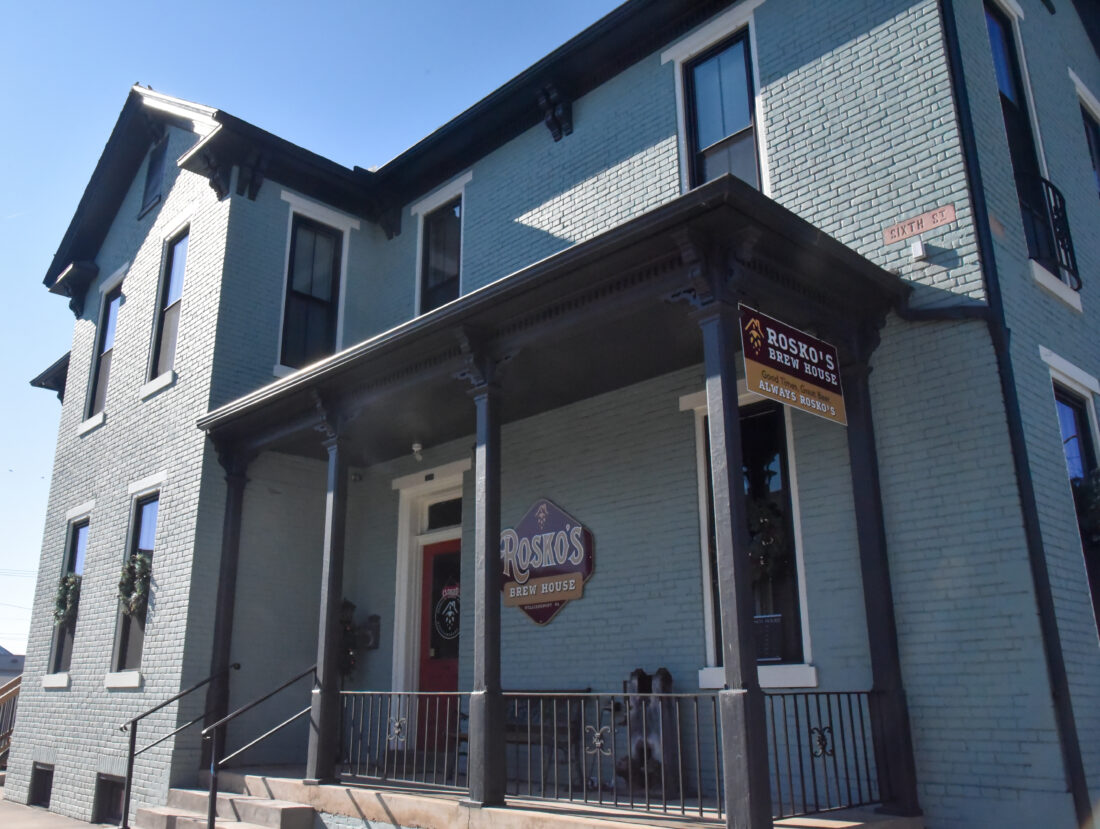
That was his motivation for buying the building now housing his craft beer pub at 601 Pine Street. After being vacant for years, Adam was keen to buy the Victorian – not just because of its historic charm but also because of a surprise in the basement. Now over 150 years old, a stone culvert runs through the structure.
“There’s nothing like it in town. It’s just really unique,” said Adam.
The arched ceiling and walls are completely made of stone displaying the craftsmanship of that time. It was erected to redirect Grafius Run. Now dry, the culvert has captured the attention of Rosko’s patrons, with some requesting special access to the area. With that curiosity has come some lore about the culvert, including that it was part of the underground railroad.
“This building was built after the Civil War, so it could not have been part of the railroad,” clarified Adam.
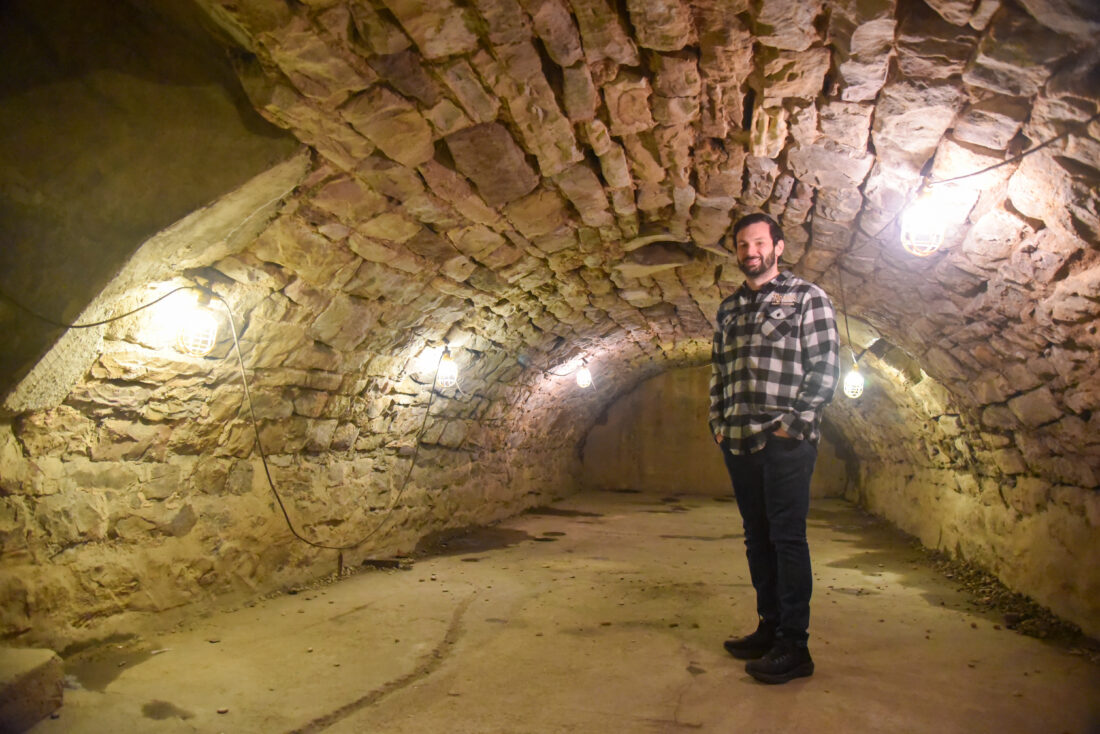
The culvert is six and a half feet high, 60 feet long and 10 feet wide. It was erected when a local grocer wanted to build a home and store on the property in 1870.
“William Fink, corner of Sixth and Pine Streets has commenced the erection of a brick dwelling, and is doing which is compelled (in order to make Sixth Street passable) to first erect a stone culvert at a great expense over the stream passing through his property and across Pine Street. When completed, it will be a valuable addition to that neighborhood. Any person acquainted with Mr. Fink as an architect and builder, will substantiate what we say, that whatever he undertakes, he does well,” reported in a March 12, 1870 article in the Williamsport Sun and Lycoming Democrat.
“In 1870, they didn’t have [trucks] so the stone was brought in by horses and mules and was dug out by hand, ” said Adam.
“The culvert was so well designed that Fink was given a commendation from city council for his great engineering,” said Matt Di Rocco, Roskowski’s stepfather and owner of the Fink property just prior to Adam.
Prior to Adam buying the building, Di Rocco had purchased the building but had little time to restore it, since he was already working on restoration at Williamsport’s John Ryan Brewery. Located at 151 East 3rd Street, the brewery is owned by Adam’s brother and sister-in- law, John and Andrea Roskowski.
“When I saw it. I wanted to buy it. [Had I not purchased it], it would have been turned into a parking lot,” said Adam.
Since the culvert has sparked so many questions from patrons, Adam decided to have a book written by historian Elaine M. Decker chronicling the culvert and building’s history. Simply titled “601 Pine Street Williamsport, PA.” The tome now sits in the barroom for guests to peruse.
According to Decker’s research, Fink was responsible for other Williamsport landmarks. Included in the book is Fink’s obituary from the Williamsport Sun & Banner on June 7, 1890, which reads, “He built the Pine Street church, the Knapp Building, the Second Presbyterian Church and was city engineer for years.”
Upon completion of the culvert, Fink built his two story-home, which also housed his store. The store began selling homemade cider, which was distributed state wide.
According to an article from the Daily Sun and Banner in Decker’s book, Fink’s wife had a near fatal run-in with the culvert on June 20, 1881.
The article reported, “Mrs. William Fink, who resides at the corner of Sixth and Pine Streets, fell in Grafius Run yesterday and was pretty badly bruised. She was standing on the covering at that point, gazing in the water when a spell of dizziness overcame her and she fell. There was but little water in the run or she would have drowned.”
“Around 1910, modern sewers were installed and cut off Grafius Run. The culvert is the last living piece of that design that Fink built. It was a great engineering feat,” said Di Rocco.
Where others may have just seen only a hole in the ground, Adam saw history and potential in the culvert. He has already held events there, with one of the most successful being a Halloween party.
“When we did the Halloween party, people were waiting in line,” said Roskowski.
Adam, along with his brother and stepfather, have taken on a task few are willing to do anymore – restoring aging Victorian homes.
“The cost is high, it’s difficult to find contractors who can do artistic restoration and code compliance is very difficult,” said Di Rocco.
For Adam, it was well worth it.
He said, “It has charm, it has a good story and history.”
Top News
American Rescue Workers puts out call for donations
For more than 90 years, American Rescue Workers (ARW) has relied on a simple, time-tested model: neighbors give ...
South Williamsport Area School board OKs land survey and appraisal
The South Williamsport Area School District approved several items during its March meeting, including a land ...
‘Just really unique’: Williamsport business preserves history — and finds surprise in basement
Lycoming County district judges kept busy with charges including terroristic threats, assault
Homeless man jailed following downtown stabbing Shortly after allegedly stabbing another man in the forehead with ...

Top counterterrorism official Kent resigns over Trump’s Iran war, says Iran posed no imminent