
What is Spontaneous Coronary Artery Dissection?
Spontaneous Coronary Artery Dissection — SCAD — strikes without warning and is often mistaken for something else because it usually affects relatively young, healthy women in their 40s and 50s. The symptoms are similar to a heart attack, but patients often ignore them because they think they’re too young, too healthy to be having heart issues.
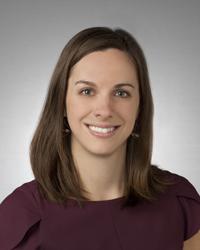
The coronary arteries are the arteries that fit on top of the heart and supply all the blood and nutrients to the heart muscle, said Dr. Agnes Koczo, who specializes in women’s cardiovascular disease and cardiology at UPMC Pittsburgh.
“When we hear people having a typical heart attack that involves most commonly atherosclerotic plaque that is obstructing flow in those coronary arteries and preventing blood and nutrients getting to the heart muscle, and that’s what causes all the symptoms,” Koczo said.
“SCAD affects the same heart artery vessels that atherosclerotic plaque would but instead of it being plaque, it is a spontaneous tearing of the walls of the blood vessel apart from each other. So it is the tearing of the vessel that actually occurs within the layers of the vessel wall itself,” she explained.
When the blood vessel tears or dissects apart, there are tiny blood vessels that supply those blood vessels and blood begins to pool forming a hematoma or blood collection in the vessel wall. As that blood collection keeps getting fed, the hematoma continues to grow.
Koczo compared it to an injury on an arm that keeps swelling and getting bigger.
“It’s a similar phenomenon where the blood gets bigger and bigger, and as that hematoma grows, that starts to block blood flow in the normal coronary vessel, where blood is normally flowing, from getting to the heart muscle,” Koczo said.
“So the end product of blood not getting to the heart muscle is very similar to atherosclerotic plaque during a heart attack. It’s just a different cause. It’s not a lipid-rich plaque. It’s this blood pooling within the vessel wall from the dissection,” she added.
Unfortunately when this happens, there are no warning signs.
“It’s very acute. Most patients will never have chest pain prior to this event,” Koczo said.
“It also typically happens in young women. The most common demographic of patients to get SCAD are perimenopausal women. So women in their 40s to 50s, most of them do not have cardiovascular risk factors, because this is not due to lipid rich plaque. So many women will not have high cholesterol, will not have high diabetes. They may have hypertension, but a third of patients have hypertension. Many of them won’t be smokers. Many of them are athletic, active, even marathon runners. And so it’s a very acute event without warning among typically young, healthy women,” she said.
There has been a lot of research about genetics to see if there are genes that either are familially passed on, or they can be what’s called sporadic in which at some point in your life you have a gene mutation due to something such as the environment.
“Even looking at sporadic gene mutations, our research has shown that there’s probably a number of different genes that in a certain group of patients that get SCAD would be responsible for essentially weakening the vessel wall and making it prone to dissection,” Koczo said,
“We believe, in general, that most patients have some kind of blood vessel wall abnormality, the most common underlying blood vessel abnormality condition is like a total body blood vessel condition called fibromuscular dysplasia. It is not autoimmune. It’s not atherosclerotic, and it’s also not genetically inherited, and it’s most commonly found in perimenopausal women,” she said.
She went on to explain that patients with fibromuscular dysplasia often dissect in the carotid, the big vessel in the neck or in the renal arteries.
“It’s actually pretty uncommon, even among a population of patients with fibromuscular dysplasia, to have coronary dissection. So, among patients with coronary dissection, about 40% will be found to have fibromuscular dysplasia. But the reverse isn’t true. Among patients with fibromuscular dysplasia, less than 5% will dissect their coronary,” she said.
Because of this every patient who has a SCAD event is screened for fibromuscular dysplasia so that all the major blood vessels are scanned.
The symptoms of SCAD are very similar to a classic heart attack, with a sudden onset of chest pain.
“It can feel like back pain. It can go into the shoulder, it can go into the arm, it can go into the jaw. It can be accompanied by shortness of breath, sweating. All of those symptoms are a symptom of the heart muscle not getting enough blood and oxygen. It’s the same sort of end product, if it’s an obstructive plaque rupture, versus this dissection, but patients will feel exactly like they’re having a heart attack, because what’s happening to the heart muscle that’s causing those symptoms is the same. It’s not seeing blood all of a sudden,” Koczo said.
SCAD is often missed as a diagnosis because it happens in young, healthy women.
“I think those people come to the emergency department, and people look at their age, they look and say, hey, these people are active. They don’t have cardiovascular risk factors,” she said.
Levels of Troponin, a protein that is released when there is damage to the heart, are checked in order to diagnose SCAD as well as looking for changes in an electrocardiogram (EKG).
Koczo pointed out that improving diagnoses of SCAD comes with “teaching providers that this exists as an entity,”
“A lot of people only think about atherosclerotic plaque, and even if they’re aware that older women with cardiovascular risk factors can have heart attacks, they should think about other things that can cause heart attack like this,” she said.
“So, I think it often starts with a thoughtful emergency medicine health care provider noticing, listening to the story, it sounds like a heart attack. If the troponins are elevated, which they most times are, if the EKG changes, has EKG changes that look like the heart muscle isn’t getting oxygen, which sometimes it has. If they do an ultrasound of the heart and the heart pumping function, or part of the heart wall that’s not getting good oxygen from that blood vessel being dissected looks weak, then they should take that person to the cath lab, just as they would for a patient, where we think they have plaque rupture and a heart attack, and that’s how we diagnose it,” she explained.
If you are experiencing any of the symptoms, Koczo stressed that it is important to get to an emergency department.
“The more time that that muscle spends not getting blood and oxygen, the more likely that that heart muscle will get permanently damaged and not come back. If we can reperfuse it and open up blood flow, even sometimes, heart muscle that looks bad at the time of the heart attack will get blood flow nutrients, and those cells will wake up, and that heart muscle will start working again,” she said.
“But if you wait too long, and that heart muscle has spent minutes, hours, days without blood flow, you know, with time it increases or decreases the likelihood that heart muscle is going to come back,” she added.
It also depends on where the dissections occurs.
“I tell people that the heart arteries are kind of like a tree where the heart arteries take off, and our aorta, I think of as kind of the stump of the tree. And then the heart arteries, as they supply down to the bottom part of the heart, are almost like the branches of the tree. So it sort of depends where it dissects. If you dissect kind of by the stump, then you can imagine that blood flow going to a much bigger territory of the heart doesn’t get oxygen, versus if you’re all way out at the tree branches of the heart, there’s a much smaller part of the tree that’s not going to or the heart that’s not going to get oxygen,” she said.
If the dissection is closer to where the heart arteries take off, more of the heart muscle is not getting blood so it is more likely that the heart muscle ends up being permanently affected.
Because SCAD, in general, affects young, healthy women they think they can’t be having a heart attack, so they delay seeking treatment. They also might have competing priorities, like getting their kids to school or taking care of a new baby.
“Pregnancy-associated SCAD is the second most common time that this presents,” Koczo pointed out.
She said that moms sometimes delay putting off going to the hospital until everything is taken care of.
Treatment for SCAD includes giving medication to de-stress the heart, to slow down the heart rate, to normalize blood pressure to maximally open up the blood vessels and allow blood to flow to the heart muscle, she explained.
“We allow the body to heal itself,” she said.
“In fact, in research studies, about 80% of patients have totally healed their dissection by about a month after their event. The reason also why we do that is because when the vessel dissects, all the tools that we have in the cath lab are designed for big, rocky, calcified, platelet rich plaque. They’re really sharp metallic tools that are meant to, kind of like drill into these mountains of plaque and push them up against the wall,” she said.
“If you can imagine tissue paper, like the layers of tissue paper are dissecting, right? And so we don’t really have tools to navigate around the dissection and open it up, and the times that we do that are when patients are really in distress, so when patients are going into cardiogenic shock. So much of the heart muscle has lost blood flow that the heart pumping function is really low, and it’s impacting blood pressure and people’s meditation at that point, that medical needs to be opened up now. And so the risk of going in there with these sharp, metallic tools to open up the dissection, or to have a cardiac surgeon, you know, bypass that area of dissection with a bypass graft like they would with patients that have plaque. We entertain those to the times where patients are really unstable and that corn muscle needs to be produced now, and we can’t wait days, weeks, months, for it to months for it to be totally opened up,” she said.
Patients who have had a SCAD event are also prone to PTSD because of the fact that it happens so suddenly and to people who are usually not susceptible to a heart attack. There is also the fear that if it happened once, it could happen again.
“We enrolled for a registry that now has surveyed thousands of patients with SCAD and our recent data shows that about a third of patients meet diagnostic criteria for PTSD after this event, so it’s incredibly common,” Koczo said.
Overall, among the people who have heart attacks, SCAD comprises less than 5% of the reason for the attack, but if that is narrowed to the population of women less than the age of 45 having a heart attack, it comprises 30% of the reason why.
So one in every three women who come in under the age of 45 with a heart attack is from SCAD. Also, if a woman presents after pregnancy with a heart attack, this is the number one reason, Koczo said.
Koczo said one of the important things is that when a young woman comes to the emergency department with symptoms of a heart attack, that someone recognizes that it might be SCAD.
“It takes an interventionist, really, to recognize it…I actually have seen a lot of patients from UPMC Williamsport with this diagnosis, so there’s obviously interventionists that are looking for this out there…I think it’s probably happening way more than we think,” she said. “I think our prevalence of it is going to increase over time. And I think that’s mostly going to be a function of both patient and provider education about this condition.”
Top News
Muncy Township appoints solicitor at special meeting
At a special meeting Thursday, Muncy Township Board of Supervisors appointed a solicitor, replacing a Williamsport ...
What is Spontaneous Coronary Artery Dissection?

Young woman shares her experience of having a heart attack as a result of lesser-known SCAD
Agreements provide grant funds for housing programs in Lycoming County
For 21 years STEP has been offering programs to assist county homeowners who might have found themselves in need of ...
Montoursville school board considering athletic field issues
The Montoursville Area School Board is mulling options before moving forward to address drainage problems at ...
Gregg Township eyed as possible site for data center
LEWISBURG — Union County commissioners confirmed a meeting will be hosted by developer PNK Group regarding a site ...