
Young woman shares her experience of having a heart attack as a result of lesser-known SCAD
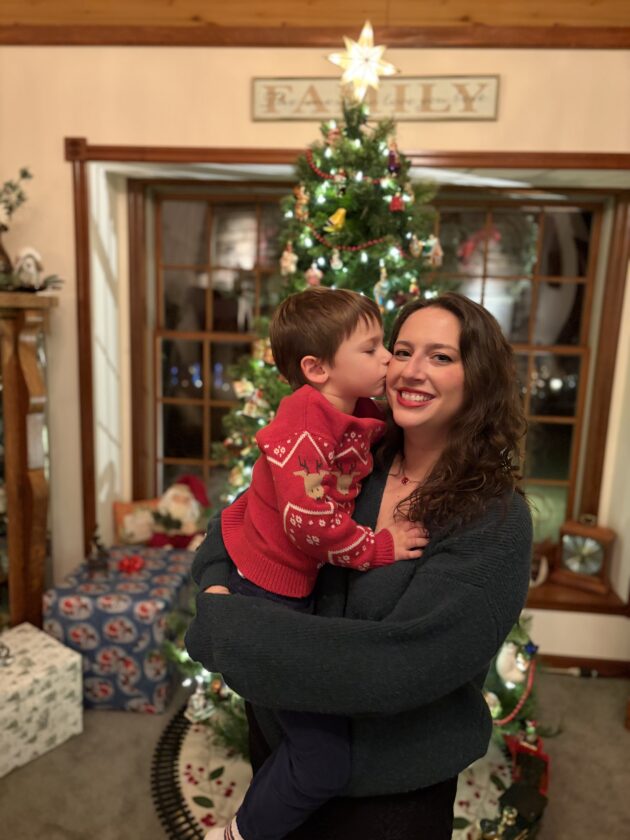
Having just returned from a relaxing vacation with her family at the beach, Marissa Barnett was headed to her parents’ river lot for a picnic when her life took a definite detour.
Driving along, with her 4-year-old son in the car, Barnett, who was 32 years-old at the time, started experiencing what she described as a “horrible tightness and pain” in her chest.
“At first I thought it was just anxiety. I’ve had a history of anxiety, few panic attacks. So I was just trying to breathe it out, but it was really stemming to both my arms, my chest, my jaw. I remember my wrist hurting so bad — I’ve never had wrist pain before,” Barnett said, recounting what happened on that Labor Day weekend last year.
“I pulled up to the park at the river lot, and I was still thinking I was having a panic attack at this point, so I called my mom to come back, thinking that if I saw her, I would feel better, and the panic would subside. And I also got out of the car and was, like, on the grass, laying down, sitting, just trying to rock myself out of it,” she said.
She admitted that remembering what happened then might be a little fuzzy because she was in so much pain.
“So my mom and stepdad came over, and they were talking to me and Googling what I was saying was hurting and my symptoms, and then they decided, well, we’re going to get you to a hospital,” she said.
Even as her stepdad, Kurt Westbrooke, drove her to the hospital, Barnett was still thinking that it was a panic attack.
“I’m still thinking, I’m having anxiety and I’m feeling silly because we’re supposed to have this family picnic, and I’m stressed out going to the emergency room for chest pain, because there’s no way I thought that I was having a heart attack,” she said.
When she arrived at the hospital, Westbrooke dropped her off at the entrance and she was put in a wheelchair and taken into the emergency department.
“The pain was subsiding a little bit, but it was still there. I had to crouch over the whole time to kind of feel a little bit better,” she said.
“I remember, you have to fill out paperwork, and they’re asking me these questions, and I’m like, I don’t know. I don’t know my birthday, I don’t know anything. Like, I’m just in pain right now. So my stepdad’s doing the most that he can at that point,” she said.
When she finally got in the triage area, a nurse took her blood pressure, which Barnett described as “sky high” at that point.
“I don’t remember the exact number, but she was like, we’re going to take this again, because this doesn’t look right. She does it again — it’s still really high. It took a long time for my blood pressure to go down, actually, and they did the EKG (electrocardiogram), and that did not indicate a heart attack, but there was something that happened on it,” she said.
Barnett said she doesn’t remember exactly what that something was, but she thinks it showed that there might be some sort of heart event happening.
“But still, everyone kind of thought it was anxiety, like even my nurse told me later, ‘We all just assumed it was anxiety,'” she said.
She was then taken to a room in the ER, and blood work was done.
“The one blood work that they needed to take, the hard stuff, takes about three hours to come back, so I knew I was going to be there for a little bit,” she said.
During those three hours, Barnett said that, although she was still in a lot of pain, she was starting to feel a little better. The pain had subsided enough that she was able to walk herself to get a chest X-ray.
“I was just like, ‘Oh, I must be fine. I’m just ready to go home,’ even though it felt horrible still,” she said.
The blood test that they were waiting on measures Troponin levels in the bloodstream. Troponin levels indicate if there has been or if there is currently a heart event or if the heart is under stress.
“That number needs to be under 10. The doctor came over, sat down, and she said, your number is currently over 3,000 almost. So she was like, ‘We are admitting you. You definitely did have a heart event,'” Barnett shared.
After that, Barnett said, things started moving quickly. She was hooked up to Heparin, which is an anticoagulant.
“Even the nurse was like, ‘Well, we all thought we were sending you home for anxiety,’ but no. And I remember my stepdad being like, ‘You said 3,000 — like, three-zero-zero-zero. That’s the number you said.’ We just couldn’t believe it,” she said
Her Troponin levels actually did get as high as around 40,000, which she explained happens the longer you are there. But, her heart also sustained damage from the heart attack.
Because it was a holiday weekend, she had to wait to see the doctors, but she was admitted and was told that she would need to go to the heart catheterization lab and also have an echocardiogram.
“Again, I had to wait a couple of days, and that was just horrible and scary and painful,” she said.
During the catheterization, they found that she had experienced what is known as SCAD, or spontaneous coronary artery dissection, which is what happens when arteries or blood vessels in the heart spontaneously tear.
“It tore, and that caused, like, a flap in my vessels causing the blockage. So it wasn’t that there was a blockage in there, it was the flap that caused the blockage, which led to my heart not receiving the blood and oxygen that it needed and getting the heart attack,” Barnett explained.
“My doctor was like, I’ve only ever seen this once before. Luckily, he even saw it. When I actually went to see my specialist in Pittsburgh, she was surprised and happy that little rural Williamsport Hospital was able to catch it, because she’s like, even just looking at your scans, it would be difficult to find because the vessels are so small,” she said.
The diagnosis was a shock for Barnett, because there was no history of heart issues in her family. The doctors were surprised and kept asking her if she used drugs, because they more commonly see heart attacks in young people who use cocaine. She learned that SCAD can be caused from high stress or emotional things and that it happens a lot in postpartum women, because it can be hormonal.
“In my case, we’re still not sure what caused it. That’s why I am seeing a specialist in Pittsburgh, just to see what’s going on. She said that SCAD has been around probably forever, but there have really not been any studies on it prior to 2017, so it’s really new,” she said.
Unlike the treatment for heart attacks caused by blockages, Barnett said that with issues caused by SCAD, stents are not typically used because they can actually cause a tear to become a full rip.
In order for the tear to heal on its own, Barnett was put on a bunch of different medicines and continues to be monitored. She also went through cardiac rehab.
“That’s the only thing that I think has really, really helped me, (especially) emotionally, because I was so afraid to go up and down stairs, pick up my son, to do anything, and they really helped me with that,” she said.
“I’m in, like, all these support groups and all that, where women do get stents, or they do end up having surgery, but they try to avoid it, just to let the rips heal naturally,” she said.
“But then it’s also hard to find if they do heal, because the only way to find that out is to go back into the cath lab, which is traumatic and doesn’t always show everything. So you just kind of hope for the best,” she said.
She is also receiving EKGs every six months to assess the damage to her heart.
Although it is unknown what causes SCAD, it can reoccur. Barnett has been advised to avoid future pregnancies because of hormonal changes that can trigger it. Menopause is also a time to be cautious.
“And then I shouldn’t do your standard heart attack stuff, I guess, like no roller coaster. Nothing that’s going to make my arteries or body clench really quickly, because that can cause it to happen again. No sudden body changes. I was told not to shovel snow, which I’m happy about,” she said.
Although it was a very scary, very painful ordeal, Barnett feels she got lucky by having a doctor who didn’t brush it off as anxiety.
“I did have a doctor that knew something of this, and they took me seriously because I mean, I even convinced myself I had anxiety. Women in general, I feel like we tough it out, like I do have a higher pain tolerance. You go through childbirth so nothing hurts after that,” she said.
“I also have a family that helped advocate for me, saying, ‘This is not normal for her, and, ‘Test the troponin.’ I think that’s the biggest thing is it is an extra test. It does require more time for the doctor. But that’s really what saved me, is someone thought, ‘Oh, let’s not just dismiss her. Let’s test this to see if there was a heart incident.’ It’s like, I’ve never even heard of the word troponin,” she added.
Barnett pointed out that her symptoms, like many women, were not what is usually thought of as typical of a heart attack.
“They always say that women have different symptoms and my right arm hurt more than my left arm,” she said.
“It was my right arm and wrist and jaw that hurt so bad. And I learned that the pain that radiates to other places, that’s also something to really keep an eye on…really the radiating to the rest of my body, I think, was a big thing that I learned. And now I kind of tell people, not just your left arm — it could be your face, your jaw, your back, all of that,” she added.
Barnett was eager to share her story in the hopes that more people could be aware of SCAD because it can often be missed since it isn’t that well-known.
“If I was home and not around my family, I think I would have just toughed it out and just been like, ‘I’m OK. Breathe it out. It’ll get better’ — and not have known that this happened, and then maybe overexerted myself later that day, the next day, and then could have died,” she said.
“While SCAD requires specialized expertise, our local cardiology team supports patients throughout their recovery and ongoing care,” said Dr. Renee Muchnik, UPMC Heart and Vascular Institute in North Central Pa.
“Collaboration with our colleagues in Pittsburgh ensures that individuals like Marissa receive timely diagnosis, treatment, and long‒term followup close to home. Once they return from their care in Pittsburgh, we continue to manage and support them here in Williamsport,” she added.
Top News
Muncy Township appoints solicitor at special meeting
At a special meeting Thursday, Muncy Township Board of Supervisors appointed a solicitor, replacing a Williamsport ...
What is Spontaneous Coronary Artery Dissection?

Young woman shares her experience of having a heart attack as a result of lesser-known SCAD
Agreements provide grant funds for housing programs in Lycoming County
For 21 years STEP has been offering programs to assist county homeowners who might have found themselves in need of ...
Montoursville school board considering athletic field issues
The Montoursville Area School Board is mulling options before moving forward to address drainage problems at ...
Gregg Township eyed as possible site for data center
LEWISBURG — Union County commissioners confirmed a meeting will be hosted by developer PNK Group regarding a site ...