
‘Lives can change’: GEO Reentry holds spring graduation
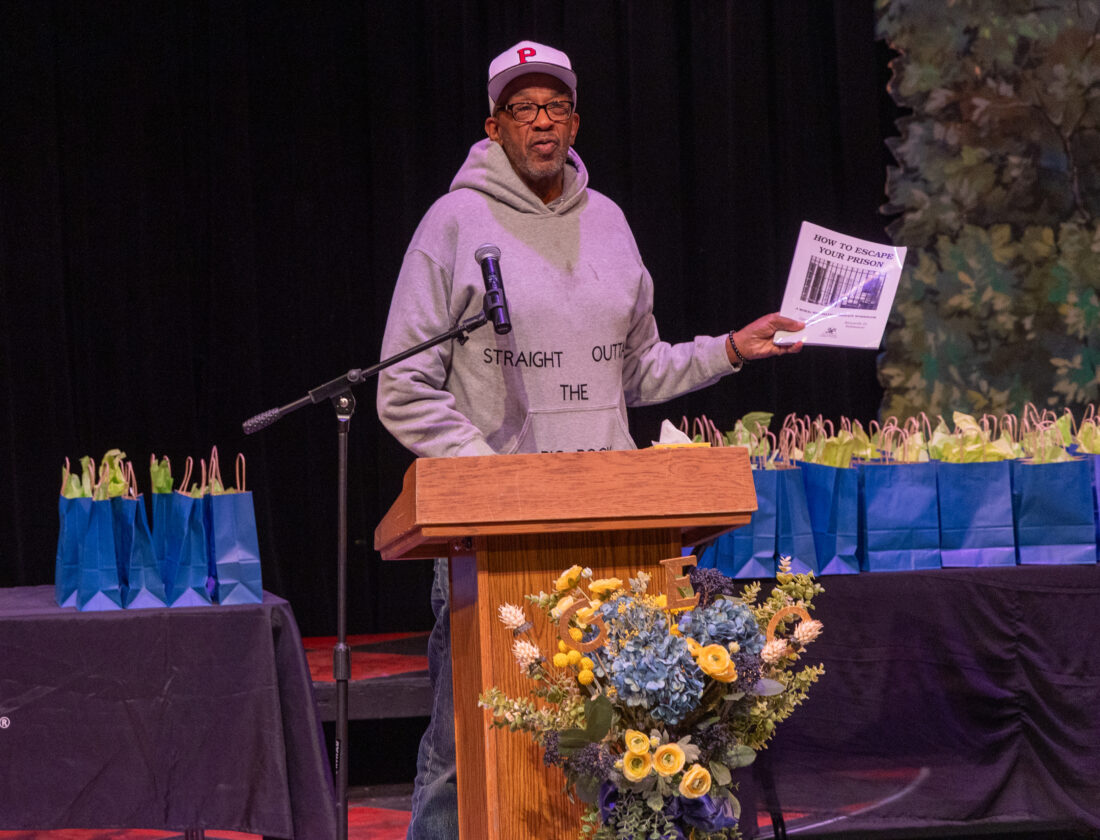
KAREN VIBERT-KENNEDY/Sun-Gazette David Trice, one of the alumni speakers at the Spring 2026 Transitional Ceremony ,talks about the difference the program has made in his life Thursday at the Community Theater League in Williamsport.
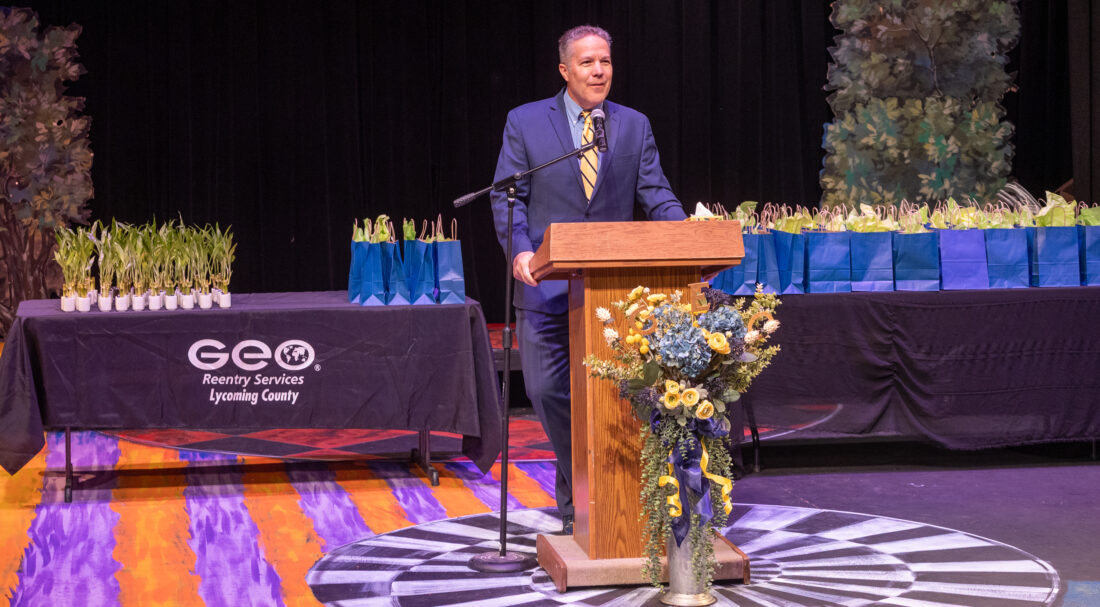
County Commissioner Mark Mussina delivers the keynote address at the graduation ceremony on Thursday. KAREN VIBERT-KENNEDY/Sun-Gazette
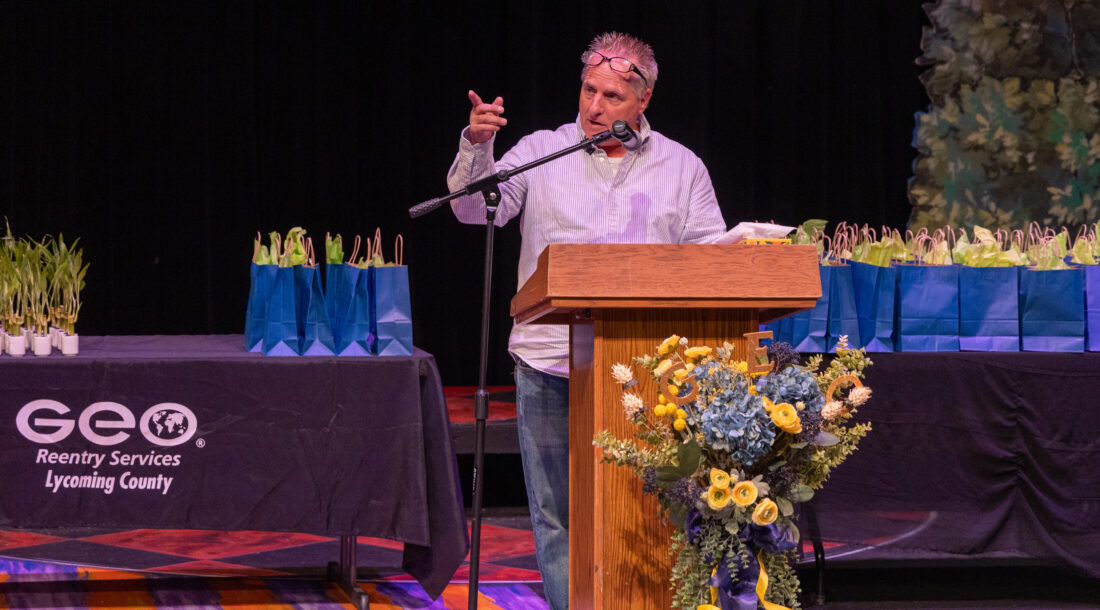
KAREN VIBERT-KENNEDY/Sun-Gazette David Follmer, deliver his graduate testimony at the Spring 2026 Transitional Ceremony ,talks about the difference the program has made in his life Thursday at the Community Theater League in Williamsport.
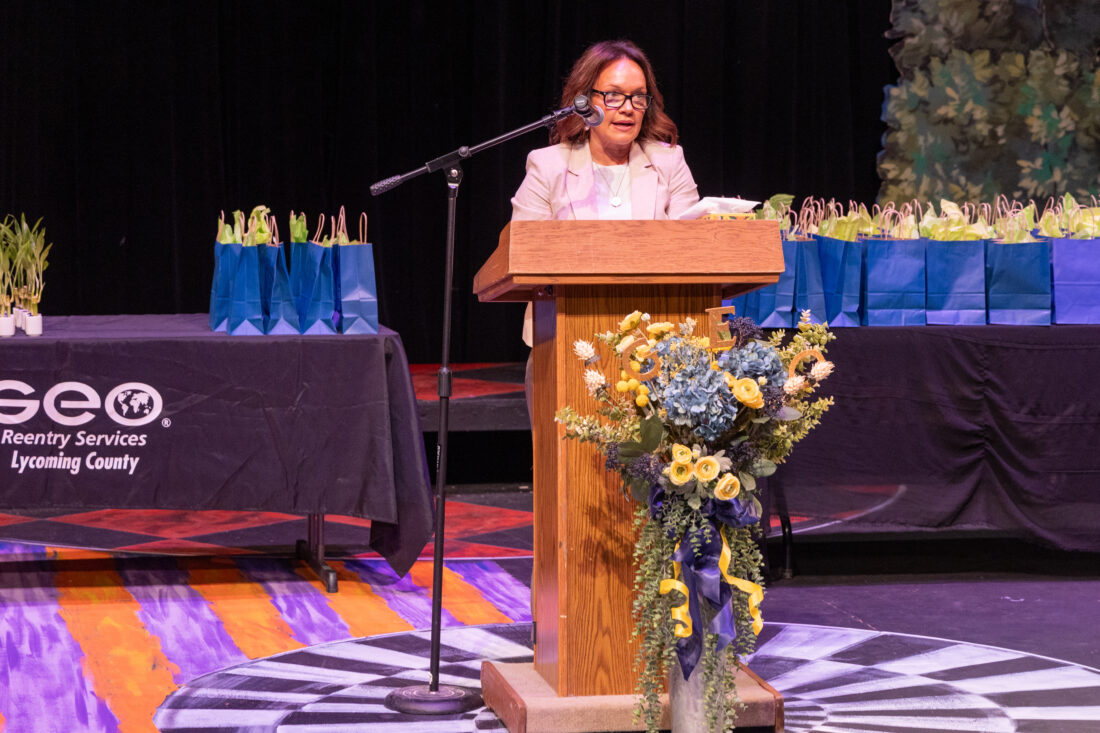
KAREN VIBERT-KENNEDY/Sun-Gazette Nicole Berry, one of the alumni speakers at the Spring 2026 Transitional Ceremony ,talks about the difference the program has made in her life Thursday at the Community Theater League in Williamsport.
KAREN VIBERT-KENNEDY/Sun-Gazette David Trice, one of the alumni speakers at the Spring 2026 Transitional Ceremony ,talks about the difference the program has made in his life Thursday at the Community Theater League in Williamsport.
County Commissioner Mark Mussina delivers the keynote address at the graduation ceremony on Thursday. KAREN VIBERT-KENNEDY/Sun-Gazette
KAREN VIBERT-KENNEDY/Sun-Gazette David Follmer, deliver his graduate testimony at the Spring 2026 Transitional Ceremony ,talks about the difference the program has made in his life Thursday at the Community Theater League in Williamsport.
KAREN VIBERT-KENNEDY/Sun-Gazette Nicole Berry, one of the alumni speakers at the Spring 2026 Transitional Ceremony ,talks about the difference the program has made in her life Thursday at the Community Theater League in Williamsport.
Trending
GEO Reentry Services held their Spring 2026 Transitional Ceremony at the Community Theatre League Thursday morning, celebrating 50 participants who triumphed over substance abuse through the reentry program.
Program Director Nicole English said this was the highest number of graduates in the program's history.
"That alone says something powerful. It tells us that transformation is possible. It tells us that when people are given support structure, opportunity and belief, lives can change," she said.
"Today is more than a graduation. It's a testament to resilience, accountability, growth and second chances," English told the participants, many of whom were flanked by friends, family and sponsors.
"Today represents the countless decisions you made to keep going. Even when the road was difficult, you committed yourselves to a lengthy and demanding process designed not only to help you re enter society, but to help you rebuild, reconnect and rediscover your purpose that takes strength, that takes discipline, and that deserves recognition," she said.
"Let us remember that graduation is not the end of the journey. It is the beginning of a new chapter. A chapter filled with opportunity, responsibility and hope," English told the graduates.
"This is a big day for you, and you all should be proud of this," Lycoming County Commissioner Mark Mussina said, urging the graduates to take time in enjoying their successes.
Mussina also cautioned the attendees to find those who are truly in their corner through life's ups and downs.
"As you press forward into your new goals and your new achievements, embrace the people who embrace you because they will be the ones to help you succeed. When you see the people in life who've been great successes, the one consistency isn't where they came from, isn't how much money they started with, it's all their support system, because nobody succeeds on their own," he said.
Lycoming County Probation Chief David Goodwin stressed that though the program was hard at times, the results of those who committed to changing their lives for the better are evident.
"This program is not designed to be easy, nor is it designed for you to just go through the motions," he said.
"As I look at the graduates today, I see people with new jobs. I see sober, confident, strong people, and most satisfying to me is I see people here today with the trusted support of their friends and their families," Goodwin said.
"The things we can't see are the tools this program has given you to be successful. These tools may have taught you how to deal with certain triggers in your life, maybe how to handle traumas of your past, how to make sense of your past, or maybe just the ability to accept the past, make peace with yourselves and look forward to your future," he said, adding that these tools would serve them well as they continue their journey.
"All of us in this room have been through, and will face, challenging times in our future. I just ask, and I will do the same, that they choose that right attitude in those tough circumstances. History tells us that we will then be guided down the right path," Goodwin concluded.
Alumni speaker David Trice said the program was the first that forced him to be honest with himself, a key part of recovery.
"Reentry saved my life," he said.
Trice began using after his life "took a turn for the worst."
"And then I'm on the front page of breaking news. It was a humbling experience," he said of his arrest during a county narcotics investigation in October 2023.
"You're looking at a guy who has a ninth grade education and became the chairman of my church. I stayed clean and sober off and on, but every time there was something drastic that happened in my life, I started using," Trice said.
For Trice, a breaking point was when his daughter and her husband moved out of state, followed closely by the death of his mother, however an emotional reunion with his family would also serve as a breakthrough moment in his decision to embrace recovery.
For alumni speaker Zada Vaughn, her ninth stint in the program was when she truly decided to embrace change.
"This was the first time I actually took myself seriously," she said.
"I lost a real dear friend, and when I lost him, everything changed," Vaughn said.
"Every day I wake up and think about it. If I don't win for him, If I don't win for me, who am I winning for? My father passed, he was one of my biggest supporters. If I'm not winning for him, who am I winning for," she asked.
"I had to really sit down with myself in this program, realize I can't keep doing this or I'm going to end up like my friends. I've had multiple friends that aren't here today," she said, adding that she wins for them as well.
"These are the first two years I haven't been homeless since I was 17, to have a stable job with a legal income, and I afford to have the things that I want and have my hair done the I want, to have the small luxuries that a lot of people take for granted," she said.
"I stand here today more mature, more wise in my actions, more stable in my mental health. A better person," said Vaughn, who celebrated her 27th birthday, something she said she never expected to do.
"I feel more alive. I feel happier with myself. I can look people in the eyes, I can look myself in the eyes, and I can tell myself 'I love you.' I can hold myself accountable, and not feel guilty, and not feel like I had to destroy myself," she said.
"There was a time when I didn't have direction, I didn't have structure, and I definitely didn't have a clear vision for my future," offered alumni speaker Nicole Berry.
"Geo Reentry Services didn't just help me get back on my feet. It taught me how to live again. It taught me discipline. It taught me accountability, but most importantly, it taught me how to set goals and actually follow through with them," she said.
"Today, I run a successful cleaning business. I have employees who rely on me, I have clients who trust me, and I wake up every day with a purpose that didn't happen by accident. That happened because someone took the time to invest in me, to guide me and to show me that I was capable of more," Berry said.
"Reentry Services gave me a foundation not to just succeed, but to keep growing. And for that, I'm incredibly grateful," Berry said.
"Today is something to be proud of, not just because we finished the program, but because of everything it took for us to get here," said Daisy Edmonds to her fellow graduates.
"When people hear of a reentry program, they might think it's just classes, rules and check ins, but for those of us who lived it, we know it's much more than that. It's early mornings when we didn't feel like showing up, but you did. It's hard conversations, taking accountability and learning how to face the things we used to avoid," she said
"This program didn't just teach me how to follow rules, it taught me how to think differently, how to pause, how to take responsibility, and, most importantly, how to believe that my past does not have to decide my future, and that's what today represents," Edmonds said.
It's not just the end of a program, it's the beginning of a new chapter, one where we take what we've learned and actually live it. One where we prove to ourselves and to others that change is real," said Edmonds, who will begin taking classes at Pennsylvania College of Technology in the fall.
"To anyone listening who might be struggling or just starting their own journey, change is possible. It's not easy and it's not quick, but it's worth it. Today, I'm proud of who I am, becoming, not perfect, but growing, not finished, but moving forward, and that is something no one can take away," she said.
"I was a good kid up until I was 13-years-old. I played baseball, loved baseball. I always wanted to be a professional baseball player, but I turned to drugs and alcohol, and it took me where I didn't want to go," said graduation speaker David Follmer, adding that over the course of 40 years, he overdosed 10 times.
Follmer said that despite coming from a good family, he turned to drugs because he wanted to, in part due to his parents' divorce when he was 12-years-old.
"I've been through a lot of programs. I never believed in God, until the past 14 months, because everything started falling into place," he said.
"Whenever I was having a bad day, I could go in and there's always somebody there to help," Follmer said, giving extra credit to his sponsor who was also in attendance.
Now a graduate, Follmer is now a sponsor himself.
"Lycoming County has a really good system set up that helps everybody. But if you don't want help, it's not going to help you," he said.
"It's sad it took me 56 years to finally come to realize how important life is. I can hear the birds chirping," Follmer said.
"I never paid enough attention. All I cared about was that next fix. I didn't care who I hurt in the meantime, how I got it. I got one way or the other, but the only fix I'm getting today is recovery," he concluded.
Closing remarks were offered by Assistant Case Manager Kelsey McAndrew, who began her journey not as an employee, but as a participant in 2018.
"My initial response was one of complete negativity. I viewed reentry as only a punishment instead of the lifeline that it truly was," she said, calling her own graduation "an impactful and pivotal moment."
"Since then, I have remained committed to myself and my sobriety. I have maintained the goal oriented mindset this program taught me, and because of this, my successes have and continue to accumulate," McAndrew said.
"As a direct result of this program, I have been able to obtain my driver's license, celebrate seven years sober and maintain the same phone number since 2019," she said, calling that "the big one."
The most meaningful success, however, has been regaining custody of her 13-year-old daughter.
"To come full circle, to work for the very program that helped make these goals possible, to transition from being a program participant to now having the opportunity to celebrate the strength and growth of the graduates here today is a privilege I hold close to my heart," she said.
"My hope for you is that you will maintain your forward momentum, continue to grow and allow what you learned here to transform your struggles and mistakes into valuable experiences. Because of this accomplishment, you are no longer defined by where you have been, but instead of the direction you are headed, choose wisely," McAndrew concluded.