
Villanueva guilty of first degree murder, jury decides
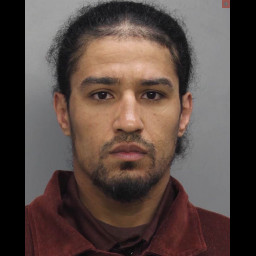
Benjamin Villanueva III, charged in the December 2023 shooting death of Jermaine Mullen, was found guilty of the crime Thursday evening, following a three day trial in the courtroom of President Judge Eric Linhardt.
The jury of 10 women and two men also returned a guilty verdict on counts of aggravated assault with a deadly weapon and tampering with or fabricating physical evidence.
Following an earlier outburst in the courtroom, Villanueva was not present in the courtroom.
“Put that in your newspaper, b*****s,” Villanueva said, addressing members of the media present in the courtroom.
Villanueva was taken into custody by the U.S. Marshals Violent Fugitive Task Force, Hartford Police Department, and Connecticut State Police in February 2024 and transported back to Pennsylvania for the killing of Mullen, which occurred in the early morning hours of Dec. 9, 2023, after the pair visited a local establishment and spent the next several hours together.
Mullen’s death was the result of a robbery gone wrong, with Villanueva in need of quick cash, assaulting Mullen, tying him up with the shoestring out of his own left shoe before placing him in the trunk of Mullen’s car, argued First Assistant District Attorney Martin Wade.
As Villanueva drove Mullen’s car east along Isabella Street, Mullen pulled the emergency latch on the inside of the hood, and began fleeing, at which point Villanueva exited the vehicle without putting the vehicle in park, shooting Mullen three times.
The death of Mullen was a targeted “hit,” Defense attorney Corey Chwiecko told the jury during the trial.
As the two drove along Memorial Avenue, they were boxed in by vehicles in front of, and behind them. They then ran from the vehicle with Mullen being shot by the assailants, Chwiecko said during the trial.
Earlier in the day, pathologist Dr. Michael Johnson testified that Mullen died of multiple gunshot wounds.
Mullen was struck by three bullets, one entering the left side of his face adjacent to his nose, one to the back of his right shoulder and one to his lower back.
The bullet entering his lower back injured his right kidney and lung, though all bullets caused a significant amount of blood loss, Johnson said.
Around the facial entry point was what Johnson referred to as “stippling,” which is made up of unburnt particles ejected from a firearm when a weapon is fired.
This indicated the gun was fired from an intermediate distance of inches to a few feet away.
Several other non-gunshot related injuries were noted by Johnson, including blows to both of Mullen’s knees and his left ankle. He was also missing his right front incissor, with swelling and bruising apparent on his upper lip.
Mullen also had an abrasion on the upper right side of his head, likely caused by “blunt force trauma,” Johnson said.
“This was a long trial with a lot jam packed into a few days,” defense attorney Corey Chwiecko said to the jury during his closing arguments, thanking them for what he called an “extremely important duty.”
“All I ask is for you to follow the evidence. And there is a lot of evidence the prosecution is ignoring or glossing over and they are going to ask you to do the same,” he said.
This evidence pointed to the presence of others at the crime scene, the attorney said.
Chwiecko first zeroed in on a blue beanie found along Braine Street.
That beanie was collected by authorities and tested for DNA and gunpowder residue, coming up positive for three unknown individuals. The hat tested negative for gunshot residue, however, indicative gunshot particles were found on the hat.
A positive result is made when three particles, lead, antimony and barium are present in one atom, whereas indicative particles result from the presence of one or two of those chemicals.
All three were found on the hat, but not in a single atom, leading Chwiecko to question how all three could end up on the beanie if it wasn’t in close proximity to the shooting.
He also questioned the existence of DNA profiles other than Villanueva on a removable fur lining from Villanueva’s coat that was found near Mullen’s body and the inside trunk of Mullen’s car.
That car was captured on surveillance video coasting into a parked vehicle along Isabella Street, which Chwiecko said would have had to make two impossible turns to get to that spot, insisting that someone had to have been driving it, bailing out before it came to a stop.
A shoelace from Mullen’s left shoe was near his body, which was devoid of any DNA aside from Mullen himself.
“If my client was tying him up, his DNA would have been transferred to the shoelace,” Chwiecko argued.
Indicative gunshot residue was found on the back of Villanueva’s jacket, which Chwiecko said could have only gotten there if he was running away from the shooters, with the residue being transferred to the front of the coat and its pockets as it was handled by Villanueva after the shooting.
“That can be the only explanation, otherwise the back of the jacket would have been clean,” he said.
Villanueva was caught on camera hiding his jacket behind a small fence in the 500 block of West Fourth Street around 4:23 a.m. before returning and going through the jacket just 25 minutes later.
Villanueva’s cell phone was discovered by police just up the street from where Mullen’s car came to rest. If he was trying to conceal a crime, he would have gone back to retrieve it, Chwiecko said.
Several pieces of evidence on that cell phone were entered into evidence by the prosecution, including a 9 mm Taurus GCS handgun, which matched the caliber of the bullets that struck down Mullen.
Chwiecko, however, pointed out that the firearm is one of the most popular types, and that the photograph was not taken by the camera attached to the phone.
Text messages from Villanueva to his mom in which he expressed a dire financial situation, having recently lost his job and unable to pay his rent were entered into evidence in order to establish a motive for the robbery were addressed head on by the defense.
“You saved me from crashing out,” read another message sent to his mom after she and a friend lent him money to help cover his rent, alleviating the cash-strapped situation he had previously been in.
Likewise, a message to his ex-girlfriend asking her to convince him not to make the mistake he was about to was in reference to Villanueva’s intention to break up with her, defense argued.
During a search of Villanueva’s ex-girlfriend’s phone, several suspicious Google searches were found according to prosecutors, including the query, “can cops break into iPhones.” Taking the stand at the trial, that ex-girlfriend said she did not recall making the searches, but added that Villanueva had not asked her to do so, Chwiecko reminded the jury.
Chwiecko also challenged the robbery motive, stressing that Mullen had dropped off $1,000 to his ex-girlfriend with Villanueva in his vehicle, but noted that it is impossible to know who could’ve seen a Snapchat video uploaded by a friend of Mullen’s just hours before the killing in which he was flashing a large amount of cash.
He further stressed that no evidence of Villanueva’s guilt, such as a murder weapon, Mullen’s wallet or a large sum of cash was ever found during searches of his home, as well as searches of his ex-girlfriend’s home and vehicle.
Despite expert testimony that the shot into Mullen’s face was from a distance of inches to a few feet, no blood was found on the recovered articles of clothing worn by Villanueva during the incident.
“Not one, not one single drop of Mr. Mullen’s blood was found on Mr. Villanueva’s pants or jacket from that close of a range,” Chwiecko stressed to the jury.
As for the presence of Villanueva’s hood at the scene, Chwiecko argued that it was pulled off by Mullen as he fell forward toward Villanueva after he was shot.
“What happened to Jermaine Mullen is tragic, but equally tragic would be finding someone guilty of a murder they did not commit,” Chwiecko said, adding, “the facts don’t stack up to that. There is reasonable doubt all over this case.”
“We keep hearing this word, ‘shooters,’ when in fact all the bullets came from one gun and one shooter,” First Assistant District Attorney Martin Wade said, after thanking the jury for their patience throughout the many breaks and delays in the proceedings.
Addressing Chwiecko’s closing arguments piece by piece, Wade stressed that the person who dropped the hat was not involved in the case.
“You can’t invent a person out of a hat,” he said.
“It’s tough to overstate the importance of the presence of the fur lining. At minimum it places him at the scene of the crime,” Wade said, adding that had that lining not been there, Villanueva’s defense would likely be that he was not present.
Additionally, there were many ways that lining could have been pulled from his jacket, including a struggle between the two men.
Additionally, Villanueva was the last person to be caught on video with Mullen prior to his death.
“Those two facts alone are enough to convict,” he said.
Despite the insistence of the defense that Villanueva and Mullen were long-time friends, the jury heard from four separate witnesses who testified to the opposite, Wade said.
Video evidence of the pair’s interactions merely show Villanueva following Mullen out of the bar and other locations, the ADA said.
“You heard that there was gunshot residue on the back of the defendant’s jacket. That is not true,” Wade said, arguing that the defense theory that indicative particles were transferred from the back of the jacket to the front work in reverse as well.
As for why Villanueva’s phone ended up in the middle of Isabella Street, Wade explained that it likely fell out of his pocket or off his lap as he jumped out of the car and attempted to chase down Mullen, stressing that he couldn’t go back for it because by that point, it was an active crime scene.
Stressing to the jury that the defense had already conceded that this was an act of intentional murder, Wade told the jury that actions speak louder than words.
“The non-forensics seals the deal. The defendant’s actions after the shooting prove that he was not a witness or a bystander, but the person who murdered Mr. Mullen,” the District Attorney said.
Despite being labeled as close friends by the defense, Villanueva did not contact police or emergency services following the shooting, instead choosing to hide in his ex-girlfriend’s home.
With regard to the lack of evidence at the site of the searches, Wade noted that it took an estimated 22 minutes beyond what it should have taken to reach his residence.
Villanueva used this time to conceal the firearm and possible other evidence.
“The gun was gone by the time he got home,” Wade told the jury.
The most important piece pinning Villanueva as the shooter was what called his “strategic placing of items of clothing” he was seen wearing that night, noting that after ditching the afford mentioned jacket and green sweatshirt, he deposited his pants and a white shirt in the dumpster behind his ex-girlfriend’s house.
Somewhere along the way, a green hat he was captured on video wearing also went missing.
“Why would he place them in separate locations? There was plenty of space in that dumpster for the coat and sweatshirt. He did it to mislead police,” Wade said.
Additionally, along with the searches made via his ex-girlfriend’s phone, there were attempts made to possibly clear data from his phone utilizing the iCloud feature, according to court testimony.
“The defendant either committed the crime or narrowly escaped becoming a victim himself. I suggest to you that one is far more likely than the other,” Wade told the jury.
“We never claimed to have perfect evidence,” Wade said, taking a broad aim at Chwiecko’s assertions.
“My job is to give you all the evidence that points to an act of foul play,” he said.
“When you take the forensic evidence in combination with his actions after the fact, I believe you will have no choice, but to find the defendant, Benjamin Villanueva guilty of all charges,” Wade concluded.