
Muncy Township officials sued for Sunshine Act violations
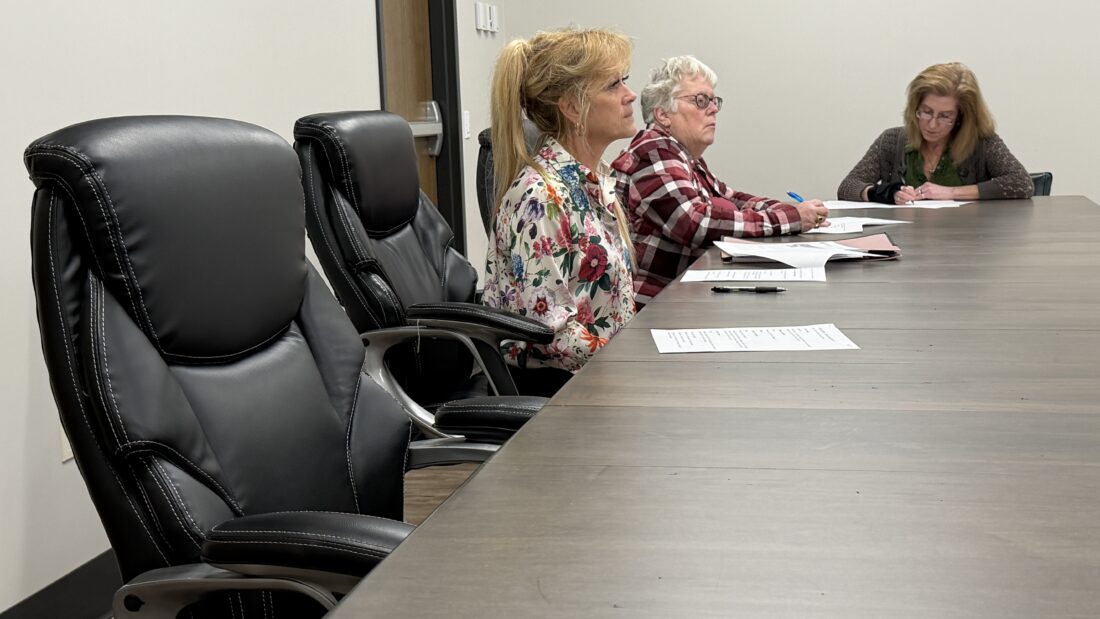
DAVE KENNEDY/Sun-Gazette
Muncy Township resident Cori Cotner has filed a civil complaint in the Court of Common Pleas of Lycoming County against the Muncy Township Board of Supervisors, the township’s planning commission, Supervisors Terri L. Lauchle and Denise B. Artley and planning commission member Lawrence Spatz, citing violations of the state’s Sunshine Act governing public meetings.
“Despite repeated objections and requests for compliance, the violations are ongoing and continuing, necessitating this Complaint,” the filing stated.
It details the actions which precipitated the complaint.
On Nov. 4, 2025, Lauchle was elected to a six-year term as a Muncy Township Supervisor, which runs until December 2031. The complaint stated that under the Second-Class Township Code, the board was required to hold a reorganization meeting on the first Monday in January, which was Jan. 5, 2026. The board was also required to select a chair at that meeting.
The minutes from the meeting attached to the complaint stated, “no vote to appoint municipal officers was taken.”
Over the course of January and February, there were additional special meetings held with public comment on agenda items permitted at two special meetings in January, the complaint stated, but not during the February meetings.
Although no public vote was taken during that time to grant Lauchle the position of board chair, the complaint alleges that she began referring to herself with that title.
On March 11, the board held a regularly scheduled public meeting. From the time it was posted on the township website on March 10 until the time of the meeting, the meeting’s agenda was altered and the opportunity for public comment on agenda items was removed. During the meeting, Lauchle then denied any public comment on agenda items and the board “proceeded to deliberate and act without such comment, in violation of the Sunshine Act,” the complaint said.
During that meeting public comment was only permitted at the end when official actions had already been taken, despite objections from those in attendance.
Action was also taken to direct the preparation of a historic preservation ordinance, “an item not listed on either the original or altered agenda, without following the required procedure for amending the agenda under the Sunshine Act,” according to the complaint.
“The actions and/or failures to act by the Board and Planning Commission at the March 11, 2026 meetings were intentional and purposeful violations of the Sunshine Act,” it further stated.
The complaint said that additional violations occurred at the Planning Commission meeting held prior to the Board meeting, including failure to provide an agenda and denial of public comment.
At no time during the township’s meetings through March 11 was there a township solicitor present and in fact the board was unable to identify if a solicitor or legal counsel of any kind had been employed by the township
“The Board’s refusal to have the Township solicitor present at meetings, despite requests from residents and taxpayers, is further evidence of intentional and purposeful violations of the Sunshine Act,” Cotner alleged in her complaint.
“The Board has a history of Sunshine Act violations, including improper procedures at reorganization meetings, failure to properly advertise special meetings, and failure to follow required procedures for agendas, public comment, and motion practice,” she stated in the complaint..
An advertised special meeting to retain a new solicitor was held on March 26 with Timothy Schoonover, of Babst Calland, being retained as solicitor. According to a newspaper article reporting on the meeting, “[a]ttorney Schoonover said ‘If the law is not being followed, I will not be solicitor for very long,’ said before the vote appointing him as solicitor — and before resigning on Friday afternoon.”
Schoonover resigned less than 24 hours after being retained, the complaint said.
Another special meeting was held on Good Friday, April 3. The agenda for that meeting did include comment on agenda items but not any opportunity for general comments and concerns.
Under the Sunshine Act, the complaint stated, ‘all meetings of agencies where official action is taken or deliberations occur must be open to the public, and the public must be given a reasonable opportunity to comment on matters that are or may be before the board prior to official action.”
According to the complaint, Count I violation of the Sunshine Act violation resulted when, “The agenda for the March 11, 2026 meeting, as posted on the Township’s website on March 10, 2026, included a designated opportunity for public comment on agenda items. However, the agenda made available at the meeting had the public comment opportunity removed…At the March 11, 2026 meeting, Chair Terri L. Lauchle denied the public the opportunity to comment on agenda items prior to deliberation and official action, despite objections from attendees and representatives of interested parties. The Board proceeded to deliberate and take official action on agenda items without providing the required opportunity for public comment…Public comment was only permitted at the end of the meeting, after official actions had already been taken, further violating the Sunshine Act’s requirements for public participation prior to official action.”
“These actions deprived the public, including affected parties, of their statutory right to participate in the meeting and to comment on matters of concern, official action, or deliberation before the Board. As a direct and proximate result of Defendants’ actions, Plaintiff and other members of the public were denied their rights under the Sunshine Act, and official actions taken at the March 11, 2026 meeting were in violation of Pennsylvania law.”
The document asked the court to “Declare that Defendants violated the Pennsylvania Sunshine Act, 65 Pa.C.S.A. § 701 et seq., at the March 11, 2026 meeting of the Muncy Township Board of Supervisors… Impose statutory penalties against Defendants as provided by 65 Pa.C.S.A. § 714, including fines and costs for intentional violations of the Sunshine Act. Award Plaintiff reasonable attorneys’ fees and costs as permitted by 65 Pa.C.S.A. § 714 and other applicable law.”
Additionally it asked that the court “Order that all official actions taken by the Muncy Township Board of Supervisors at the March 11, 2026 meeting in violation of the Sunshine Act be declared null and void.
The Count II violation of the Sunshine Act resulted when the township board held the advertised special meeting on April 3.
“The agenda for this meeting included an opportunity for public comment on agenda items, but did not provide any opportunity for residents or taxpayers to comment on general issues of concern to the Township, as required by the Sunshine Act,” the complaint stated.
As a result of not providing an opportunity for public comment on matters of general concern, the board deprived the plaintiff, Cotner, and other members of the public of “their statutory right to participate in the meeting and to comment on matters of concern to the Township prior to official action.”
The Sunshine Act “requires that the board or council of a political subdivision provide a reasonable opportunity at each advertised regular meeting and advertised special meeting for residents or taxpayers to comment on matters of concern, official action, or deliberation which are or may be before the board or council, prior to taking official action.”
The complaint asks the court to “Impose statutory penalties against Defendants as provided by 65 Pa.C.S.A. § 714, including fines and costs for intentional violations of the Sunshine Act. Award Plaintiff reasonable attorneys’ fees and costs as permitted by 65 Pa.C.S.A. § 714 and other applicable law;…(and) Order that all official actions taken by the Muncy Township Board of Supervisors at the April 3, 2026 meeting in violation of the Sunshine Act be declared null and void.”
The court is also being asked to “grant such other and further relief” as deemed just and proper.
The complaint was filed on April 10 and the plaintiffs have 20 days to respond.
.