
Trending
(EDITOR'S NOTE: Culinary Creations is a column that typically prints the last week of every month. It is written by Shawn L. Hanlin, executive chef of Le Jeune Chef Restaurant, operated by Pennsylvania College of Technology's School of Business, Arts & Sciences as a training site for students in culinary arts and baking pastry arts majors. Hanlin has been a chef for 40 years and was on Team USA for the World Culinary Olympics in Erfurt, Germany.)
Good day, all. Chef Hanlin here, from Le Jeune Chef Restaurant.
In the next few installments, we will be exploring salsas and similar sauces.
Not all salsas have to be spicy, and their heat level can be adjusted to your liking. You can also make salsas using many different ingredients. For example, fruit: Tropical fruits work well, like mango and pineapple.
We will learn the difference between avocado salsa and guacamole. We will also explore green salsas, using tomatillos instead of tomatoes.
By the time we are done with salsas, you will never buy jarred salsa again. Homemade is easy, fast, better and more economical. So get ready.
History of salsa: The cultures of the Aztecs, Incas and Mayans were likely where the origins of salsa began. Most likely, all these cultures ate some form of salsa.
A Franciscan missionary, working in Central America, documented Aztec foods, including a sauce made from tomatoes, chiles and squash seeds. This combination of ingredients didn't go by one specific name until the Spanish priest dubbed it salsa in the 1500s.
The Aztec tradition was passed down to future cultures living in Central America and Mexico. Now, salsa has come to be found throughout all of North America.
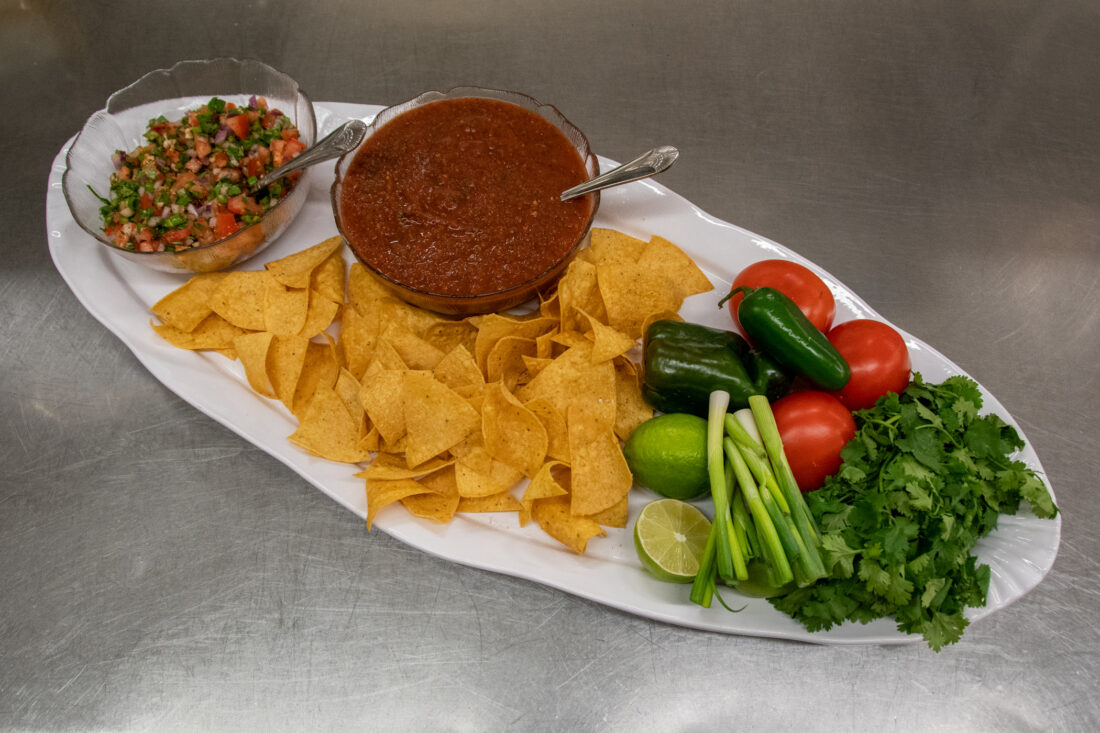
Today we will explore two basic salsas. The first one is a raw, fresh tomato salsa, commonly known as pico de gallo. All ingredients are finely chopped, with very little liquid being added.
This salsa is a great topping for tacos, quesadillas, etc.
Traditional Mexican pico isn't considered a dip. It is eaten as a topping on other dishes or even considered a salad.
The other salsa we will make today is, as I call it, a cooked salsa, or salsa taqueria: taco sauce. What we will make today is a quick version, using cooked, canned whole peeled tomatoes in place of fresh tomatoes.
We will have a list of ingredients, but not amounts, as this is totally up to you as for the heat level you will want to achieve.
We will also serve this with fresh corn tortilla chips, made much easier in Le Jeune Chef, as we have a deep fryer always on. We cut our fresh corn tortillas into wedges and dropped them in the deep fryer. You know when they are ready when the bubbling slows. After removing them from the fryer, we sprinkled them with kosher salt. Purchased chips will also work for this, but freshly fried tortilla chips are really much better.
The ingredients for both salsas are exactly the same, except the difference in the tomatoes.
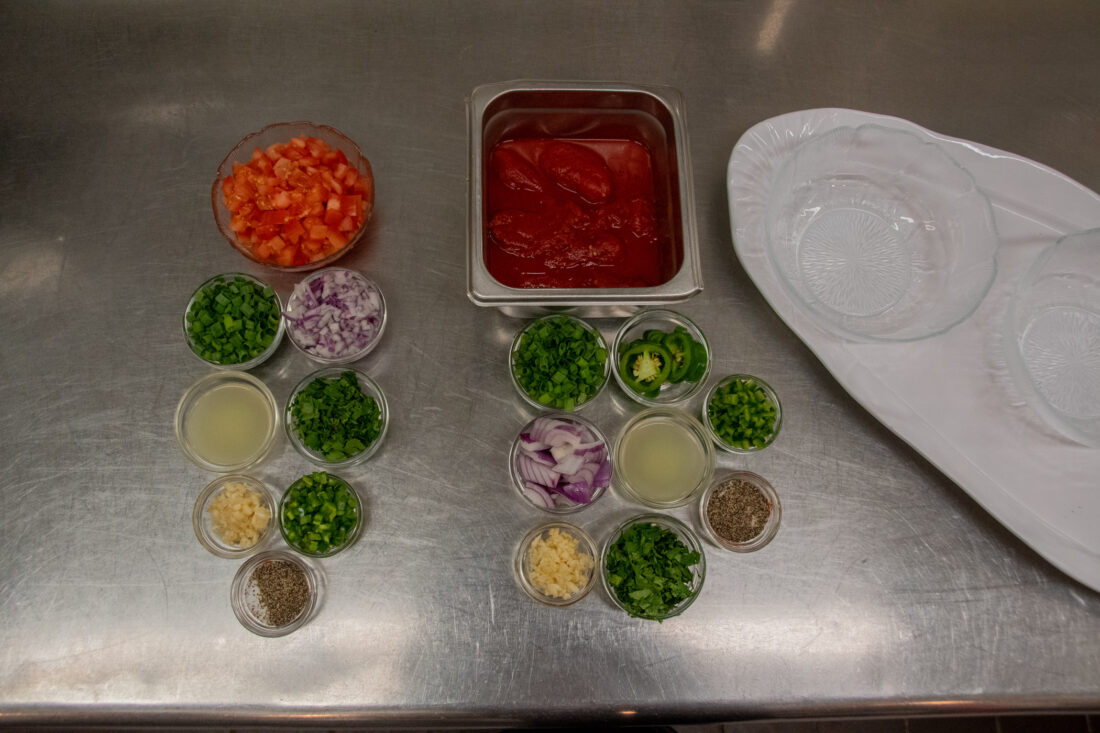
As you see in the photos, we have the two types of tomatoes (fresh chopped tomatoes and canned whole peeled tomatoes), and each gets: scallions, red onions (yellow onions are fine, too), cilantro, poblano, jalapeno (serrano can also be used, but remember they are hotter. Usually, the smaller the pepper, the hotter they are.), fresh chopped garlic and fresh lime juice.
They also get a number of dried spices including a little cumin, chili powder, cayenne pepper, kosher salt and black pepper.
For the pico de gallo, Finely dice the vegetables, place them in a bowl with the lime juice and dried spices, and mix them with a spoon.
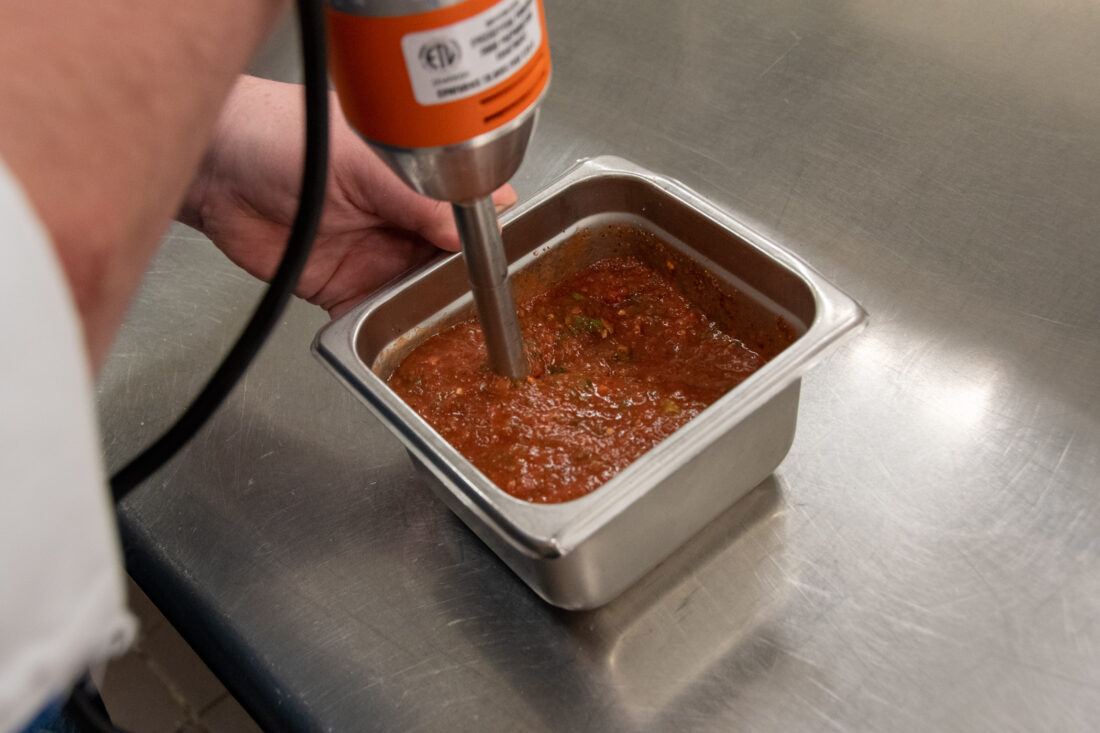
For the cooked salsa, Combine the canned whole tomatoes with the remaining ingredients, this time using a stick blender, food processer or home blender. If you use a home blender, be sure not to overblend it, because you'll lose all the color and texture. It's nice to have some chunkiness in the salsa.