Lawmakers get firsthand look at importance, challenges of home health care
-
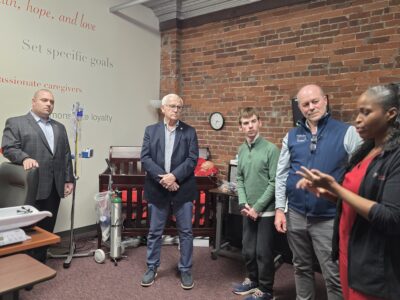
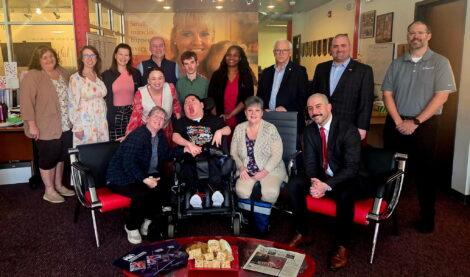
- State representative Joe Hamm, R-Hepburn Township, State Sen. Gene Yaw, R-Loyalsock Township, BAYADA client Jacob Stopper and State Representative Jamie Flick, R-South Williamsport listen attentively to Kwamaine Mathis, BSN, registered nurse and Clinical Instructor during a recent visit to the organization’s Third Street site.
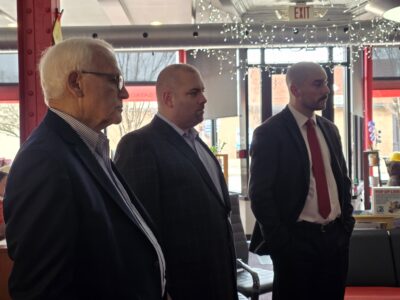
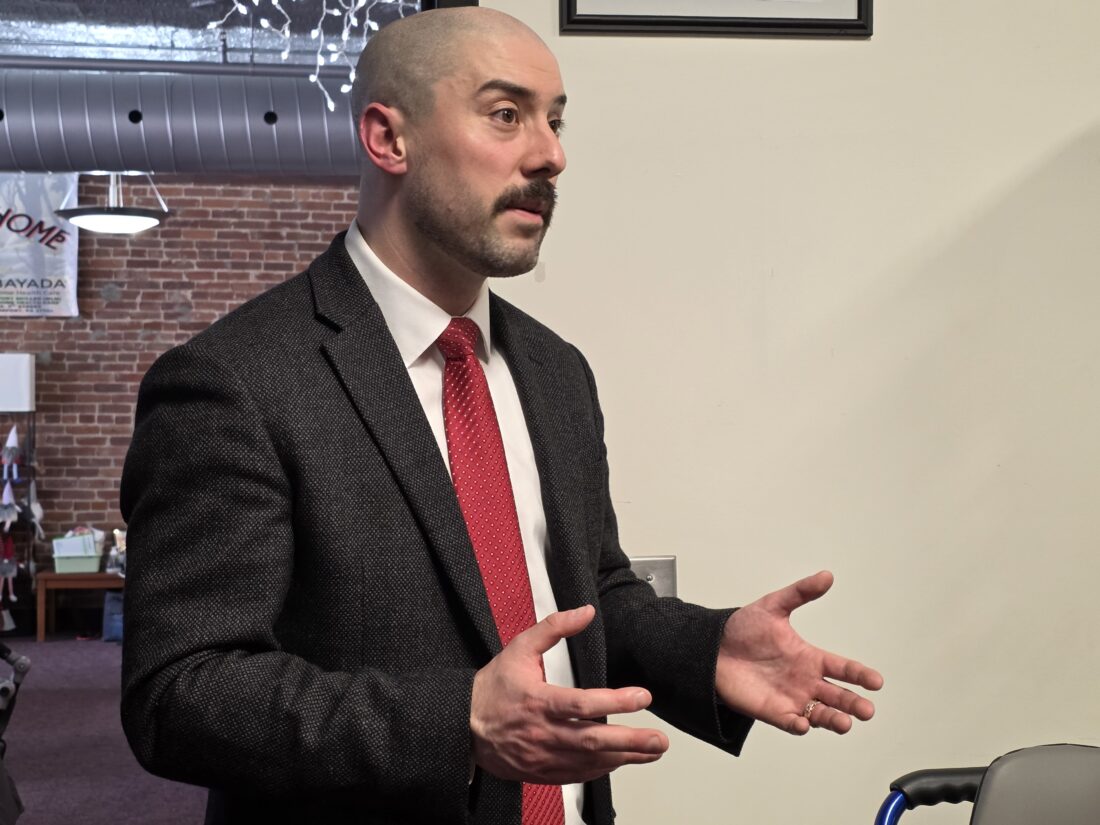
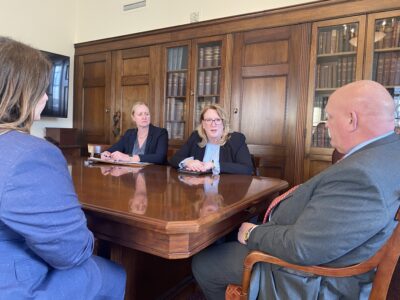
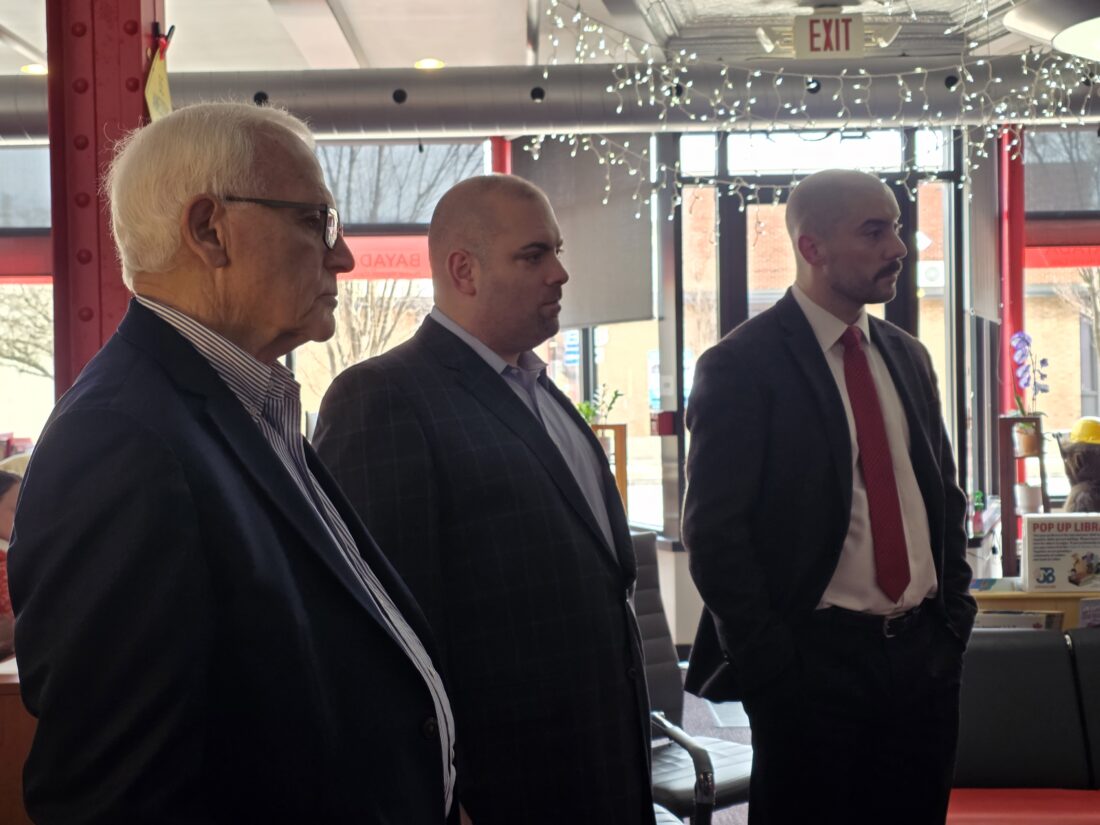
Local lawmakers got an up-close look at the importance of home health care, the shortages that have plagued the industry for years and the efforts BAYADA is putting forward to close that gap during a recent visit to its Third Street location.
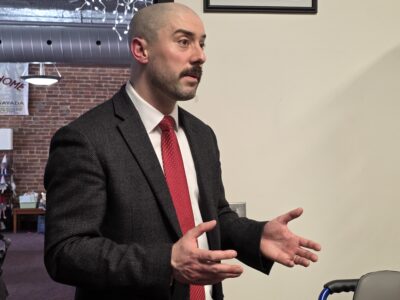
“The purpose of bringing you here today is to give you some insight into what we do here at BAYADA, why home care matters,” Williamsport director Jonah Milliken told state representatives Jamie Flick, R-South Williamsport and Joe Hamm, R-Hepburn Township, and State Sen. Gene Yaw, R-Loyalsock Township.
The lawmakers received an in-depth look at the facility’s SIM lab, which offers caregivers hands-on experience with a variety of situations that may arise in the field prior to working with real life clients.
“When you’re in home care, you’re working one on one, whereas in the hospital, you have other nurses that you can rely on or you may have a doctor on the floor that you can reach out to,” Milliken explained.
“In home care, the critical thinking skills and clinical capabilities are of a higher threshold,” he said.
“Everything that’s done in the hospital setting, we can do it at home. That’s medication management, that’s assessment of vital signs, tracheostomy care, if you have a difficult time eating or have an ostomy, seizure activities, aging or you just need care at home,” stressed Kwamaine Mathis, a registered nurse, clinical instructor, who holds a bachelors of science in nursing.
One of the ways through which BAYADA works to help make certain their caregivers are field ready is through their Advance Through Nursing Program, which provides scholarship, financial assistance and mentorship to their home health aides seeking to become licensed practical nurses or registered nurses.
Unlike many healthcare facilities that offer a sign-on bonus that ropes caregivers into working for the company for a specific amount of time, BAYADA offers up to $5,000 up front to help with the immediate costs of pursuing their license, and up to $10,000 in monthly student loan repayment post-graduation.
“Through that program, I also had monthly sessions where I met with a woman who would ask if I needed help with anything, if I needed support, and she would give me resources that other nurses gave her that worked for them,” explained Erin McAleer, LPN Nurse Resident.
“With the residency program, I still meet weekly with a mentor, and we talk about what we’re learning about, if there’s anything I need help with, skills I’m iffy about, or anything like that, and then it goes to monthly for the first year, so you still have that support even after you’re on your own,” McAleer explained to the lawmakers.
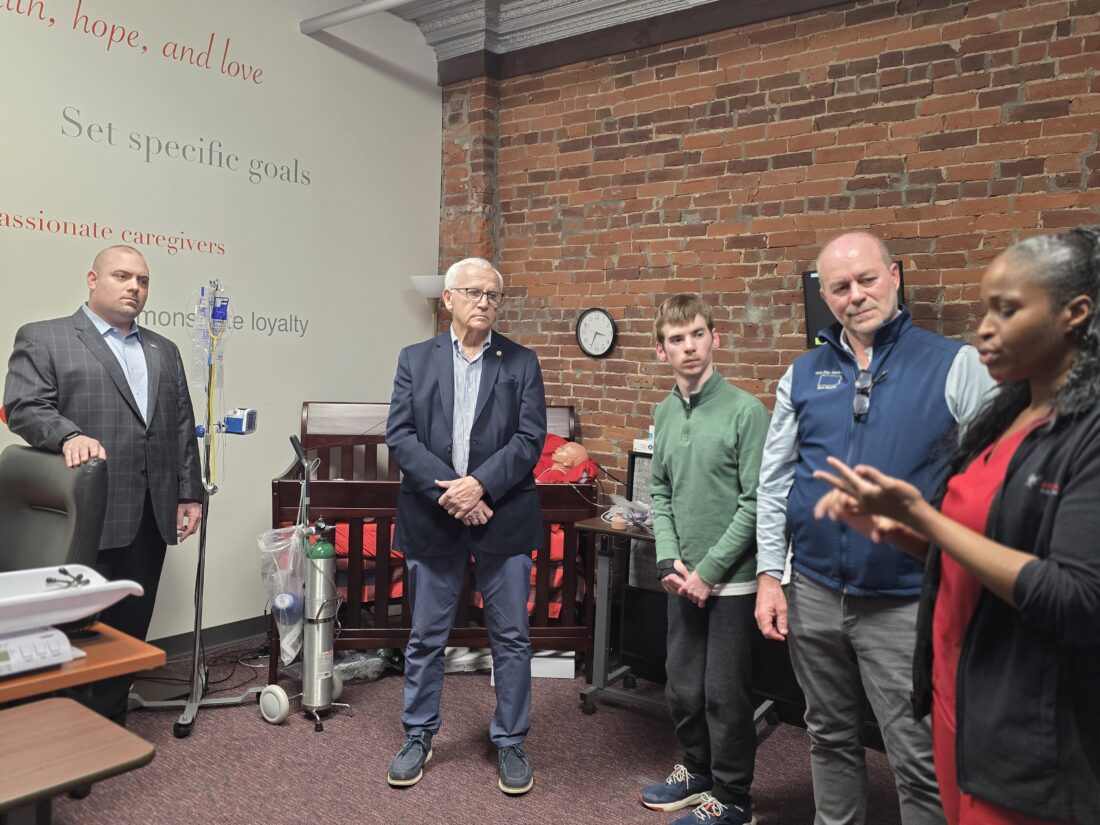
State representative Joe Hamm, R-Hepburn Township, State Sen. Gene Yaw, R-Loyalsock Township, BAYADA client Jacob Stopper and State Representative Jamie Flick, R-South Williamsport listen attentively to Kwamaine Mathis, BSN, registered nurse and Clinical Instructor during a recent visit to the organization's Third Street site.
“In the home care setting, you do have a community. However, that community is remote, so we make sure that in our core program, in the five weeks of training, our caregivers have not only simulation training, precept and hands-on training, but we make sure that we look at the nurse holistically, and are offering education programs,” Mathis said.
As part of that effort to retain those that come to BAYADA, the organization is one of the few to offer a wellness program, helping their staff navigate compassion fatigue, imposter syndrome, and any other challenges that may arise from their commitment to care.
While there are around 100 nurses working for BAYADA in Lycoming County, the waiting list of clients seeking care is extensive, Milliken said.
“Every single day, we get referrals, and honestly, what determines if we are able to fill that is if we have a nurse we can partner them up with,” he told the lawmakers.
And within rural communities, the need for home healthcare is even greater with how spread out larger healthcare facilities are, Milliken stressed.
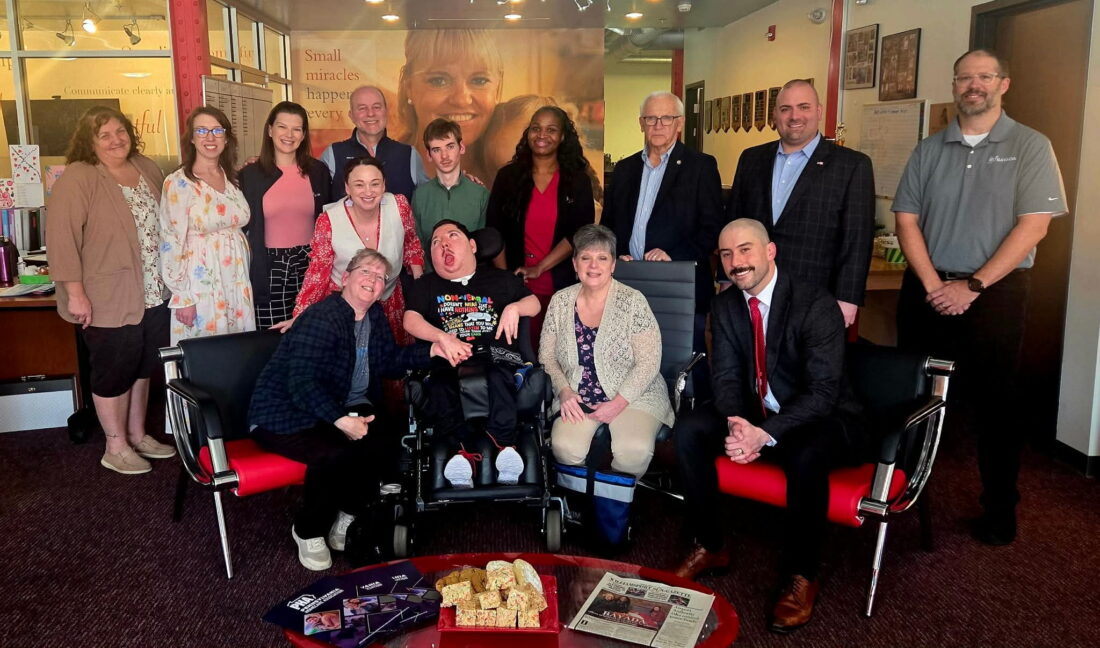
To give the lawmakers tangible examples of BAYADA’s impact on the lives they touch, two clients, Jacob Stopper and Brandon Eck, were invited to the presentation.
Two days before he was due to be born, Eck’s mother suffered a heart attack, and he was delivered pot-mortem.
Eck was diagnosed with cerebral palsy and has a trach and feeding tube.
“He’s nonverbal, but he has a lot to say, and he lets you know,” said adoptive mom, Tammy Walker.
Like many families without nursing assistance, when Eck’s nurse, LPN Deb Ergott, is unavailable, Walker takes over those duties, along with the rest of her everyday responsibilities.
This can lead to loss wages and overall stress on relationships. Additionally, the cost of facility treatment often dwarfs the cost of home healthcare.
“I don’t mind, it’s my life, but you take the back seat to everything, so I don’t know where we would be without the help at home,” Walker said.
“There’s other options, but my option is we will be together till one of us is called to our forever home,” she said.
To help alleviate the effects on families, BAYADA regularly works with other providers such as CareGivers America and Maxim Healthcare Services, through which Ergott is employed, to make sure clients have coverage.
Asked how the lawmakers can be of help, Milliken said the most important takeaway is to be aware that the need exists.
“If some kind of legislation or a budget passes your desk involving home care, this is the line item. This is your visual,” he stressed.
“Even within this small picture of home care, there’s totally different needs,” Milliken said.
“Very simply put, remember Brandon, Tammy, Erin, the entire office that there’s immunity. Community behind this system, and the lives that are affected,” Mathis added.
Each of the lawmakers walked away with a better understanding of the critical nursing situation.
“I was impressed by a number of things at BAYADA, including the focus on a positive work culture which was reflected in the faces of the staff who met with us,” Flick said in a statement to the Sun-Gazette.
“The opportunities for professional and personal growth are important for job satisfaction and employee retention,” the statement continued.
“They put a human face on the issues surrounding home healthcare, and I got a true sense of the impact good care has on people who are ill or disabled, and on their families. It’s meaningful to be able to stay in their homes and receive care,” Flick said.
“I appreciated the opportunity to visit BAYADA’s Williamsport office and see firsthand how they are tackling rural Pennsylvania’s healthcare workforce shortage,” Yaw told the Sun-Gazette in a statement.
“Programs like this create real pathways for people to enter the field, advance their education and ultimately become licensed and serve their own communities. It’s an innovative, commonsense approach that supports patients and strengthens our region’s workforce,” his statement said.
“It was very clear to me the employees have strong compassion and love helping others. They are doing exceptional work caring for our loved ones, friends and neighbors. The work they do is important and life changing and I can’t thank the BAYADA team enough,” Hamm said in a statement to the Sun-Gazette.
Milliken was grateful for the opportunity to speak directly to those with the ability to positively impact the current nursing situation.
“Our goal in hosting this visit was simple: to give our local decision-makers an accurate glimpse at the everyday realities of home care,” he said in a statement to the Sun-Gazette.
“By showing them the extensive training involved in preparing our in-home caregivers and inviting them to personally speak with the medically vulnerable individuals who rely on home care and the dedicated healthcare professionals who deliver it, we hope to have moved the needle even a little. So that when legislation or budget proposals cross their desks that directly impact home care services, the impact on real people – their constituents – is front of mind,” he said.
“We appreciated their compassion and thoughtful engagement, which reflected a genuine commitment to strengthening home care services. I recognize the complexity of the Commonwealth’s budget process, yet I remain hopeful that the support we all felt from them in our office will translate into meaningful action as they make decisions in Harrisburg,” Milliken’s statement concluded.
Health
Lawmakers get firsthand look at importance, challenges of home health care
Quilters craft cozy keepsake for newborn at UPMC Magee‑Womens
UPMC expert: Understanding the different types of rehabilitation care
Growing a career close to home: A Bradford woman’s journey in health care
UPMC expert: Your colon matters more than you think