
Local experts all agree hellbenders need better protections
Trending
There is a huge amount of therapy for me, at least, on super stressful days - when it feels like the whole world is falling apart and the sky is falling with work projects and other major situations - to lay down in bed at night and zero in my thoughts and prayers of thankfulness on a smaller scope of what is going right at home.
That even when all else is spiraling out of control, at least my immediate family and things within my two-acre corner of the world are OK, safe and secure.
I had that feeling, briefly, for the Eastern hellbender as I helped Dr. Peter Petokas this past July.
He and a student had collected a number of healthy hellbenders from a stretch of stream in our watershed and were collecting data - weights and other measurements, samples for fungal testing, observations on how they are doing. Eventually, each hellbender was placed carefully back at the exact spot it was collected.
The work wasn't hard but it was meticulous, tiring and yet refreshing. Petokas pointed out that this was one of the best stretches of hellbender habitat possibly in the country.
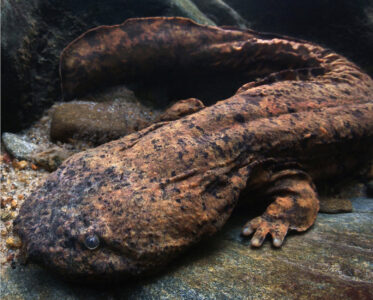
Hellbender numbers have drastically declined across the country - Petokas estimates that 95 percent of their populations have been lost in our watershed alone. Yet, at that very moment for those specific hellbenders, life was good. They could take a breath (through their lasagna-like skin flaps), feast on crayfish and be thankful.
I could relate with that zeroed-in moment of peacefulness.
However, that feeling doesn't last and we can't use that sense of security to ignore the bigger-picture need for species protection. The reality is that these sections of hellbender habitat utopia are nearly gone and the few remaining face threats both upstream and down.
The US Fish and Wildlife Service (USFWS) decided in 2019 to not grant the hellbender a threatened or endangered listing under the Endangered Species Act. Around that same time, we were celebrating the Loyalsock Creek and the hellbender itself (naming it our state amphibian) here in PA. None of that really mattered when a few years later a coffer dam failed and sediment buried pristine hellbender habitat - one of numerous issues facing the species.
Our association joined several others in pushing the USFWS to have to relook at its 2019 decision and this past fall (on Sept. 5, 2023), a federal judge agreed.
Later this year, the agency is expected to share new information and update its decision.
Interestingly, Pennsylvania, in 2025, will be releasing its 10-year update of the Statewide Wildlife Action Plan, which will include the status of the hellbender, currently only a species of special concern (which does not trigger any real protections when stream work is done near known hellbender habitat).
However, when a group files for a NPDES (National Pollutant Discharge Elimination System) permit for earth disturbance related to any waterway, applicants must provide proof of consultation with the PA Natural Heritage Program regarding presence of any state or federally threatened or endangered species.
If authorities determine that the proposed earth disturbance activity may adversely impact the species or critical habitat, it could require a change in construction plans or some other remediation to protect the species.
I personally don't know the exact science for deciding whether a species should be listed, and I don't know the hellbender's status beyond the Susquehanna watershed. However, I do know that we have some of the world's best authorities on this species right here in our watershed.
So, I interviewed Petokas again this summer for a fresh update on the status of the hellbender. And then I checked in with Matt Kaunert, the newish director of Lycoming College's Clean Water Institute who has a long history of hellbender work in western PA. I even sent some questions via email to Dr. Mizuki Takahashi of Bucknell University, who has studied giant salamanders in Japan to look at the world-view situation for hellbenders.
Instead of weaving their comments into one long comprehensive story, I kept them separate, hoping to illustrate not only their notable differences in approach to studying these animals but more importantly the similarities they have.
The bottom line is that there is MUCH we don't know about this secretive, nocturnal species despite its longstanding residence in our watershed. We are just starting to understand it and the pollutants that threaten it.
It deserves a cushion of protection until we better understand it, its unique reproductive habits and the cocktail of contaminants that threaten it … at least in our Susquehanna watershed where we are down to a few dwindling pockets of ideal habitat that so easily could be wiped out if we aren't very careful.
Right now, officials are fighting to reintroduce species in PA that have been completely lost like the American Marten. Let's not let the hellbender get so far gone that we need to fight 100 years from now to reintroduce it from scratch.
An online petition to demand agencies protect the Eastern hellbender as either threatened or endangered is listed on the Middle Susquehanna Riverkeeper Association's website via change.org.
The Middle Susquehanna Riverkeeper Association serves an 11,000-square-mile watershed of the Susquehanna River, including Sullivan, Lycoming, Clinton, Union and Northumberland counties. Read more at www.middlesusquehannariverkeeper.org.