Trauma center designation for UPMC Williamsport expected to save lives
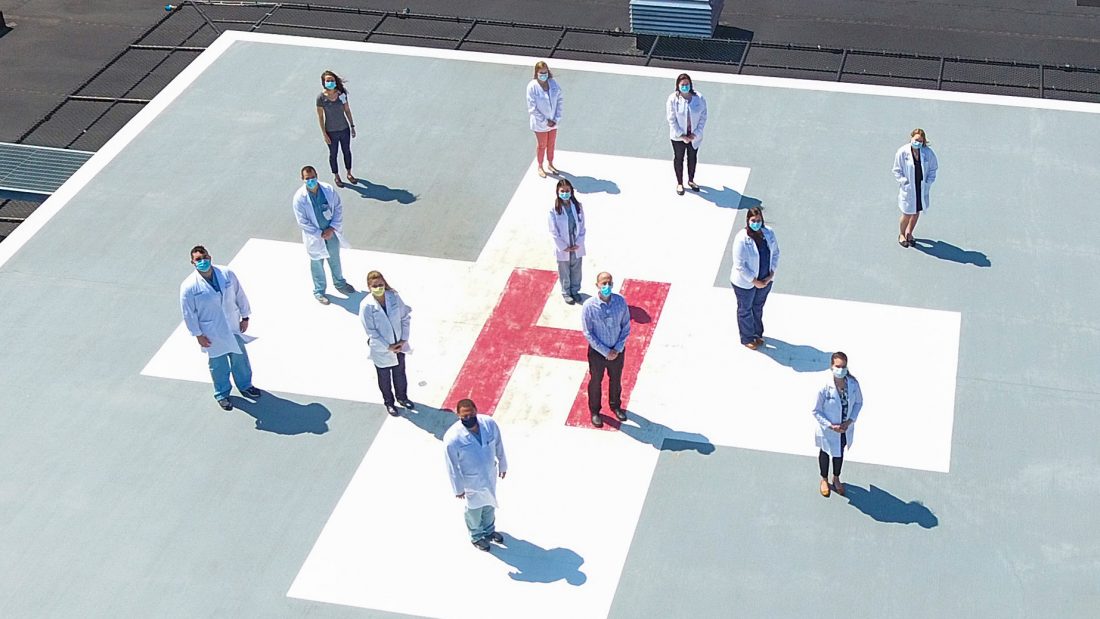
DCIM100MEDIADJI_0078.JPG 0.91.142 Dr. Elefant and Trauma Team for spring 2021 Foundation Focus Magazine
PMC Williamsport has been granted Level II Trauma Center accreditation by the Pennsylvania Trauma Systems Foundation, putting in place a team of surgeons and others who specialize in dealing with patients suffering from gunshot wounds, stabbings, car accidents, and falls that break bones.
This accreditation goes into effect on Sept. 1 after at least four years of preparation.
“UPMC Williamsport’s accreditation as a Level II Trauma Center offers life-saving benefits for our patients and the community, including more rapid critical care treatments, enhanced emergency surgery outcomes and real time coordination with Level I trauma experts within the UPMC network,” said Steve Johnson, president, UPMC in North Central Pennsylvania.
“We now have amazing trauma, ER, paramedic and critical care teams right here in Williamsport 24/7,” Johnson said.
In addition to having a trauma surgeon in the hospital 24 hours a day, an operating room (OR) readiness team is on standby around the clock, Johnson said.
UPMC Williamsport’s trauma OR is dedicated solely to trauma patients and is equipped with the most advanced tools for delivering high-quality emergency care the moment it is needed, he said.
Centralized location to fill gaps of service
Williamsport’s centralized location serves patients as far north as Wellsboro and the New York border, and fills gaps to the west such as eastern Clinton, Cameron and McKean counties.
Emergency medical service protocols dictate that the most seriously ill patients get transported to a Level I or II trauma center and UPMC Williamsport is one of just three trauma centers in the 12-county region and this marks UPMC’s sixth accredited trauma center in the state.
These facilities and trauma teams provide a high-level care incorporating a team approach involving departments throughout the hospital offering 24-hour services to severely injured patients.
Trauma surgeons, neurosurgeons, orthopedic surgeons, cardiac surgeons, radiologists, nurses, and support staff all have specialized training and expertise in treating traumatic injuries.
Besides clinical duties, trauma experts from UPMC also provide community education and outreach through accident awareness and prevention programs such as Stop the Bleed and SLIP or Senior Lifestyle Injury Prevention as well as car seat and helmet checks, and distracted driving events.
UPMC went through a vetting process, with a site visit on June 3 and the results announced this week.
Time is of the essence
“Trauma is any injury that occurs to the body from an external force,” said Dr. Ronen Elefant, medical director and a trauma surgeon, Trauma Services, UPMC of North Central Pennsylvania.
Time is of the essence and the quicker the patient gets into surgery the better chances for survival, Elefant said.
In medical circles, he said, it is known as the ‘golden hour.’
Typically, the first hour after the trauma is the most crucial and the quicker the patient gets into surgery the higher the survival rate is.
Top causes of trauma
In this region, the most common causes of trauma injury that bring patients in are falls, motor vehicle crashes, burns, and gunshot wounds, according to UPMC staff.
These events cause life-threatening trauma in multiple areas of the body.
Once that happens, a team of surgeons and the rest of medical professionals are at the ready.
It’s simplistic to toss around the word trauma without understanding the complexities of the scenarios encountered by the patient, their families and the care givers.
Most of the trauma treated locally is the result of blunt force, such as what happens in vehicle accidents, bicycle upsets but trauma may be caused by a projectile or bullet or knife penetrating the skin and causing internal organ injuries and loss of blood.
In some cases, the trauma patient requires a team of medical professionals and those in sub-specialties such as for injuries to the brain or bones.
Most internal organ damage can be treated by generalized trauma surgeons. In certain cases, such as replacing limbs or facial injuries, while some of the work can be done locally, those patients are often taken to level one trauma centers, Elefant said.
Reaching this pinnacle
Since starting the journey, trauma patients and families have been grateful because it allows them to be here instead of being several hours away, said Star Bixby, manager, Trauma Services. UPMC, North Central Pennsylvania.
UPMC has the resources from the emergency medical technicians and paramedics, to the emergency room and surgeons and the rehabilitation center.
“The big thing is life saving treatments are here in their own backyard,” Bixby said.
“UPMC elevated care throughout its sub-specialty services helping to make the hospital better for all patients,” she said.
It’s unique because the services in the hospital start with the patient in trauma and end up with their discharge, she said.
Close matters
“Medical emergencies and accidents can happen to anyone, and time is of the essence for treatment so there are significant benefits to having access to such high-level care close to home,” said Jason Fink, president and CEO, Williamsport/Lycoming Chamber of Commerce.
“I can speak from firsthand experience after being hit by a car while on my bicycle earlier this year.
“My kneecap was shattered, a traumatic injury requiring specialty care.
“In the past, I would have had to leave the area for treatment.
“Fortunately, UPMC now treats these types of injuries locally and I was able to get the care I needed at UPMC Williamsport, within two miles of my home and family. My surgeon and physical therapy team were exceptional and had me up walking and back to running and biking quicker than I thought possible. UPMC is bringing access to this advanced, life-saving care right here when it’s needed most and that’s exciting for our community.
“Adding trauma service capabilities is part of UPMC’s continuing investment to advance specialty care in the region.”
Post care and effects of accreditation
After discharge, a trauma survivors network is available to pair up those who can share in their similar experience as they continue to heal.
The new designation is expected to attract top-level career-minded individuals with high level of skills to want to work for UPMC, Elefant said.
Internally, the trauma center designation has already resulted in demonstrations of excellence.
UPMC recognizes its employees with a special award given to those who’ve shown initiative and who’ve stepped up to the challenge in trauma cases.
Recently a technician involved in patient care had the foresight to prepare life-saving equipment in advance and was recognized for his efforts by the trauma team.
“This accreditation validates the years of work and progress made by our physicians and staff,” Elefant said.
“We’re proud to now offer our communities a new level of life-saving trauma care closer to home right here.”
Top News

Histories collide with Victorian house, law firm on Millionaires Row in Williamsport
Lycoming County’s public safety director presents plan to ease staffing shortage
When someone calls the county’s 911 center, it’s usually at a time of crisis in their lives. Currently that ...
Attorney’s concerns include water, proximity of proposed egg farm in Muncy Creek Township
“It is not just a case where ‘it’s allowed to be here, so let’s let it happen’ . . . sometimes just ...
Former 911 dispatchers share thoughts on possibility of future ‘public safety disaster’ in Lycoming County
Warning that the county is facing a possible “public safety disaster,” particularly as seasonal threats of ...

Pedestrian dies after being struck by SUV on I-180 in Fairfield Township