Williamsport Mayor Derek Slaughter: State tax reform a necessity
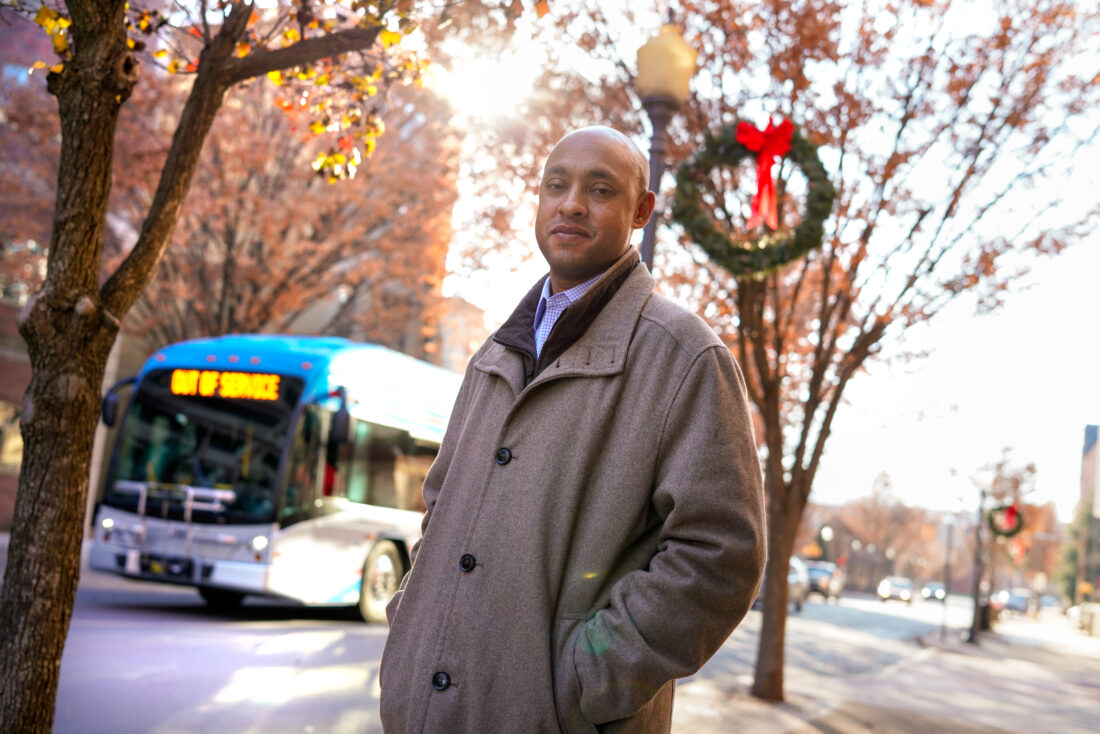
Mayor Derek Slaughter stands on 3rd Street in dowtown Williamsport Dec. 12, 2023. Mayor Slaughter was first elected in 2019 and is now in his second term after being reelected and running unopposed this year. DAVE KENNEDY/Sun-Gazette
Mayor Derek Slaughter said with real estate tax as what third-class cities use to gain enough income to operate, state legislators are those who need to change the outdated tax law, giving cities more flexibility and options to bring revenue in to add to their coffers.
“We hear that,” Slaughter said of the concerns expressed by city taxpayers who pay not only city tax but also county and Williamsport School District tax.
The city tax levy of 16.72 mills next year with a half mill tax increase equates to the average household assessed at $100,000 paying $1,672 a year in city tax.
With the other taxes that is near to or over $4,000 annually in tax for homes with similar assessed values.
The half mill generates $430,479, according to the budget, and Slaughter asked for 1 mill to cover a $825,000 deficit. The finance office looked at and was okay with council dipping into the American Rescue Plan funds to cover purchasing expenses and that brought the millage to a half mill.
But now that the ARPA, a one-time contribution, is done, with allocations needing to be completed by the end of 2024 and spending by the end of 2026, Slaughter and several on council said they are looking for help from legislators to change the outdated tax law and that may be returning to whether the city government structure may have to change from optional charter government to other forms.
As an example of the limitations on taxes generating revenue for the city to operate, Slaughter cited the local services tax of $52 a year per employee as “not a lot to work with.”
If tax reform does not happen, cities such as Williamsport — which has adopted a $30 million budget with a half-mill of real estate tax hike, half of that coming from property taxes based on this year’s budget — have few other means of raising revenue except through earned income, business privilege, mercantile and Local Services taxes and from permits for building and construction.
Despite yeoman efforts by city Treasurer Kevin Mackey to collect mercantile and business privilege tax in house, and various departments tightening their belts, the need for tax reform is again a siren call from taxpayers heard by the mayor and City Council as they wrestled with yet another tax-increase budget.
As an example of how antiquated the tax system is in this state, Slaughter pointed out a comprehensive report done by the Pennsylvania Economy League, referring to how it is “not 1965 any more,” and how decades’- old tax laws made third-class cities dependent on real estate tax.
“It was presented to use at the Pennsylvania Municipal League,” said Slaughter, who, this fall, is expected to become that organization’s president. The report outlines how there must be reform but it has to come from the state legislators.
This year, revenues are more than expenses, but that has not always been the case, he said.
He added how the state legislators should be asked to come up with more practical means of decreasing deficits that include ideas beyond the real estate tax and what seems certainly to be potentially annual increases if the status quo in state tax law remains intact.
Top News

Expanding broadband in rural Pa. was complicated by rule changes and uncertainty in 2025

Trout Run native sees novella put to film
City of Williamsport plans for revamping of housing funding

Lycoming County real estate transactions
Montgomery Area School District seeks new legal counsel