
State addressing heat-related damage to roadways
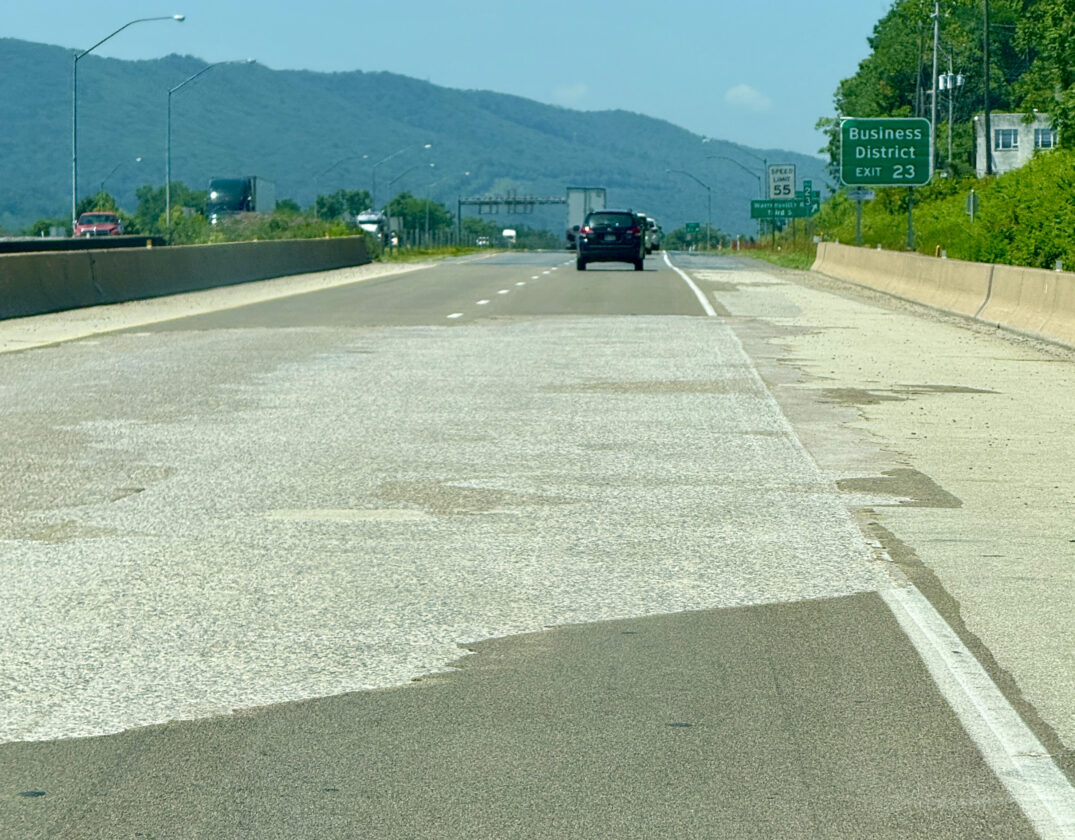
DAVE KENNEDY/Sun-Gazette A patch on the bridge on Interstate 180 West over Loyalsock Creek in near Montoursville on Tuesday.
The blazing heatwave has caused superheated roadways leading to asphalt melting, bumps on Interstate 180, and shattered epoxy bridge overlays in several locations in the region.
Asked what is coming off the driving surface of the bridges and locations, the state Department of Transportation (PennDOT District 3 Montoursville) said there are problems at Route 405 in Muncy, I-180 Montoursville, Route 880, Route 15 in Northumberland, Route 6 in Bradford, and Interstate 180 over Fairfield exit.
The epoxy bridge deck overlay is coming off some of the bridge decks.
Asphalt melted on eastbound Interstate 180 in Williamsport between the Market Street bridge/Route 15 and Basin Street entrance ramp.
“Due to excessive heat, the asphalt expanded creating a bump in the surface of the road,” stated Maggie Baker, a department spokeswoman.
Motorists were urged to slow down and drive with caution. A variable message board and bump signs were put up to alert motorists until the roadway can be leveled, a news release said.
The bump in the road was repaired overnight Wednesday, according to PennDOT.
PennDOT had their work crews perform emergency repairs on Interstate 180 near Montoursville, where the bridge surface was ripped off in places causing a bumpy riding experience and potentially hazardous conditions for those on motorcycles.
Several calls were placed to the PennDOT offices about the epoxy breaking into pieces in some locations.
Near Muncy, the bridge crossing Muncy Creek in Muncy Creek Township also was experiencing the same heat-related epoxy damage as was one on Route 880 near Rauchtown.
PennDOT engineers say they are examining why the extreme heat was impacting the epoxy treatment in this manner.
The epoxy bridge deck overlays are a thin layer of material, usually epoxy resin and an aggregate that are applied to the existing bridge deck.
Why does the department place epoxy on bridges?
“The material is a preventative form of maintenance,” the department stated. The epoxy overlays protect the bridge deck from water and deicing salts, wear and tear, and overall help extend the life of the structure.
A thin layer of material, usually epoxy resin or polymer is applied to the bridge deck. This acts as a binder. An aggregate is then added to the epoxy, which enhances safety by improving traction.
So why is the epoxy coming off the surface of some bridges? PennDOT engineers said they are reviewing possible causes of the separation, also known as delamination, and why it is occurring on some bridges and not others.
What is PennDOT doing about the epoxy coming off the bridges?
“Our maintenance forces and/or contractors are cleaning up any loose epoxy as the Department identifies epoxy separating from the bridge decks,” engineers said in response.
“The Department is reviewing causes of the delamination and why it is occurring on some bridges and not others. It does appear that the high temperatures are a factor in the premature failures issues,” the engineers said.
Does the epoxy being removed impact the integrity of the bridge?
“The epoxy is a protective layer and the separation of the layer does not impact the integrity of the bridge and are the areas where epoxy is broken up dangerous to drive over?
“Maintenance crews will continue to review and clean up any loose epoxy from the bridge decks. Meanwhile, the underlying concrete bridge decks are safe to travel on.
“Motorists should always give their full attention and be alert for possible hazards. Motorists are encouraged, too, to report roadway concerns to PennDOT by calling 1-800-FIXROAD. If large debris is making the roadway unsafe, motorists should call 911.
Overall, the district has been using epoxy overlays for about 20 years with good success.”
“As issues are identified with the epoxy overlays, the department reviews the bridges to plan for appropriate repair strategies,” PennDOT officials said.
Top News
Things are looking better at the landfill
It was another week of good financial news for the county, according to Lycoming County Commissioner Marc Sortman, ...

Real estate transactions

Night lights at the Lycoming County Fair
Supervisor questions pay rates for secretary and solicitor
PENNSDALE – The issue of whether the part-time secretary position at Muncy Township is overpaid was a topic of ...

Sen. Lindsey Graham dies after a brief and unexpected illness
Law enforcement officials address video of detective following, questioning teen
Two law enforcement offices have responded to a video clip circulating online. In the video, a young man crossing ...