
Emergency Muncy Township meetings cause tension
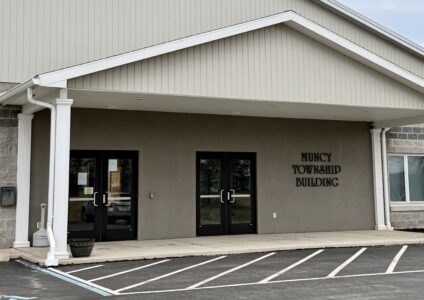
Muncy Township supervisors in Pennsdale are wrestling with some thorny issues as they begin the year, causing the ire of residents and angst as two state troopers attended a hastily-called special meeting Tuesday night.
Nothing done at the meeting required the state police to intervene and the troopers walked out after the meeting was adjourned. It was not certain who specifically asked for the police presence, but Supervisor Terri Lauchle, chair, said it was done to ensure the meeting was orderly. The township has its own police department.
Still, the charged atmosphere inside the township building remained palpable, as residents were informed that an emergency situation existed to get four employees — two police officers and two road crewmembers — paid after a 2026 budget was approved last year.
After this meeting, Lauchle released a statement for the news media:
“Our responsibility is to restore order, protect township operations, and keep government functioning for residents. That’s what the board is focused on.”
The township is in flux because, as of Dec. 31, former township manager Gwen Pidcoe resigned, according to the supervisors. In the Jan. 5 reorganization meeting, “everything was tabled,” Lauchle said, leaving a fast-approaching payroll deadline — today — to pay the police and road crew.
Lauchle and Supervisor Denise Artley agreed to post a notice of the special meetings on the front door of the township building with an agenda listing their purposes to meet payroll obligations, hire a tax service and to hire a secretary-treasurer for the office.
The supervisors Monday temporarily hired a Turbotville-based tax service for $75 a month, and on Tuesday Lauchle and Artley approved hiring former county controller Krista Rogers, also on a temporary basis. Supervisor Heath Ohnmeiss was working and arrived after the Tuesday special meeting was adjourned. He was at the Monday special meeting.
Moreover, because supervisors, by a quorum, did not permit public comment during the two open meetings and did not place the advertisement of the special meetings in a newspaper of record, the ire of some of those who came meetings was evident – as some inside the supervisors’ meeting room declared the board was in violation of the state Sunshine Act, a law that requires agencies to deliberate and take official action on agency business in an open and public meeting.
The Sunshine Act requires that meetings have prior notice, and that the public can attend, participate, and comment before an agency takes that official action.
The Office of Open Records (OOR) does not enforce the Sunshine Act, but it does provide training on the law.
Ohnmeiss expressly warned Lauchle and Artley about the open records law concerns Monday, after he spoke ahead of the meetings with Pennsylvania State Association of Township Supervisors, whose staff member told him that special meetings required public comment and advertisement in the newspaper.
“Krista is overly qualified,” Lauchle said to the Sun-Gazette after the meeting.
“This is a temporary position,” Artley said.
Rogers, who had served as Lycoming County’s controller since 2004, resigned her position last year.
Rogers had been involved in legal actions with the county commissioners since 2021 over what department should have control of the general ledger, payroll and accounts payable functions which the commissioners had removed from Rogers’ office citing problems.
The case was settled in Rogers’ favor and the county was required to pay legal fees associated with the trial totaling over $80,000.
When asked why the supervisors are running the meetings without the legal guidance of a solicitor, Lauchle said, the firm of Perciballi and Williams, Williamsport, provided such service as of 2025. When asked by the Sun-Gazette where the solicitor was, Lauchle said she could not say as the supervisors had not decided on which firm would provide that service in 2026 and during reorganization everything was tabled, or delayed, she added.
When asked about not permitting public comment during the special meetings, Lauchle said the township was facing an emergency situation and Artley added many of the questions that residents might have could not be answered as these were special meetings, not regular monthly supervisors’ meetings. It should be noted that after the meeting was adjourned residents asked questions but not on the record.
During one of the meetings, a resident said payroll is not an emergency and special meetings require public comment.
As for those open records complaints, an attorney specializing in state Sunshine Law was told about the townships’ actions taken thus far based on what has transpired, including the declaration of an emergency, supervisors posting the meeting notice on the door and not permitting public comment.
“That doesn’t appear to meet the very narrow definition of emergency meeting in the Sunshine Act, so there are questions about compliance in this situation,” said Melissa Bevan Melewsky, Media Law counsel at the Pennsylvania NewsMedia Association.
Special meetings under the Sunshine Act require public notice of the date, time and location at least 24 hours in advance in a newspaper of general circulation, Melewsky said.
However, emergency meetings do not require public notice, she added, but all the other requirements the law attach, including minutes, right to record, public comment, etc.
The act defines “emergency meeting very narrowly:
An emergency meeting is called for the purpose of dealing with a real or potential emergency involving a clear and present danger to life or property. It was not clear to Melewsky that it was an emergency as payroll did not seem like “a good fit.”
As to public comment, the plain text of the law requires public comment at regular and special meetings, but there is also a First Amendment right for any meeting where individuals are impacted, Melewsky said.
If it is determined there were legal missteps or misinterpretation of the law the actions taken these can be amended in a future regular meeting, Lauchle said.
“We can agree to disagree,” Ohnmeiss said after the meeting to his co-supervisors on the potential Sunshine Law violation.
Lauchle remained adamant that the supervisors had discretion to not permit the public comment at the special meetings, and said that the meetings were “duly advertised’ and posted on the door, because of the “emergency” of the obligation to get the employees paid and ensure the continuity of local government.
The township could face penalties if found to be in violation of the Sunshine Act. In addition to being assessed attorneys’ fees, any member of an agency who is found to have willfully violated the act can face criminal charges and be subject to fines of $100 to $1,000 for the first offense, and $500 to $2,000 for the second offense. Any fine must be paid personally; an agency cannot pay the fine.
A court can also award attorney fees to the prevailing party if the court determines that either (1) an agency willfully or with wanton disregard violated the Sunshine Act or (2) the legal challenge was of a frivolous nature or was brought with no substantial justification.
To the extent anyone knows or suspects that a criminal violation of the Sunshine Act occurred, the county District Attorney in which the agency is located has jurisdiction to decide whether prosecution of such complaints is appropriate.
Top News
Emergency Muncy Township meetings cause tension
Muncy Township supervisors in Pennsdale are wrestling with some thorny issues as they begin the year, causing the ...

History alive and well at Pennsylvania Farm Show
Former Williamsport Area High School principal’s resignation finalized
The Williamsport Area School Board approved the resignation of High School principal Roger Freed, almost a year ...
City of Williamsport appoints sewage enforcement officer
Emergency meetings held over payroll, vacant position for Muncy Township
