
At 100 years old, historic Bowman Field evokes memories
SUN-GAZETTE ARCHIVE PHOTO
SUN-GAZETTE ARCHIVE PHOTO
SUN-GAZETTE ARCHIVE PHOTO
SUN-GAZETTE ARCHIVE PHOTO
SUN-GAZETTE ARCHIVE PHOTO
SUN-GAZETTE ARCHIVE PHOTO
SUN-GAZETTE ARCHIVE PHOTO
SUN-GAZETTE ARCHIVE PHOTO
Trending
Countless stories, rich in history, many of them colorful, are part of Journey Bank Ballpark at Historic Bowman Field, a community landmark marking its 100th birthday this year.
And perhaps no two people know more about the old stadium and the many players and personalities who've been part of its legacy than Lou Hunsinger, a city native and author, and Williamsport Crosscutters Vice President Gabe Sinicropi.
The two recently enthralled the Williamsport Chapter of SABR with stories and memories of the historic ballpark.
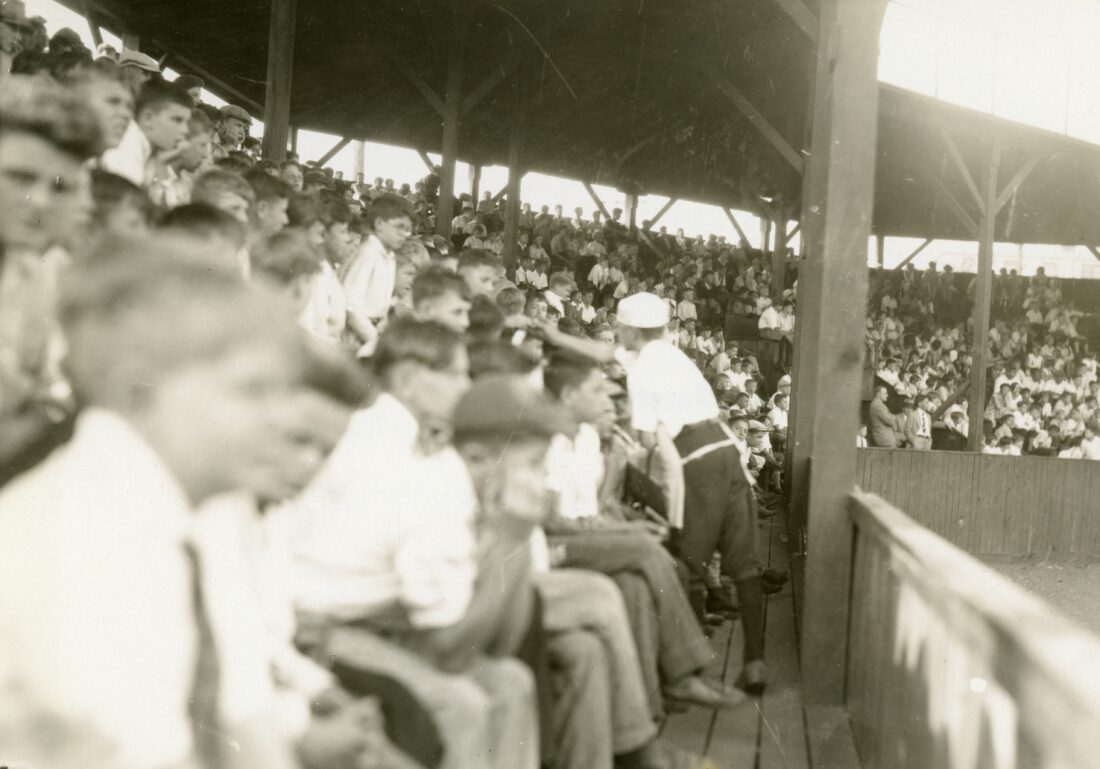
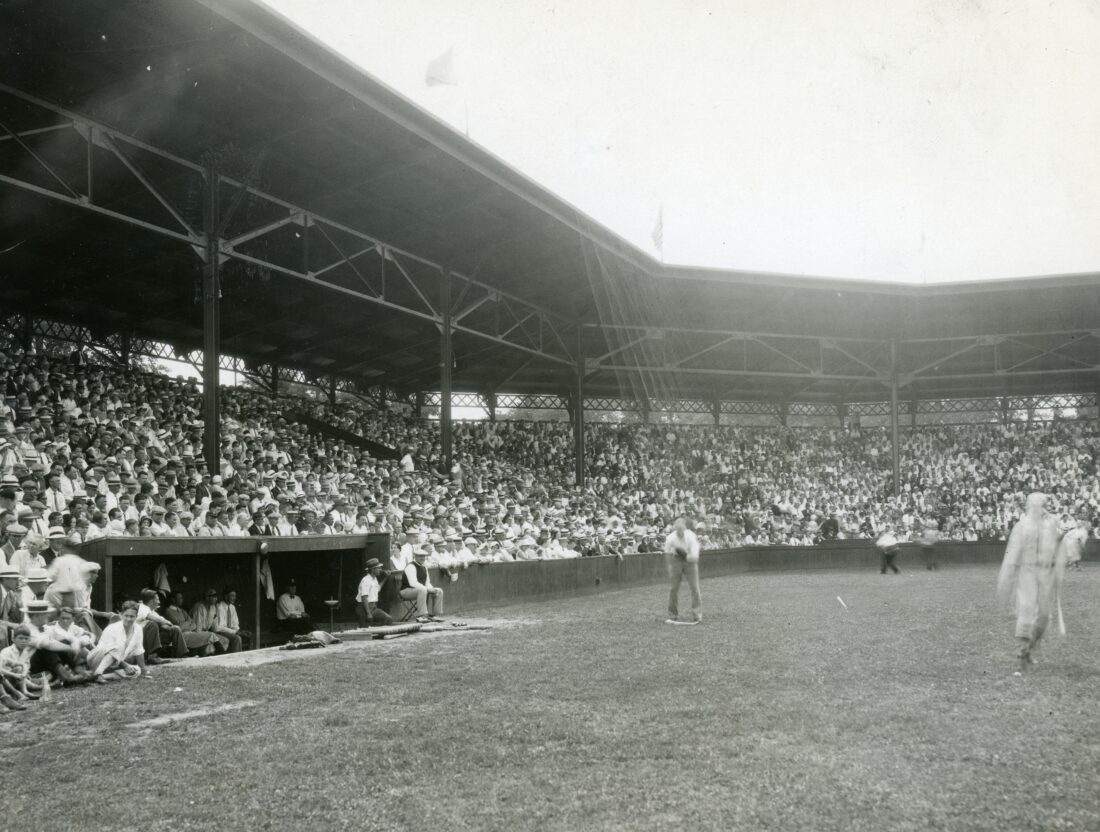
Hunsinger, co-author of Gateway to the Majors: Williamsport and Minor League Baseball, traced the origins of the stadium. It all started in 1924 when a group known as the Williamsport Baseball Club felt a modern ballpark was needed for all the people.
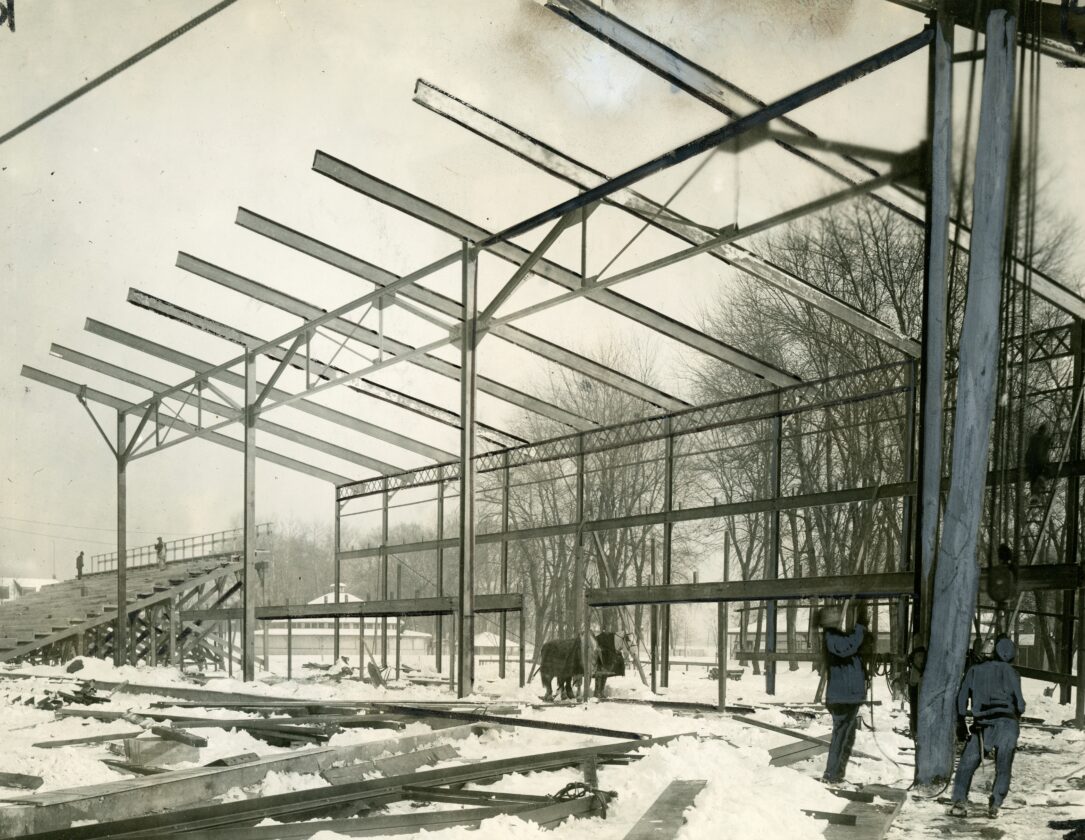
Land was acquired at the northwest corner of Memorial Park and construction began the next year.
The cost of construction? Just $75,000.
Originally called Memorial Field, the first games were a pair of exhibitions in 1926 between the Harrisburg Giants of the Eastern Colored League and the hometown Williamsport Grays April 27 and April 29.
The Giants' Oscar Charleston, a Hall of Fame player, christened the new ballpark with the first home run. Charleston would be among the many storied baseball figures and legends who would appear at the Williamsport ballpark over the next 100 years.
By 1929, the ballpark was renamed Bowman Field in honor of J. Walton Bowman, who spearheaded fundraising efforts to build the new stadium.
In its early years, Bowman Field not only served as the home ballpark for the Grays, but for other events including boxing, wrestling matches, and football.
"Bowman Field was a multi-purpose ball field," Hunsinger said.
Just 10 years after it opened, Bowman Field sustained severe damage from the 1936 flood.
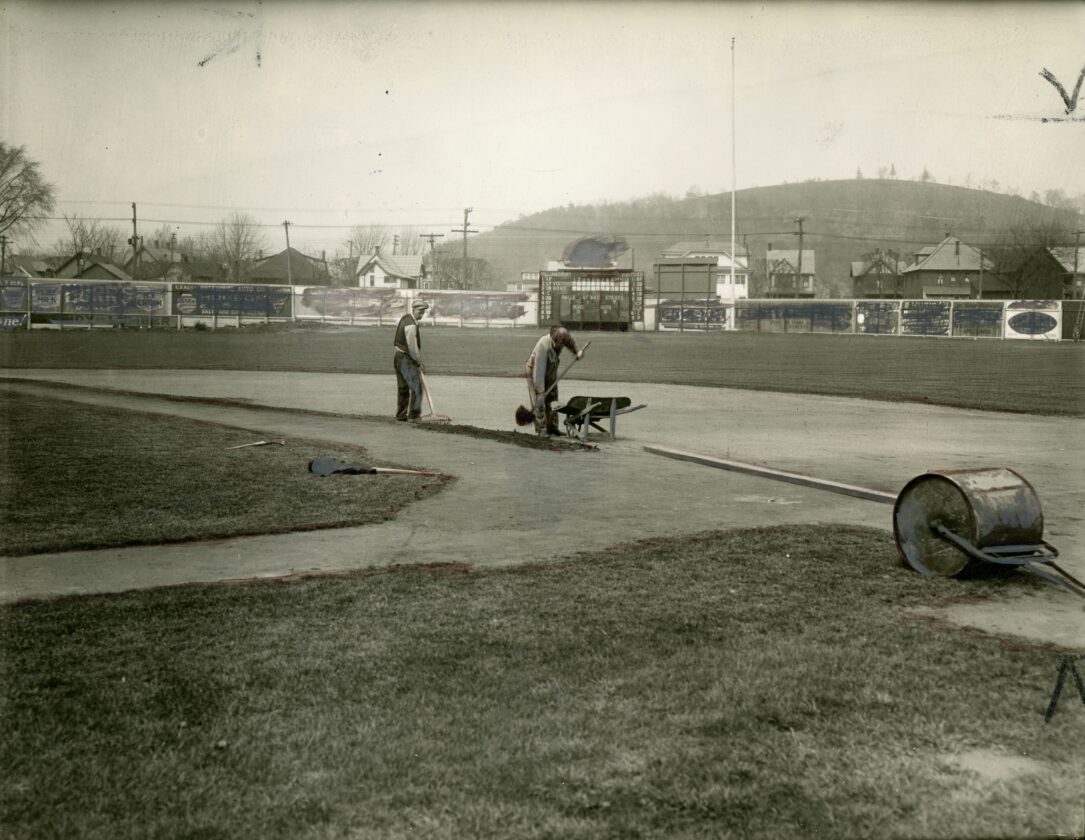
Thanks to funding and the efforts of the federal Works Progress Administration, the ballpark was repaired and cleaned up.
"Baseball in Williamsport was saved thankfully," Hunsinger said.
The stadium sustained less serious and costly damage from flooding in the years 1946 and 1972.
Hunsinger noted the team was known as the Williamsport Grays for 33 years,
And, over the years, bad clubs as well as good clubs took the field at the ballpark.
Hunsinger referred to the 1960 Williamsport Grays dubbed the Go-Go Grays under Manager Frank Lucchesi. The team finished as co-champions of the Eastern League.
Danny Cater was with that team and later played in the Majors. For several years, he made his off-season home in Williamsport.
Dick Allen, a future Hall of Famer, starred on the 1962 Grays team. Allen, who later played for the Philadelphia Phillies and other Major League clubs, hit .329 that year, slugging 20 homeruns for the Grays.
Williamsport would have a minor league team affiliated with various Major League franchises including the New York Mets and Houston Astros into the early 1970s.
But in 1973, the city and Bowman Field suddenly found itself without any professional team.
Minor baseball returned to the city in 1976 with the ballpark becoming home of the Williamsport Tomahawks, a Cleveland Indians affiliate Hunsinger called "one of the worst teams in city history."
Although this Double A Eastern League club finished in last place, it included several future Major Leaguers including Larry Andersen, who would go on to pitch for the Philadelphia Phillies and later join the team's broadcast team, and Alfredo Griffin.
Unfortunately, 1976 marked the only season for the Williamsport Tomahawks, and over the next eleven years the city would again have no professional baseball.
No one could have foretold what would become the strangest and perhaps most celebrated event ever to occur at the ballpark when baseball returned to the city in 1987. It marked the initial year of the Williamsport Bills, a perhaps largely forgotten Cleveland Indians Double A team in the Eastern League that finished with a 60-79 record.
But it was what happened at the ballpark on Aug. 31 that became one of the most talked about incidents at the ballpark.
That was the evening Dave Bresnahan, a light-hitting catcher, pulled off his hidden ball trick, using a potato he had tucked away in his mitt to tag out an unsuspecting baserunner charging for home plate.
The Bills would play in Williamsport for just five seasons before the city and ballpark were again left without a minor league team.
For many communities, that was often the reality of professional baseball, according to Sinicropi.
"Williamsport was quite frankly a stopover place for teams, who were always waiting for a better place," he said.
That didn't dissuade some local people from pushing for professional baseball just the same, including Bill Pickelner, a longtime Williamsport businessman.
Sinicropi, who had been involved with helping run the Geneva Cubs, which were suddenly without a home in the upstate New York community, was contacted by Pickelner.
Sinicropi and his colleague, Doug Estes, took up Pickelner on his request to have a look at the ballpark but came away less than impressed.
"The stadium was not in good shape," he recalled.
Metal folding chairs served as box seats and the outfield did not have a level playing surface.
Jimmy Piersall, a former Major Leaguer, who occasionally turned up in Williamsport as a roving baseball instructor, was not a person to mince words. He took one look at the playing surface, and quipped, "I've seen great outfields. This ain't one of 'em."
There were other problems as well.
The ballpark's front entrance badly needed upgraded; the scoreboard was antiquated.
"As Sinicropi recalled, "Bowman (Field) had pieces of ballparks from all over the place."
Still, it was an opportunity, and 1994 marked the return once again of baseball to Bowman Field with the Williamsport Cubs, although that first year was a less than auspicious one for the club.
The Cubs finished that year with a record of 26-49 for sixth place in the New York Penn League's Pickney Division under manager Jerry Weinstein.
The attendance for 35 home dates was 61,233, an average of 1,750 fans per game, and for the next four seasons the Cubs had a minor league affiliate in Williamsport.
In 1999, the Cubs pulled out of Williamsport.
"The (Pittsburgh) Pirates took over and we became the Crosscutters," Sinicropi said.
It was the start of a new era, a kind of rebirth for minor league baseball in the city.
The ballpark later underwent major renovations, becoming a more attractive and pleasing venue for fans and ballplayers alike, according to Sinicropi.Between the stadium's upgrades and some competitive teams, a kind of renaissance was under way.
Banner years for the Crosscutters included 2001 when the team was co-champion with the Brooklyn Cyclones of the New York-Penn League and 2003 when the club captured the league title outright.
In 2015, the Crosscutters won the league's Pinckney Division.
With the onset of COVID-19 in 2020, minor league baseball operations shut down across the nation.
The following year, Major League Baseball eliminated minor league baseball from more than 40 communities, including Williamsport.
But with the launch that year of the Major League Draft League, Williamsport was granted a team comprised of some of the best college players to showcase their talents.
Sinicropi and Hunsinger recalled the many baseball figures and celebrities who have appeared at the ballpark as well as the numerous entertainment attractions.
A Three Dog Night concert in August 1971 reportedly drew 10,000 people to the ballpark.
Some of the best Negro League teams with legendary players such as Satchel Paige, Josh Gibson, and Buck Leonard took the field in Williamsport.
Among the numerous other notable players were Nolan Ryan, Jim Bunning, Jim Rice, Bill Mazeroski. Early Wynn, Whitey Ford and John Smoltz.
The ballpark can boast of being one of the oldest stadiums where baseball games continue to be held.
Each August, during the Little League World Series, when all baseball eyes are on Williamsport, Journey Bank Ballpark at Bowman Field, features a single game between two Major League teams.
Securing a ticket to attend the game in the ballpark with a seating capacity of just 2,500 can be a difficult if not impossible undertaking, Sinicropi noted.