
Lycoming County’s Right to Know cost revealed
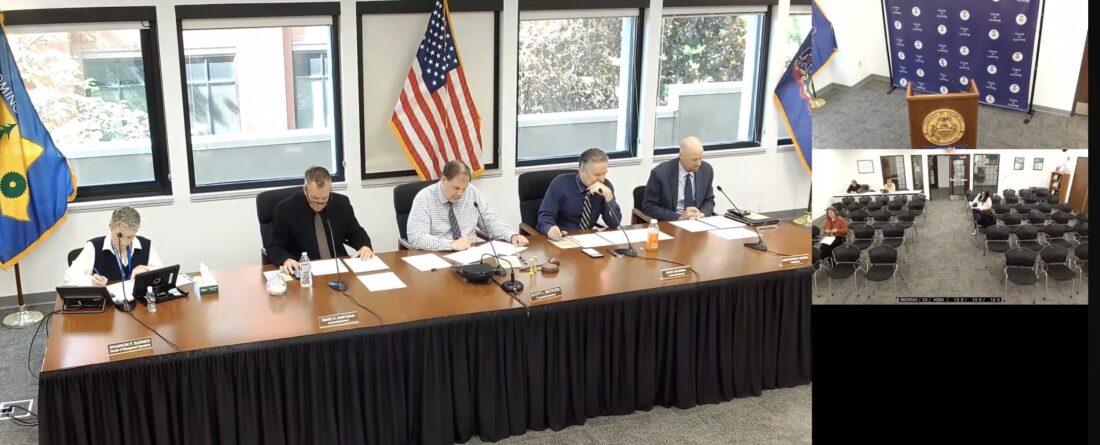
Screenshot
From December 2024 through the end of last year, Lycoming County spent almost $74,000 trying to answer inquiries from 21 individuals or entities through Right to Know (RTK) filings.
The largest amount came from Terri Lauchle, who, since the beginning of this year, has been serving on the Muncy Township Board of Supervisors. At the time of the filings, Lauchle, whose 40 requests including appeals cost the county $21,117.75, was a private citizen.
The next highest amount was the miscellaneous review category at $20,749.50. These might include simple questions where nothing needs redacted, can be quickly dealt with and are less likely to be appealed, according to a county employee.
In total, the county handled just over 300 RTK requests.
The list was released by the commissioners at their meeting this week in an effort to be transparent about how county funds are spent.
“This is one area in the day-to-day operations that kind of came to my attention,” said Shannon Barnes, the county’s director of administration.
“Right to Know’s keep the county busy, and I’m not sure that the public knows exactly how much time is dedicated to this process, and certainly not the cost that’s associated with the process,” she said.
Barnes went on to explain that the cost of RTK’s are not a line item in the budget and can’t be quantified.
“But it certainly impacts the cost to the county,” she said.
The figures that were listed in the agenda, she said, were simply the solicitor cost and is one part of the process.
“The costs within the attachments are the fees which are charged for the review, the legal analysis, preparing a response and filing of the Right to Know’s,” Barnes said.
“This does not reflect the countless hours of staff that go into this process. Most of the time the Right to Know’s are submitted electronically, but there are a lot of times when they are not. If a submission is received in written form, the Right to Know officer has to enter them into our system. That means every single thing that is written on the submission has to be manually typed into our electronic system. This can take some time when there are multiple pages of information to enter,” she explained.
“Once entered, the Right to Know is forwarded to the department to which the information is being requested. Then the department starts collecting the data or information requested. Depending on what is requested, it can encompass pulling electronic information or manually searching for records within archives that are stored in a record retention department. This, as you can guess, takes a lot of time. None of those hours are itemized as part of the day-to-day employee duties. I just wanted to point that out. It is a lengthy process, and it does cost the county in time as well as money,” she said.
“We wanted to show this because it’s a staggering cost, when you look at, you know, close to $75,000 and that’s not really the entire costs that go along with it,” Commissioner Marc Sortman said.
“So that’s a lot of money that taxpayers are paying out. In some of the situations, not to overload our meetings or anything-not that they’re full to begin with-but you know, if there is something people want to know, we’re a very open group, so come in and ask the questions. We’ll take questions online. Sometimes we may view it just strictly as a comment and not respond. And then if you feel like you need to go further for a Right to Know that’s your right to do,” he said. “But maybe start with coming in and asking us the question before you go through the legal costs that we have involved when you do it as a Right to Know,” Sortman added.
Commissioner Mark Mussina said that he didn’t realize what went into filing a RTK and the costs involved until he became a commissioner.
“The thing that’s been frustrating now that I’m on this side of the table is the people that file Right to Knows about things that they don’t have a right to know,” Mussina said.
He used the example of conversations commissioners might have in casual settings that are not documented.
“That’s not public information, and people will ask for things that were discussed in simple preliminary meetings and you know…there’s a limit as to what you have a right to know. And when people ask, and then they get denied, and then they reword it, and ask again, and then they get denied again, and they ask multiple times for the same thing that they’ve already been told they don’t have a right to (know),” he said.
He added, “that’s where the waste really comes in.”
RTK costs over $2,000 listed by the commissioners include: Colin Best, $2,179.50; Tony Cooper, $8,955; Casey Monaghan, $8,829; and James Nottingham, $4,811.50.
The exact total amount of costs incurred by the county for RTK requests was $73,884.