
Keeping an eye on the sparrow as winter months approach
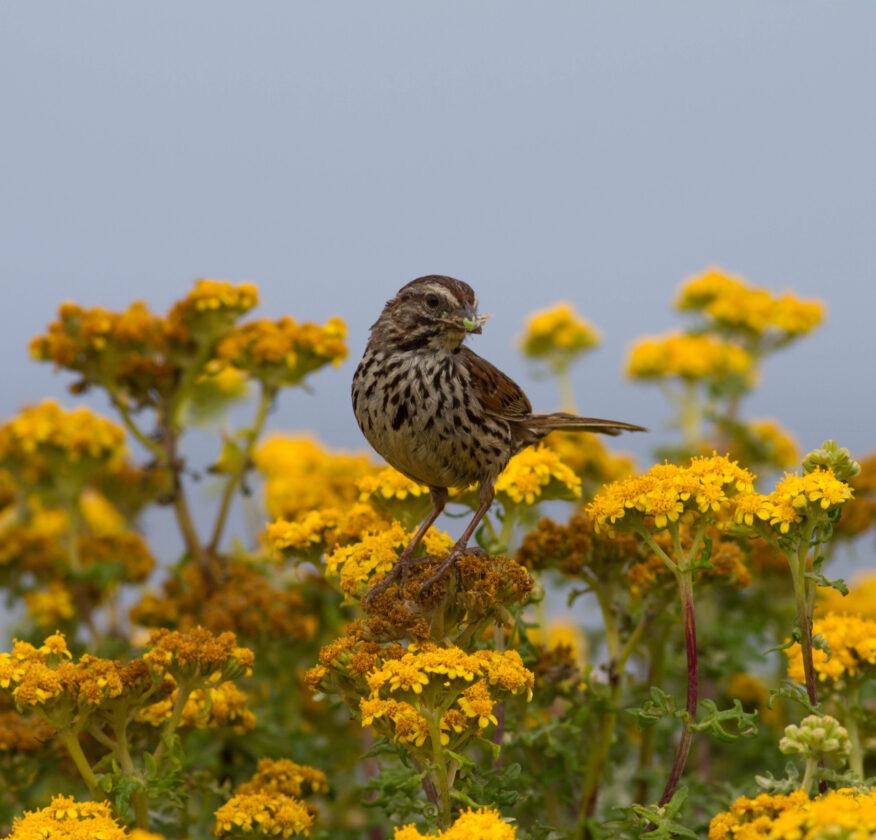
PHOTO PROVIDED A song sparrow remains perched on foilage in this photo provided by Modi Hammarstedt, which won an Audubon Photography Award in 2020.
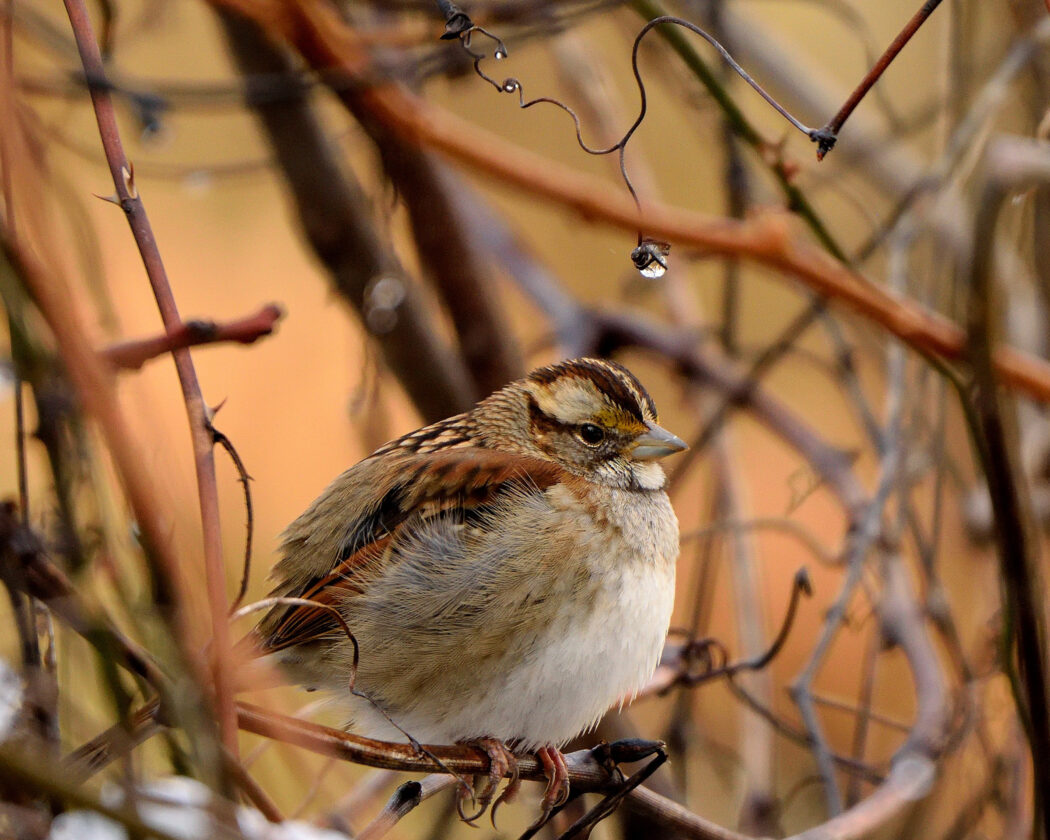
PHOTO PROVIDED A white-throated sparrow, white-striped, is shown perched on a branch during a light snow flurry in this photo by Dawn Phillips which won an Audubon Photography Award in 2015.
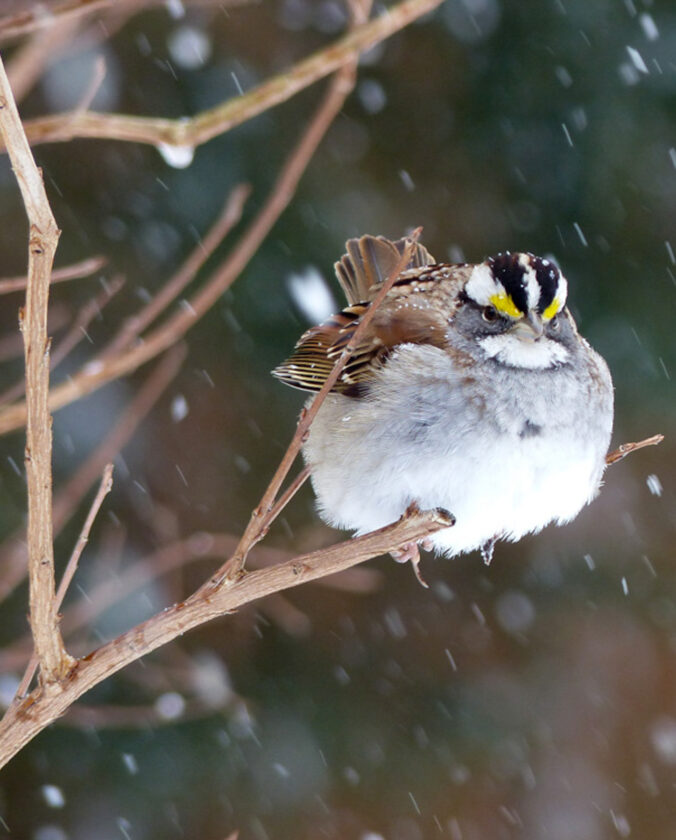
White-throated Sparrow.
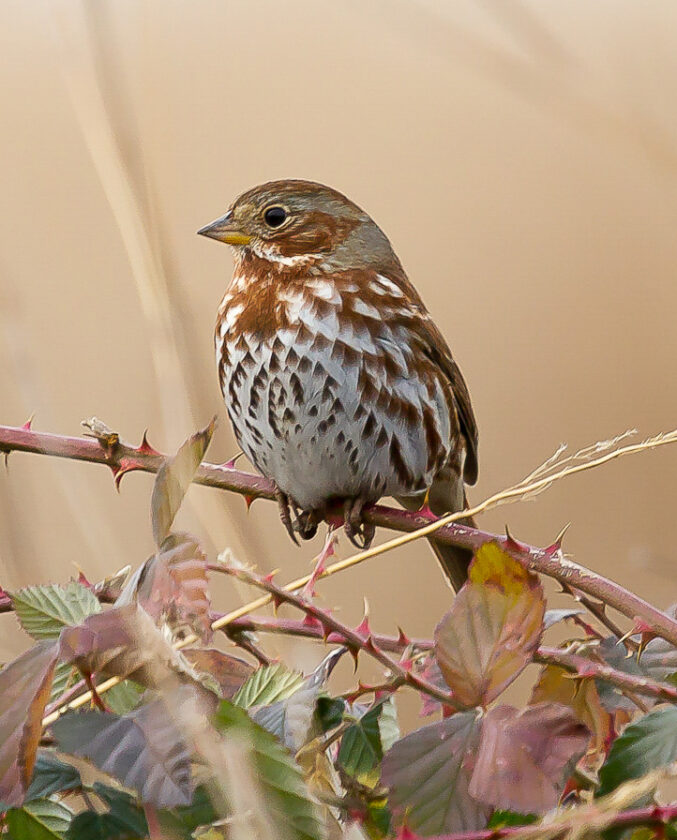
PHOTO PROVIDED Shown is a fox sparrow perched on a rose bush branch in this photo provided by David Boltz which won an Auduon Photography Award in 2012.
PHOTO PROVIDED A song sparrow remains perched on foilage in this photo provided by Modi Hammarstedt, which won an Audubon Photography Award in 2020.
PHOTO PROVIDED A white-throated sparrow, white-striped, is shown perched on a branch during a light snow flurry in this photo by Dawn Phillips which won an Audubon Photography Award in 2015.
White-throated Sparrow.
PHOTO PROVIDED Shown is a fox sparrow perched on a rose bush branch in this photo provided by David Boltz which won an Auduon Photography Award in 2012.
Trending
On Seven Mountains Audubon's October bird walk at Turtle Creek Park near Lewisburg, I was thrilled to spot four birds I wouldn't have noticed or identified without the help of more experienced birders: a red-shouldered hawk, a yellow-rumped warbler and two Nashville warblers.
Always eager to see less-familiar birds, I'm grateful to those who can spot and identify them better than I. But of the 30 species tallied that day, the one that delighted me most was one I heard but didn't see: a white-throated sparrow, calling somewhere in the tall grasses: "Poor Sam Peabody, Peabody."
The three warblers were on their way south to their wintering grounds, and the red-shouldered hawk could have been a year-round resident or heading south, too.
But the white-throated sparrows were newly arrived, after a summer spent raising their young or learning to fly and forage in the Boreal Forest biome: the northern edge of Pennsylvania, New York, New England, the northern Great Lakes region, and most of Canada. Maybe this is why the other mnemonic phrase birders use to represent their song is "Oh, Sweet Canada, Canada!"
One reason the white-throated sparrows return brings me such joy each fall may be that theirs was one of the first songs I learned to recognize by ear. Or it could be because when they arrive, I can inwardly cheer, "Yay, you made it" as I do for the wood thrushes, chipping sparrows and others who return in spring. I admire their sociability, too.
There's often a song sparrow or two hanging out with the white-throated flock in my back yard, seemingly accepted as their own. Sometimes a fox sparrow joins the group for a few days -- perhaps considering whether to stay here, at the northern edge of their winter range, or proceed farther south.
To me, the white-throats seem more cooperative than the American goldfinches and house finches that flock to my feeders: less apt to push each other aside, more willing to wait their turn. In my yard, a "lookout" sparrow can often be identified, perched on a fence rail or branch, ready to give an alarm at the first sight of a hawk or cat.
Last year I learned that ornithologists have observed an unusual connection between white-throated sparrows markings and their mating and parenting behavior. You may have noticed that some white-throated sparrows have white stripes on their heads, while others have tan-colored stripes. But whereas most color variation within bird species is due to the sex of the bird, both male and female white-throated sparrows are equally likely to have white or tan head stripes.
Males appear to prefer white-striped females as mates, and females tend to prefer tan-striped males. So why wouldn't all females have white stripes and all males, tan stripes?
There's a further twist: white-striped birds of both sexes are more aggressive -- in other words, there is a genetic link between white stripes and aggressiveness, not between stripe color and sex.
Ornithologists suspect the white-striped females outcompete tan-striped females for the preferred, less-aggressive, tan-striped males, leaving the white-striped males to the tan-striped females -- which would explain why mates tend to have opposite stripe colors.
And wait, there's more: tan-striped males and females appear to spend more time tending the young, while white-striped parents of both sexes defend the area around the nest more vigorously. So whether the adults end up with their preferred stripe of mate or not, White-throated sparrows' offspring end up with one excellent defender and one excellent nurturer as parents.
This winter, I will keep this information in mind as I watch the white-throated sparrows at my feeder: do the birds with white head stripes appear more aggressive? Can I see nurturing behavior in the tan-striped birds? What would that look like in winter? Are the apparent guard sparrows white-striped, tan-striped, or both?
The more I learn about the birds who visit my yard, the more intriguing questions they raise, and the more I appreciate them as neighbors and fellow travelers on our shared planet.
Sabrina Kirby is a retired Bucknell writing teacher, who lives in Lewisburg. She birds with Seven Mountain Audubon, but particularly loves birding in her own backyard.
BIRD LORE is produced by the Lycoming Audubon Society (serving Lycoming and Clinton Counties) and Seven Mountains Audubon (serving Union, Snyder, Northumberland and Columbia Counties) and Tiadaghton Audobon Society (serving Tioga and Potter Counties). Information about these National Audubon Society chapters can be found at: http://lycomingaudubon.blogspot.com, http://sevenmountainsaudubon.org and https://tiadaghtonaudubon.blogspot.com.