
Trending
No World War II battle represents the fighting spirit of the US Marine Corps better than Iwo Jima. In terms of its combat brutality and staggering casualties, it was the worst battle in the history of the Corps.
The Marines' 3rd, 4th and 5th Divisions led the assault of Iwo Jima with key support from the Army's 147th Infantry Division and the Navy. Pacific Fleet Commander-in-Chief Admiral Chester W. Nimitz said that among America's fighters at Iwo Jima "uncommon valor was a common virtue." The non-profit Stories Behind the Stars (www.storiesbehindthestars.org) has written memorials about each of the fifty-nine PA Marines in the 5th Division who sacrificed their lives during the March portion of the battle's hostilities. Lycoming County was home to one of them: PFC William L. Mahaffey.
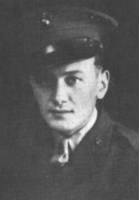
William Leland Mahaffey, Jr. was born on June 1, 1922 in Jersey Shore, PA to William Leland Mahaffey, Sr. and Alma V. Mahaffey. His father was a machinist for a motor company. His mother was a homemaker who died when Mahaffey was seventeen years old. Mahaffey had one younger sister. He graduated from Jersey Shore High School.
Mahaffey registered for the draft on June 30, 1942 in Philadelphia, PA where he worked for the Philadelphia Navy Yard. He enlisted in the Marines on January 13, 1943 in Philadelphia, PA. Mahaffey was eventually assigned to the H&S Company, 27th Marine Regiment, 5th Marine Division and attained the rank of Private First Class. The division was activated on November 11, 1943 at Camp Pendleton, CA. The 27th regiment was activated on January 10, 1944. Parts of the division were deployed to the Pacific to help in the Battle of Guam, but by the time they arrived there, they were not needed. They then headed back to Hawaii for further training. They then left Hawaii in January 1945 and sailed past Saipan heading for Iwo Jima.
D-Day at Iwo Jima was February 19, 1945. Allied military planners anticipated an "easy time" conquering the enemy, predicting victory in a three-day battle. The reality was a gruesome slog of thirty-six days from February 19 - March 26, 1945 that historians have described as "throwing human flesh against reinforced concrete." The island's determined Japanese defenders had the most ingenious and deadly fortress in military history. Their eleven miles of interlocking subterranean hideouts, concrete bunkers, hidden artillery and pillboxes proved to be some of the most impenetrable defenses encountered by the Marines.
The invasion was designated Operation Detachment whose purpose was to capture the island with its two airfields. Its success would take out the Japanese fighter planes used to intercept B-29 bombers on their way to Japan and would provide the US use of those same airfields for their own fighters and an emergency landing field for the bombers.
The 5th Marine Division's mission was to cut off Suribachi from the rest of the island and to pivot north, advancing along the western half of the island. The division landed on Iwo Jima at 0900 hours on February 19, 1945 where they sustained heavy casualties. On February 23, 1945, two American flags were raised on Mount Suribachi. Their progress after that was measured in yards as they had to fight through hundreds of layered and mutually supporting Japanese pillboxes and strong points. On March 2, 1945, the 5th Marine Division was embroiled in the battle for Hill 362. The division would fight on Iwo Jima until March 28, 1945 where they would sustain 2,482 Killed in Action, nineteen Missing in Action and 6,218 Wounded in Action. This was the highest casualty rate of the three Marine divisions involved in the invasion.
The ultimately victorious 36-day assault saw some of the fiercest and bloodiest fighting of the Pacific War. The battle resulted in more than 26,000 American casualties, including 6,800 dead. Iwo Jima was the only US Marine battle where American casualties exceeded those of the Japanese. Enemy combat deaths, however, numbered three times as many as American deaths. Of the 21,000 Japanese on Iwo Jima at the beginning of the battle, only 216 were taken prisoner.
Mahaffey was killed in action on March 15, 1945 at Iwo Jima, possibly in a plane crash. It is not known where he was initially buried. Mahaffey was repatriated to the US and buried at the National Cemetery of the Pacific (Plot N, Grave 1188) in Honolulu, HI. Mahaffey posthumously was awarded the Purple Heart.