
Congressman focuses on how visa reform can help farming
Trending
Why allow the melons and squash to rot in the fields, or dairy farmers be unable to milk because of "seasonal restrictions on the available non-immigrant workforce to harvest or produce the products?"
That is a question U.S. Rep. Glenn Thompson, R-Howard, chair of the House Agriculture Committee, had as he unveiled the Securing Agriculture's Workforce Act of 2026 (SAWA).
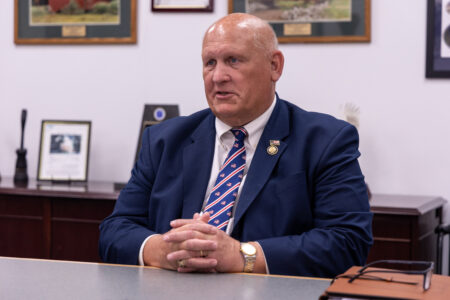
Thompson sat down recently with the Sun-Gazette editorial board to go over the particulars and other activities he is engaged in to help the American farmer.
This is statutory reform of the H-2A temporary agricultural worker visa program, the first since its creation four decades ago under the Immigration Reform and Control Act of 1986.
It's an overhaul of the nation's agricultural non-immigrant worker system for the first time in four decades and it could address labor shortages that threaten the nation's food supply.
What it does is expand access to legal foreign workers, reduce regulatory burdens, and open the H-2A temporary agricultural worker visa program to year-round livestock and dairy operations long excluded from the system.
Over the years, the 40-year-old program has been restricted to strictly "seasonal" and "temporary" work contracts of 10 months or less, legally shutting out year-round agricultural sectors like dairy, pork, and poultry, he said.
Last year, there were few American citizens who applied for these jobs. Because the regulation is for seasonal workers it applied to some dairy, greenhouses, mushroom producers.
The new bill takes away such limitations by eliminating the "seasonal" mandate, allowing temporary workers to remain on the job under contracts lasting up to 350 days. It also expands eligibility to include controlled environment agriculture, forestry, aquaculture, and livestock operations.
He noted how with the bill the work could be expanded into oyster, clam and kelp farming operations.
He has made three attempts at getting the legislation passed to address the need to bolster the American workforce.
Today, he said, there are 50-cosponsors to the bill and organizations representing farmers, ranchers, processors, and, yes, foresters as when there is a wildfire there is a need to replant trees.
The legislation is backed by a coalition of more than 400 agricultural organizations, representing sectors from fruit growers to livestock producers, who have lobbied intensely for federal relief, he noted.
The bill is not to go through the Agriculture Committee, however, but rather the Judiciary Committee.
Because of this, Thompson said he has been working closely with that committee Chair Rep. Jim Jordan, R-Ohio, and personnel at the White House.
He observed how because of the seasonal limitation that dairy farmers could not milk the cows. The dairy sector operates 365 days a year. This would allow contracts at dairy farms for up to 350 days a year.
Beyond expanding access, the bill contains a provision, a mechanism allowing existing, unauthorized agricultural workers to transition legally into the H-2A program.
To participate, workers must pass background checks and an in-person interview. The bill does not provide a pathway to citizenship, maintaining the H-2A program's non-immigrant status.
The pork industry also strongly endorsed the changes.
To reduce bureaucratic gridlock across the Departments of Labor, Homeland Security, and State, the bill mandates the creation of a centralized, online portal for all employer and agency interactions. It also allows for multi-year labor certifications and housing inspections.
"There is no greater national security threat than disruptions to our food supply," Thompson said.
"We have the people here now and they are not able to work," he said. "We can either import our food or get our food using the temporary non-immigrant workforce."