
Rep. Glenn Thompson offers update on farm bill’s status
Trending
From writing a sweeping Farm Bill, to listening to farmers concerns about foreign entities buying prime farm properties, a federal lawmaker stopped by Williamsport recently to go over legislation that is pending and passed into law.
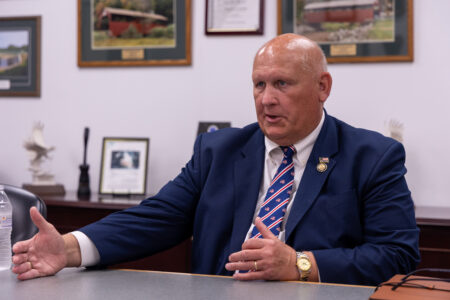
"We are delivering outcomes," said U.S. Rep. Glenn "GT" Thompson, R-Howard, of the 15th Congressional District, and chair of the House Agriculture Committee.
Recently, legislation he unveiled, which passed the House, and is heading to the Senate requiring 60 votes, is known as the Farm, Food, and National Security Act of 2026.
The bill is a comprehensive piece of legislation that reauthorizes the U.S. Department of Agriculture (USDA) programs through 2031. The House passed it on April 30, by a 224-200 vote and is currently awaiting action in the Senate.
Thompson, who grew up on a dairy farm, and is the first chair of the committee from Pennsylvania in over 170 years.
He said on this bill he continues to work with Sen. John Boozman, R-Arkansas, who is the chairman of the Senate Agriculture, Nutrition, and Forestry Committee and also serves on the Appropriations, Environment and Public Works, and Veterans' Affairs committees, to get the bill over the hump and onto Trump's desk.
Thompson noted how Boozman is drafting similar legislation that has in it "98% of what we want." The challenge, Thompson added, will be with the Senate as 60 votes will be needed.
Yet, Thompson said he is hopeful that an updated farm bill that meets the current needs of farmers and ranchers will get support.
The legislation reauthorizes key U.S. Department of Agriculture programs.
The bill updates farm policy to strengthen "supply chains," he added.
It also expands credit access for producers, and enhances crop insurance.
By investing in rural broadband and infrastructure, it also addresses modern challenges to support farmers, ranchers, and foresters, he said.
This legislation is a multi-billion investment in farms, including providing farmers with $65 billion in risk management and loss prevention through making crop insurance available, he said.
Farmers, naturally, are dependent on weather conditions, often facing drought or extreme cold causing unwanted frost late in seasons, or sudden appearances of tropical storms and floods that damage fields.
Delivering outcomes
Crafting legislation that becomes law to help the farmer and agricultural industry has always been one of his top priorities.
However, Thompson does not sugar coat how rural family farms are struggling in 2026, with such impediments as inflation and foreign import competition, but he added that action he takes on behalf of the farmers and the ag-community is done by first listening to them directly and then crafting legislation to address their needs, and he says they have expressed their gratitude.
One of the signature achievements was signed early this year by President Donald J. Trump, the Whole Milk for Healthy Kids Act.
In the Oval Office in January Thompson stood beside the president who signed the dairy-and-health-related act, which restores flavored and unflavored whole and 2 % milk options in school nutrition programs.
This act overturned restrictions that had been in place since 2010 and permits schools nationwide to offer whole and 2% milk as an option for students, in addition to fat-free and low-fat varieties.
"A lot of the low fat milk was getting thrown out and wasted," Thompson said.
Through this legislation, students still have the full range of milk options, plus, he noted, how the law gives dairy farmers, especially those in his rural district, a boost in production.
Thompson said his work includes protecting animal health and that includes investing in universities such as Penn State.
Crypto currency
Many people might not know that Thompson and House Committee on Financial Services Chair French Hill, R-Arkansas, introduced the Digital Asset Market Clarity (CLARITY) Act. The legislation is a step toward delivering certainty and clarity to digital asset entrepreneurs and market needs. It is meant to protect consumers and "foster innovation moving forward," Thompson told the Sun-Gazette.
Thompson clarified how he does not own crypto currency but certain crops fall under the category of commodity and the Commodity Futures Trading Commission (CFTC).
The CFTC regulates commodity futures and options markets in the U.S. for agricultural commodities, such as corn, wheat, and soybeans.
While many rural residents have relied on cash for many years, there is a growing appetite for alternatives to fiat currency. Internet access is expanding to remote communities, mobile wallets and digital assets are becoming increasingly popular among farmers using the technology.
As Ag Committee chair, Thompson said he listens to the nation's farmers and organizations' concerns about protecting land being purchased by foreign entities such as mainland China.
He said he also addresses their other concerns such as the amount of solar farms proposed and appearing on prime farmland.
To ensure university research continues, Thompson supports mandatory funding for them to allow expanding study on sows and poultry and investigating nutritional requirements specific to different stages of growth in sows and poultry.
According to a publication on this issue, such research could further help scientists to understand the impact of environmental conditions on animal health and productivity. It could explore genetic factors that influence growth rates and disease resistance and assess the effectiveness of various breeding techniques for improved yields. It could analyze the role of biosecurity measures in preventing disease outbreaks and evaluate the economic implications of different feeding strategies on farm profitability.
Thompson said he will keep listening to what the farmers, ranchers and ag-businesses tell him and the committee their needs and concerns and put it into action in legislation to help them and to grow the agriculture economy.