
Reflections in Nature: How does wildlife survive in winter’s rough environment?
Trending
On Friday, snow blanketed the ground with the thermometer hovering near zero degrees, making for a white Christmas. Although our winter is starting off cold and snowy, the National Weather Service is predicting an above average temperature for the coming months.
Even when the temperature drops below zero, we humans can turn up the thermostat to stay warm. During a cold snap, I am often asked how wildlife can survive in such a harsh environment.
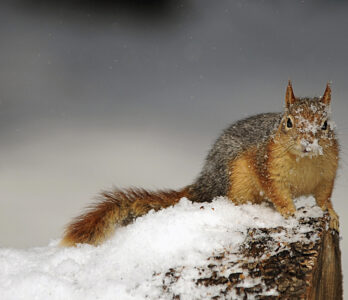
Perhaps many of you believe that the cold weather brings wildlife activity to a stand-still. Well, if you go for a walk in the woods at this time of the year, you will see many signs of animal activity, especially when snow is on the ground. When reading animal signs in the snow, you will find that it is almost as if reading the life history of the animal. By following the tracks, a person can learn how the animal survives.
Backyard bird feeders have plenty of activity during a cold snap. Finches, chickadees, sparrows, doves, blue jays, and cardinals will be regular visitors. The winter woods are alive with wildlife activity.
Wildlife that are active during winter months keep warm by revving up their internal furnaces, a process known as shivering. Most birds shiver throughout the winter. Some birds (goldfinches) switch from using carbohydrates to using fats, which prolongs the amount of time they can shiver. Birds also have the ability to use only certain muscles for this continuous shivering, and this preserves some of the fat.
Us humans shiver, but our shivering does not increase body temperature. Shivering, which is our body's first response to being cold, only aids the body temperature from falling any lower. Shivering raises our body’s metabolic rate. Minor shivering can produce 20-25% of the warmth our bodies produce, while violent shivering can increase heat production by as much as 400%. Shivering does not make you feel warmer, but it does prevent further heat loss.
Humans and most animals cannot tolerate icy intrusions in their tissues. When the temperature drops low enough, ice forms in delicate blood vessels, causing the blood vessels to either burst or stretch beyond a point where they can rebound. However the main problem with tissue freezing is dehydration. Not all water bound up in ice is available to the cells that die of thirst.
Some wild creatures, especially insects, can be super cooled and still survive. They have the ability to maintain a body temperature below the freezing point without freezing. The wooly bear caterpillar can spend as many as ten months of the year in a frozen state without any ill effects. Some insects in Alaska can resist freezing in temperatures as low as 70 degrees below zero. This is done by ridding their bodies of “seed crystals,” such as dust and bacteria from which ice can grow.
The arctic ground squirrel is a mammal that hibernates, however during this hibernation, its body temperature drops below freezing without doing any harm to the body tissue. How the arctic ground squirrel is able to do this remains a mystery.
Other animals — such as wood frogs, box turtles, and garter snakes — actually freeze solid and still survive. The wood frog survives freezing temperatures by producing a form of sugar called glucose. The frog floods its body with this glucose, which protects the cells from ice damage. The sugar increase brings on a coma in the wood frog, causing its metabolism to drop near zero. The frog freezes and spends the winter frozen. When the weather warms in the spring, the frog thaws and hops away.
If we humans were able to pump enough glucose into our bodies to prevent our cells from freezing, sugar levels would rise so high, causing diabetic comas and deaths.
The garter snake spends the winter in a hibernation den where the temperature stays approximately 40 degrees. While in the den, the snake’s heartbeat drops to a few beats per minute compared to about 20 beats per minute on a warm summer day. In early spring, the garter snake will come out of the den, however, this could be too early since the air temperature could drop below freezing, and the snake will freeze. A day or two spent in a frozen state does not harm the snake since the snake thaws out when the temperature goes above 32 degrees.
The painted turtle hibernates under water. The cold water and low oxygen cause the turtle to go into hibernation. The heart beat can go as low as one beat every ten to eleven minutes. On a warm summer day, the heartbeat might be 30 to 40 beats per minute.
When there is no oxygen available, the turtle produces an unwanted by-product called lactic acid, the same chemical that causes cramps in humans. A fatal chemical imbalance known as acidosis is caused If the turtle produces too much of this lactic acid. The turtle combats this acidosis by using calcium carbonate, which comes from its shell.
This calcium carbonate neutralizes the excess acid and the turtle has no ill effects. It’s the same process as taking an antacid. When the water temperature rises, the turtle comes out of hibernation and goes about its life cycle.
We still have a lot to learn about how wildlife survives the winter’s cold. Also, as humans, we still need to solve the problem of keeping our water pipes from freezing.
Bill Bower is a retired Pennsylvania Game Commission Wildlife Officer. Read his blog and listen to his podcasts on the outdoors at www.onemaningreen.com.