
Reflections in Nature: Grapes were one of earliest plants cultivated by humans
Trending
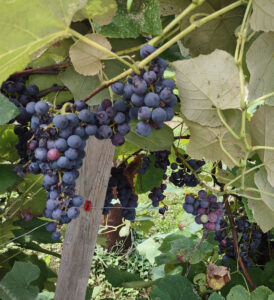
Food for wildlife has been spotty this year. Some areas have very few apples, acorns and beech nuts, while other areas seem to have plenty. In all areas, it has been a banner year for grapes, not only the cultivated but wild varieties as well.
One of my most vivid memories occurred while grouse hunting in a large grape thicket. It was after Christmas and the grouse season opened, with a good snow cover on the ground. The grapes were plentiful that year and were hanging on the vines later than usual.
Hunters know that if you find food, you'll find game. That year I had an unbelievable number of flushes in the grape thicket, however, I remember quite a lot of shooting but have no memory of birds in my game bag.
Grapes were one of the earliest plants cultivated by man. The seeds of the grape have been found with Egyptian mummies from the Bronze Age about 3500 BC. In the Bible, we read that after the great flood, Noah planted a vineyard.
Grapes, which were grown by both the Romans and the Greeks, were of such importance that each had gods of wine. The Roman God of Wine was Bacchus, and the Greek God of Wine was Dionysus.
Grapes were one of the earliest plants cultivated by humans. Seeds of grapes have been found with Egyptian mummies from the Bronze Age.
After Leif Ericson sailed across the North Atlantic Ocean, in 1000 AD, he returned home with stories about a new land, which he named Vineland because of the abundance of wild grapes found growing there. Historians now agree that Vineland was the East Coast of North America.
At the time the colonists came to America, they found grapes growing wild, however these wild grapes were sour and did not make good wine. The colonists began bringing grape plants from Europe to cultivate in their new land. This species of grapes quickly fell prey to an American insect known as phylloxera. This insect created a gall on the leaves and the insect entered the roots of the grape vines, causing them to die.
This insect was accidentally introduced into Europe, where it almost destroyed their grape industry.
Since grapes and wine played an important part in the early settler's life, many attempts were made to establish European grapes in their new country. Colonial governments gave tax exemption status to people who planted grapes. Despite this the only place where European grapes were successfully planted was in California, where they were introduced by early missionaries. Today, California leads the states in grape production.
Although New York, Michigan and Washington are also grape producing states, all three together do not produce as many grapes as California. Today, at least 3,000 varieties of grapes have been grown, with at least a thousand of these varieties originating in the United States. The vineyards of France, Italy, Spain and the Rhine Valley of Germany are world famous for their grape production.
The early colonists tried all methods to raise European grapes but failed. They were reluctant to work with the grapes found growing wild due to their sour taste. Until a grape vine was produced that could withstand the plant louse the colonists switched to growing apples. Many new varieties of apples were discovered. Instead of wine, the colonists produced apple cider, apple jack, apple vinegar and even beer.
Eventually, the American wild grape vines and the European grape vines were grafted together. These vines resisted the plant louse and produced good grapes and high-quality wines.
Grapevines are climbing shrubs. The main stem is called the trunk; the main branch is the arm, and the soft growth of the current season is a shoot.
New plants are usually grown from cuttings taken from the vines during the winter. Each vine should bear approximately 15 to 25 pounds of grapes, depending on the growing season.
Grapes are rich in glucose and fructose plus they are a source of potassium, iron, sodium, calcium, magnesium, phosphorous and Vitamins C and B. A pound of grapes contains about 435 calories and almost 75% water. Grapes are eaten fresh, squeezed into juice, dried as raisins and, of course, made into wine.
In old English, grapes were known as winberige, literally meaning wineberry. Our word grape comes from the French word grape. It was probably a derivative of the verb graper, meaning gather grapes; with the underlying notion that grapes were gathered with a pruning hook.
Although grapes are important to humans, they are more important to wildlife. More than 75 species of birds and mammals are known to feed on grapes and when wild grape vines do not produce wildlife suffers.
I would have loved to return to that grape thicket during the late grouse season, with snow covering the ground. To walk in a grape thicket on a cold winter's day, with snow cover, that contains all species of birds, especially grouse, is indeed a magical moment.
On the hunt, with your hunting buddies and dog, you might hear the familiar whirl of the beating wings of a grouse taking off. Even though you are expecting a bird to flush, the noise and the snow being knocked off the grape vines is startling.
Most often there will not be time to get the shotgun to your shoulder; however, if you do get a shot, it is usually a miss. It is often said, "It doesn't get any better than a day spent like this."
However, times change, and the grape thicket land is now posted against hunting, and my grouse hunting buddies have either died or not up to the challenge of a vigorous grouse hunt.
Bill Bower is a retired Pennsylvania Game Commission Wildlife Officer. Read his blog and listen to his podcasts on the outdoors at www.onemaningreen.com.