
Mental health issues subject of House Republican policy committee hearing
Trending
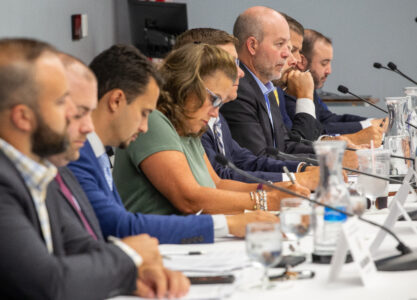
Mental health issues specific to rural populations was the focus of a House Republican Committee hearing held at the Pennsylvania College of Technology yesterday.
The hearing was the first in a list of events planned for the Human Services Expo organized by Rep. Jamie Flick, R-South Williamsport.
Two sets of panelists addressed the committee targeting areas that are affected by the difficulties people in rural settings have in seeking help for mental health problems.
Leading off the panelists, Lycoming County District Attorney Ryan Gardner expressed frustration over the lack of resources available in dealing with people who struggle with mental health issues and end up in the justice system because of a lack of options.
"During my almost-four-year tenure, I've had occasion to witness and experience the frustrations of law enforcement, prosecutors and defense counsel regarding the insufficient availability of resources to individuals afflicted with mental health issues and simultaneously confronted with criminal charges," Gardner said.
Police officers are trained to identify people who are having a mental health episode, Gardner said, and how to de-escalate situations.
"Unfortunately, despite the best efforts of law enforcement to capitalize on the educational resources available to them, more often than not when an officer is dispatched to a situation involving an individual, again, afflicted by mental health issues, the officer has no alternative but to make an arrest in order to protect the safety and welfare of the individual, causing disturbance and war to ensure the safety and welfare of the general public," he said.
Even though many of the arrests are for something classified as a misdemeanor, the arrest can begin a cycle of repeated arrests because of the lack of resources available.
Keith Wagner, executive director of the Lycoming-Clinton Joinder Board, was a co-panelist with Gardner.
Wagner characterized the mental health system in rural counties like Lycoming and Clinton as being in "deep trouble."
"The mental health system has deteriorated to the point that we are in constant crisis, aiding what we can and watching in frustration some of our most vulnerable citizens and their families suffer needlessly," Wagner said.
"For example, during the past decade 2010 to 2020, the suicide rate in Lycoming county increased 65% from the previous decade," he said.
One of the frustrations for rural counties, Wagner said, is that the state funding is tied to population, so that the funds are not going to counties with lower numbers, even though like Lycoming County, they cover a large geographic area.
"It directly relates to the most significant barriers for rural counties to providing effective mental health services," Wagner said, citing population access and funding as those barriers.
Wagner also pointed to a declining workforce in the field which leads to staffing shortages.
The current state budget sends the greatest portion of mental health funding to education settings, and Dr. Eric Briggs, superintendent for South Williamsport Area School District, urged the legislators to work with districts to address the issues in the schools.
"Rural school districts are unique in their composition, often grappling with limited resources, geographical isolation and reduced access to specialized services. These factors contribute significantly to the mental health challenges faced by students in these areas. The disparity of mental health supports between rural and urban school districts is evident, and we must work together to bridge the gap," Briggs said.
Sherry Shaffer, COO and government programs officer of Community Care Behavioral Health Community Care Behavioral Health at UPMC, also spoke at the hearing about mental health services funding.
Members of the committee were given the opportunity to question the panelists and often asked what could be done to alleviate the challenges rural populations are facing in finding help for mental health issues.
"We need to address that in a proper way and make sure that folks are getting resources. Whether you're a kid in school or an adult or at any stage in life … [we have to make] sure that Pennsylvanians are getting the resources they need -- to have that hope and opportunity," said Rep. Torren Ecker, R-New Oxford.
A speaker series followed the hearing in the afternoon, with an expo featuring over 60 human service agencies and providers held in the evening.