Author follows up ‘Ove’ success with quirky tale about storytelling
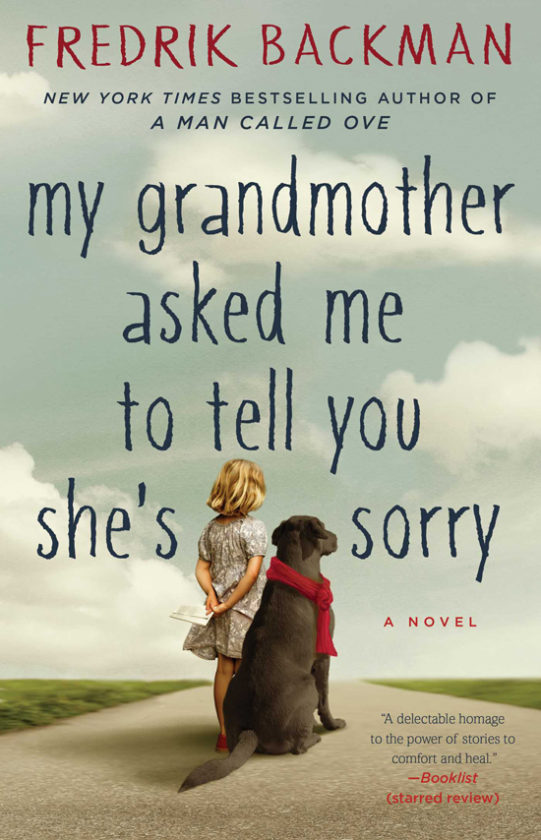
It’s hard to describe “My Grandmother Asked Me to Tell You She’s Sorry” without referencing other books featuring mythical lands and creatures: “Alice in Wonderland,” “The Chronicles of Narnia,” “The Wizard of Oz,” “Harry Potter” and even Tolkien’s Middle-Earth come to mind as Swedish best-selling author Fredrik Backman creates an elaborate story in the Land of Almost-Awake and the Kingdom of Miamas.
It is reality told in the form of a fairy tale by 7-year-old Elsa’s elderly and quirky grandmother. When her grandmother dies, Elsa is sent on an incredible adventure to deliver apology letters. The letters lead her to an apartment building full of unusual and interesting people who each begin to take on the persona of characters in Granny’s stories. Although Elsa is young, she is wise and smart and determined to understand the mission Granny sent her on.
The book opens with, “Every seven-year-old deserves a superhero. That’s just how it is.” It soon becomes apparent that Granny is Elsa’s superhero and Granny has been a hero to more people than Elsa realized. Elsa’s journey leads her to discover how each apartment resident is connected to Granny, each other and Granny’s past through the intricate stories about the land of Miamas. Each kingdom represents an important characteristic in Granny and Elsa’s secret shared language:
• Mimovas — I Dance (music)
• Mirevas — I Dream (dreams)
• Miamas — I Love (fantasy)
• Miaudacas — I Dare (courage)
• Miploris — I Mourn (sorrow)
• Mibatalos — I Fight
• Along with the new kingdom her Granny had planned on building before her death: Mipardonus — I Forgive.
It’s not hard to see the symbolism as Granny tells Elsa: “If Mimovas falls then Mirevas falls, and if Mirevas falls then Miamas falls, and if Miamas falls then Miaudacas falls, and if Miaudacas falls then Miploris falls. Because without music there can’t be any dreams, and without dreams there can’t be any fairy tales, and without fairy tales there can’t be any courage, and without courage no one would be able to bear any sorrows, and without music and dreams and fairy tales and courage and sorrow there would only be one kingdom left in the Land-of-Almost-Awake: Mibatalos.”
As Elsa and her mother learn more and more about her Granny and her unusual past, it reminded me of how easy it is lose the memories and stories of our elders if they are not shared. And while Granny was a great storyteller, we don’t all have to spin a yarn to share our family history, life lessons and reflections of the past. Granny may be a polarizing character but her bond with Elsa is true and pure.
There are parts of Backman’s tale that are reminiscent of Jonathan Safran Foer’s “Extremely Loud and Incredibly Close,” as both stories deal with a journey after a heartbreaking loss. But unlike Foer’s novel, in which the characters all knew the young boy was coming on a journey, none of the recipients of Granny’s letters are expecting the letter or a visit from Elsa. Nonetheless, they are happy to comply with Granny’s final wishes to protect Elsa and the castle she calls home.
Fans of Backman’s first novel, “A Man Called Ove,” may enjoy this different take on the intergenerational relationship between the two main characters and the lives they influence. This book also introduces one of the apartment complex’s residents, “nag-bag” Britt-Marie, who is given her own novel, “Britt-Marie Was Here.”
What I admire in Backman’s stories is his honesty and perspective about grief and losing those we love the most. I would recommend this book to Neil Gaiman fans, as the storytelling is fantastic and heartwarming.
Backman’s story made me remember the characteristics that made my own grandmother spunky and unique and wish that we had our own secret language to share as Elsa did with Granny.
Lifestyle News

Program portrays life of Revolutionary War soldier, painter
Uptown Music Collective accepting scholarship applications
The Uptown Music Collective, the area’s premier nonprofit school of music, is now accepting scholarship ...
Speakers at city library to discuss great dinosaur movies
The James V. Brown Library, 19 E. Fourth St., is offering a free program titled, “The Lost Worlds: Prehistoric ...
Library hosts ‘name the dinosaur’ contest
The James V. Brown Library, 19 E. Fourth St., is hosting a naming contest for its 2026 Summer Learning stuffy. ...

Laurel Festival returns to Tioga County